
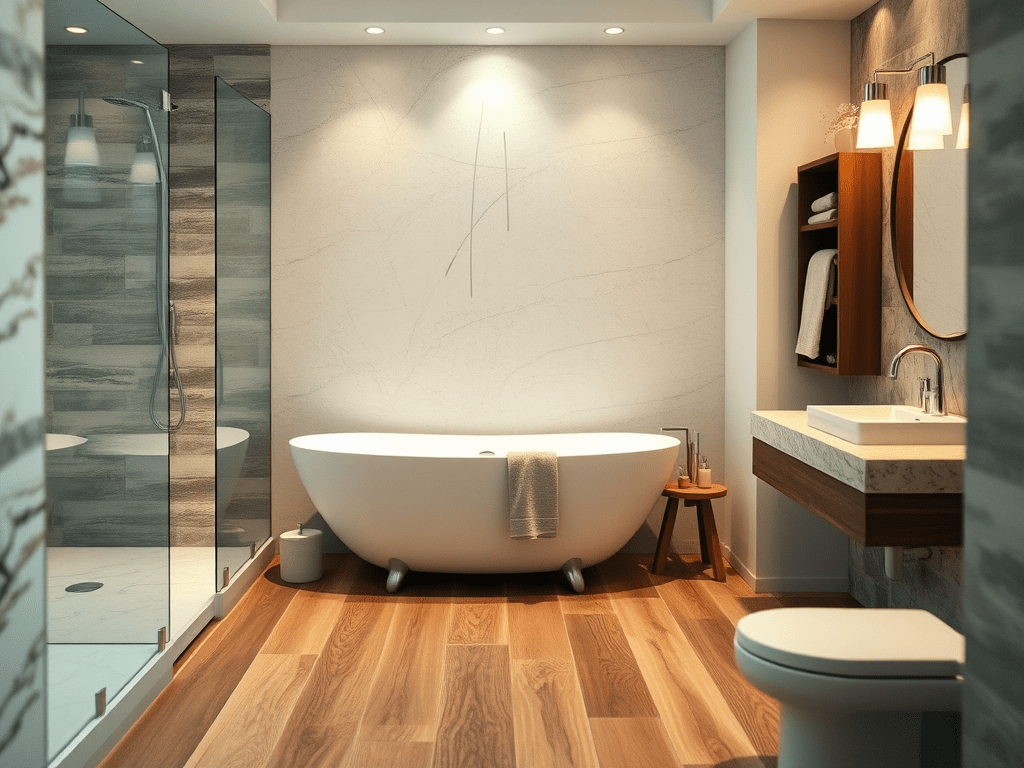
When it comes to designing a bathroom, flooring is one of the most important decisions you’ll make. The right flooring can enhance your bathroom’s aesthetics while offering durability and functionality. But with so many options available, how do you choose the perfect one for your space? Let’s dive into key considerations and explore popular flooring options that are both stylish and practical for bathrooms.

Key Considerations for Bathroom Flooring
- Water Resistance: Bathrooms are naturally high-moisture areas. Your flooring needs to be able to withstand splashes from sinks, steamy showers, and even occasional spills. Choosing a water-resistant or waterproof material is crucial.
- Durability: Your bathroom is a high-traffic area, so you need flooring that can withstand constant use, water exposure, and cleaning products.
- Safety: Bathrooms can become slippery when wet, making slip-resistance an important feature for flooring. Prioritize materials that provide a good grip to prevent accidents.
- Comfort: Bathroom floors tend to be cold, especially in winter. Look for flooring options that feel comfortable underfoot or pair well with underfloor heating systems.
- Style: Your flooring should complement the overall style of your bathroom, whether you’re going for a modern, rustic, or classic look.
Popular Flooring Options for Bathrooms
1. Ceramic and Porcelain Tile
Ceramic and porcelain tiles are the go-to choice for bathroom flooring due to their excellent water resistance and durability. They come in a variety of shapes, sizes, and colors, allowing you to create custom patterns and designs. Porcelain tiles, in particular, are denser and less porous than ceramic tiles, making them even more water-resistant.
Pros:
- Waterproof
- Wide variety of designs
- Long-lasting and durable
Cons:
- Cold and hard underfoot
- Can be slippery when wet (opt for textured or matte finishes)
2. Vinyl Flooring
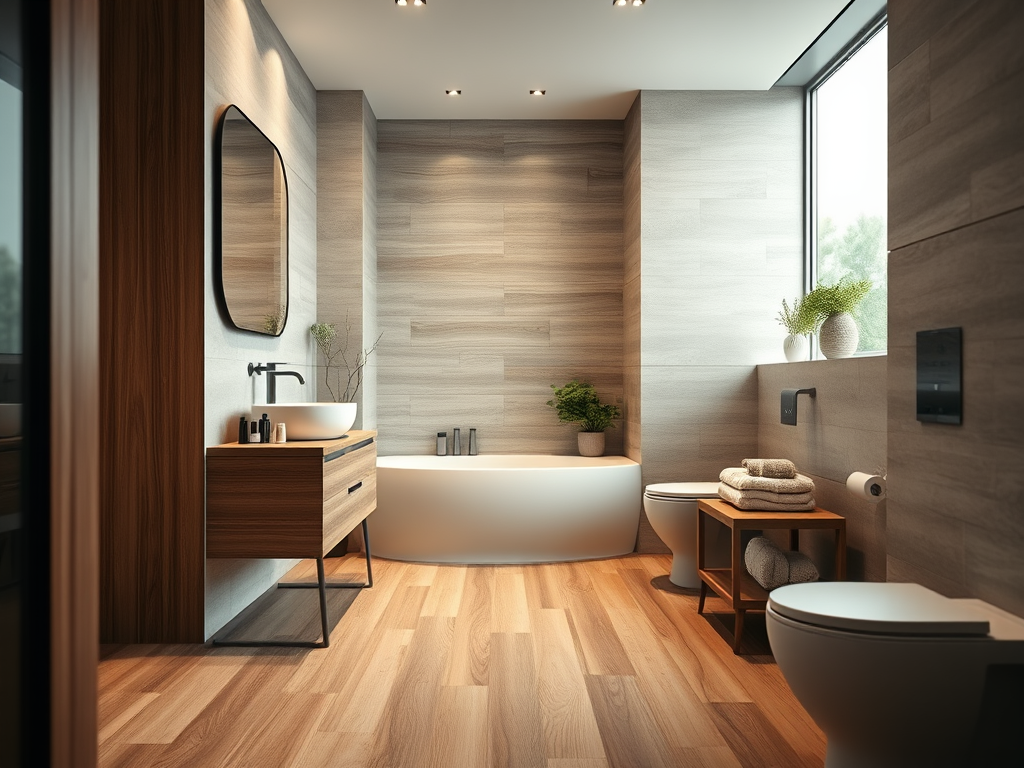
Vinyl flooring has come a long way in terms of design and performance. Luxury vinyl planks or tiles mimic the appearance of wood or stone, providing a stylish and affordable option for bathrooms. Vinyl is water-resistant, soft underfoot, and easy to maintain, making it a practical choice for busy bathrooms.
Pros:
- Waterproof and budget-friendly
- Comfortable and warmer than tile
- Easy to install and maintain
Cons:
- Can dent or scratch over time
- Not as high-end as tile or natural materials
3. Natural Stone
For a luxurious bathroom, natural stone flooring such as marble, granite, or slate offers a timeless and elegant look. While these materials are naturally water-resistant, they do require sealing to protect them from moisture and staining. Stone floors provide a beautiful and unique aesthetic but come at a higher cost.
Pros:
- Luxurious and unique appearance
- Adds value to your home
- Durable when properly maintained
Cons:
- Expensive and requires professional installation
- Needs regular sealing to maintain water resistance
4. Engineered Wood
Engineered wood is a more bathroom-friendly alternative to solid hardwood. It’s made by bonding layers of real wood to a plywood base, which makes it more resistant to moisture. While not as waterproof as tile or vinyl, engineered wood can bring warmth and a natural feel to your bathroom.
Pros:
- Warm and natural appearance
- More water-resistant than solid hardwood
- Adds value to your home
Cons:
- Needs proper sealing to protect against moisture
- Can warp if exposed to excessive water
5. Cork Flooring
Cork is an eco-friendly option that’s gaining popularity for bathroom flooring. Naturally water-resistant and antimicrobial, cork is a great choice for those looking for something sustainable. It’s soft underfoot and provides good insulation, keeping your feet warm in colder months.
Pros:
- Sustainable and eco-friendly
- Comfortable underfoot and insulating
- Water-resistant with proper sealing
Cons:
- Requires regular sealing
- Susceptible to scratches and dents
Additional Tips for Choosing Bathroom Flooring
- Consider Underfloor Heating: If you choose a colder material like tile or stone, underfloor heating is a great option to add comfort. Many modern heating systems can be installed beneath flooring, giving your bathroom a luxurious, spa-like feel.
- Choose the Right Finish: For tile and stone flooring, opt for matte or textured finishes to provide more grip and prevent slipping. Polished surfaces, while beautiful, can become dangerously slippery when wet.
- Maintenance: Keep in mind the maintenance needs of your flooring choice. Materials like natural stone and wood require more upkeep than vinyl or ceramic, so think about your willingness to reseal or polish your floors regularly.
My Recommendations
- Home Depot: has a wide variety of options, sizes and colors to choose from, many items can be found at reasonable prices.
- Lowe’s: has similar options to other stores of it’s kind but the often have something that is fitting for every style.
- Amazon: has limited selection but they do have options for those that like to shop online rather than shopping in the stores.
- I also recommend trying local stores. They could possibly have the best pricing and selection for your area.
Conclusion
Choosing the right flooring for your bathroom is a balance between style, functionality, and maintenance. Whether you opt for the classic look of tile, the warmth of engineered wood, or the durability of vinyl, your choice will significantly impact the overall feel and function of your bathroom. By considering water resistance, durability, comfort, and safety, you’ll find the perfect flooring to suit your needs and design preferences.
Have you recently updated your bathroom flooring? Share your experiences and tips in the comments below!

 Discoveringlifellc
Leave a comment