
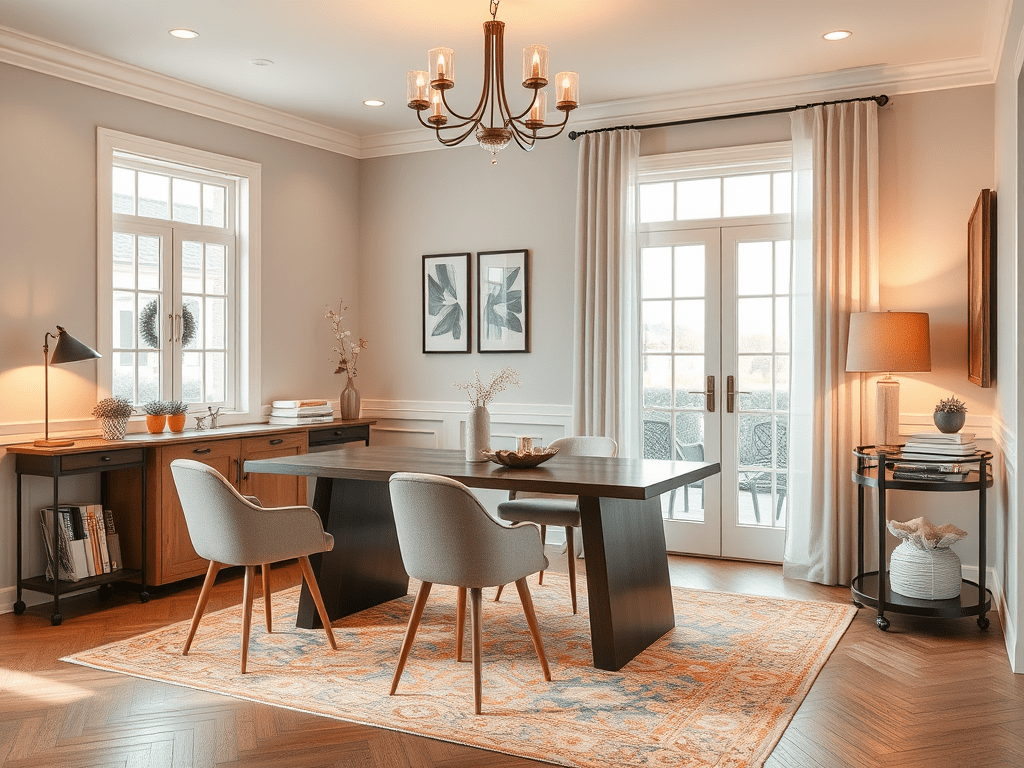
In many modern homes, space is a luxury. With open-concept layouts and smaller square footage becoming the norm, the traditional purpose of rooms is evolving—especially the dining room. Once reserved strictly for formal dinners and holiday gatherings, the dining room is being reimagined.
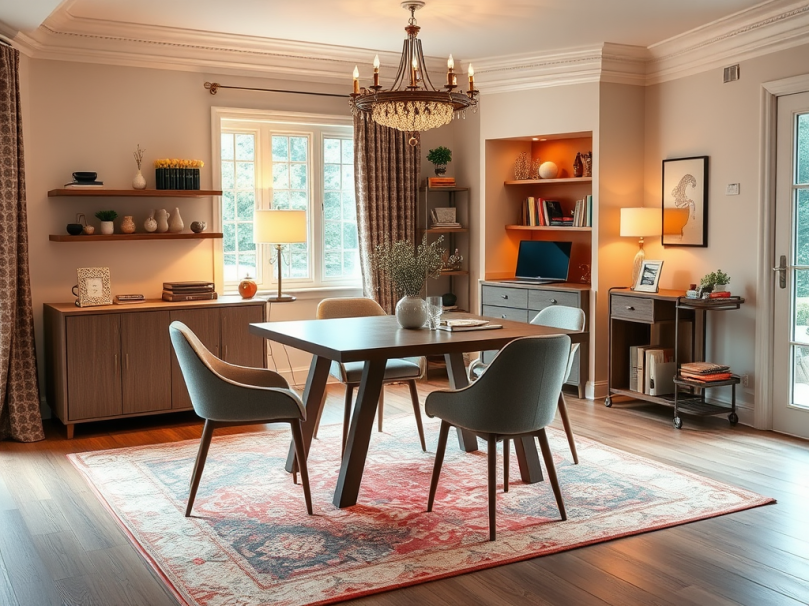
But is it conventional to use your dining room for more than dining? Absolutely. And if you’re not doing it yet, you might be missing out on valuable potential.
Why It Makes Sense to Rethink the Dining Room
In today’s busy households, every inch of space needs to pull its weight. With families working from home, kids needing homework stations, and creative hobbies or side hustles on the rise, multifunctionality isn’t just a trend—it’s a smart way to live.
Gone are the days when the dining room sat empty 90% of the time. Now, it’s all about creating a space that feels elegant enough for dinner yet practical enough for everyday life.
6 Smart Ways to Make Your Dining Room Multifunctional
1. Create a Dining Room-Office Hybrid
Add a sleek storage cabinet or console to hide away office supplies when not in use. Choose a dining table that doubles as a spacious desk, and use stylish organizers that blend into your decor. Bonus: You’ll never have to “clear the dining table” to take a Zoom call again.
2. Use Built-In or Modular Storage
Built-in shelves or modular bookcases can instantly transform your dining space into a mini library or display area. Use woven baskets, lidded bins, or labeled boxes to keep things organized. It’s functionality disguised as decor.
3. Add a Bar Cart or Coffee Station
If you have extra wall space, a bar cart or coffee station adds charm and utility. It turns your dining room into a morning coffee nook or evening entertainment zone—without taking up much room.
4. Make It a Homework or Craft Zone
Family dinners and creative sessions can coexist! Keep placemats or a protective tablecloth handy, and stash craft supplies in nearby drawers. Just like that, your dining room becomes a kid-friendly creativity station.
5. Choose Flexible Furniture
Go for extendable dining tables, foldable chairs, or benches with hidden storage. This gives you the flexibility to expand or minimize your setup depending on your needs for the day—dinner party or design project.
6. Use Lighting and Rugs to Zone the Space
Layer your lighting with a chandelier above the dining table and a floor lamp in the reading or working corner. A large area rug can define the dining zone, while another smaller one can set apart a reading nook or workspace. This visual separation helps the room feel intentional and organized.
Tips for Keeping It Stylish
- Color Cohesion: Stick to a consistent color palette to make the room feel unified, no matter how it’s used.
- Hide Clutter: Storage furniture with doors or curtains can help hide non-dining items when guests come over.
- Keep It Flexible: Avoid overly permanent installations. The goal is adaptability!

Final Thoughts
So, is it conventional to use your dining room in multifunctional ways? Today, it’s not only conventional—it’s smart, stylish, and in some cases, essential. With a little creativity and thoughtful design, your dining room can be both the heart of family meals and the hub of daily life.
 Discoveringlifellc
Leave a comment