
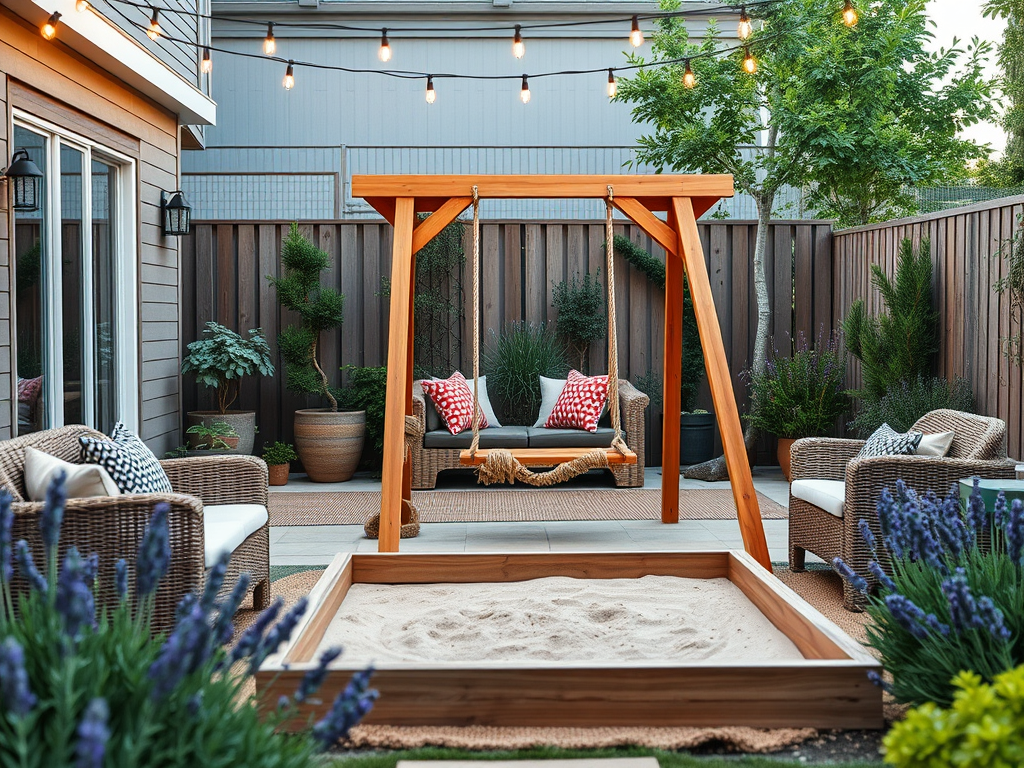
When designing an outdoor space, many of us dream of serene seating areas, string lights twinkling overhead, and perfectly curated planters. But if you’re a parent, there’s another reality to consider—how do you blend your children’s outdoor toys, swing sets, sandboxes, or playhouses into the design without your backyard feeling like a preschool playground?
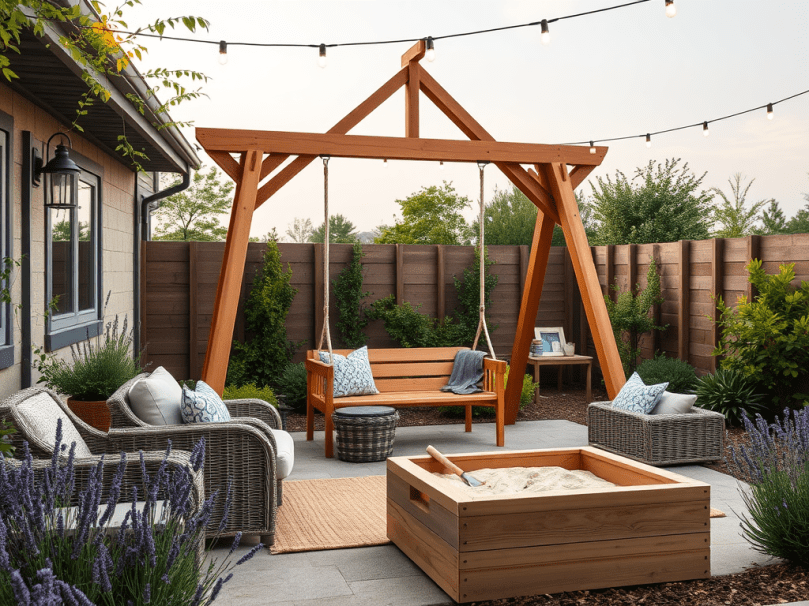
Good news: you can create a stylish and family-friendly outdoor area. It just takes a little creativity, balance, and a few thoughtful choices. Here’s how to make your kids feel at home in your backyard and still stay true to your aesthetic.
1. Choose Natural Materials
Plastic playsets in primary colors can clash with a cohesive outdoor look. Instead, opt for swingsets, climbing structures, or sandboxes made from natural wood or muted tones. Cedar or pine structures blend beautifully with most backyard designs, especially if your space leans rustic, farmhouse, boho, or Scandinavian.
Example:
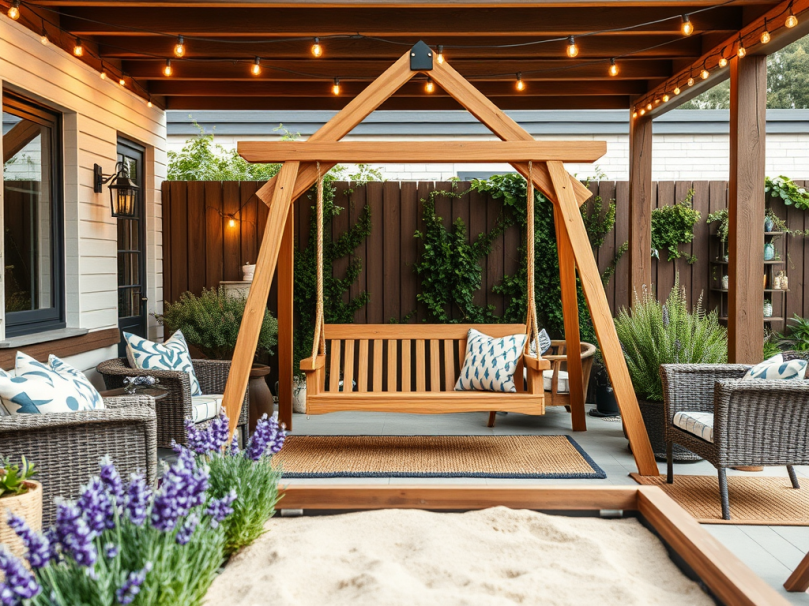
A cedar A-frame swing with rope swings and a wooden ladder can easily complement a patio with wicker furniture and jute rugs. Add a soft tan or sage-green canopy to the top for both shade and style.
2. Paint to Match Your Palette
Many wooden playhouses or sandboxes come unfinished. This gives you a great opportunity to paint or stain them in colors that align with your outdoor theme.
Example:
If your patio is done in whites, blacks, and neutrals, paint the playhouse a soft charcoal or creamy white. Add gold hardware or a mini black lantern for a stylish touch that matches your home’s exterior.
3. Add Landscaping Around the Play Area
A little landscaping goes a long way in helping kid zones feel more integrated into the space. Border their area with low-maintenance shrubs, decorative grasses, or even large planters. This defines the area while keeping it visually connected to the rest of the yard.
Example:
Use wooden raised beds to frame a sandbox. Plant lavender or rosemary around it—bonus: they smell great and deter bugs!
4. Incorporate Storage with Style
Toys have a way of taking over. Keep things tidy with outdoor storage solutions that double as décor.
Example:
Use a rattan outdoor bench with hidden storage to stash balls, water toys, or chalk. Or tuck a painted wooden toy chest near the playhouse that matches the furniture on your deck.
5. Designate Zones
Create “rooms” in your backyard just like you would indoors. This helps kids understand where their space is and helps adults maintain a sense of order and design.
Example:
One corner of your yard can hold a playhouse and sandbox. Another can have a cozy reading area with a teepee or tent for quiet time. Use outdoor rugs or pea gravel to separate areas visually.
6. Make Play Décor a Feature
Instead of hiding your kids’ things, make them part of the statement. Choose whimsical, well-designed play pieces that become outdoor focal points.
Example:
A white wooden teepee with twinkling fairy lights is a magical addition to a boho-inspired yard. Add a few soft outdoor pillows and it becomes a cozy hideaway for your kids and a photo-worthy corner.
7. Choose Timeless Over Trendy
When buying swingsets or large toys, think long-term. Go for classic styles that age well and can be updated as your child grows.
Example:
A modular wooden play structure that starts with a slide and swing can later be turned into a fort, reading nook, or climbing wall with a few simple additions.
Final Thoughts
Your outdoor space should feel like an extension of your home—and everyone who lives in it. By choosing play pieces that complement your design, integrating natural materials, and styling around the toys, you can create an environment that delights your children and reflects your personal taste.
After all, home is where life happens—and that includes digging, swinging, and making backyard memories.
 Discoveringlifellc
Leave a comment