
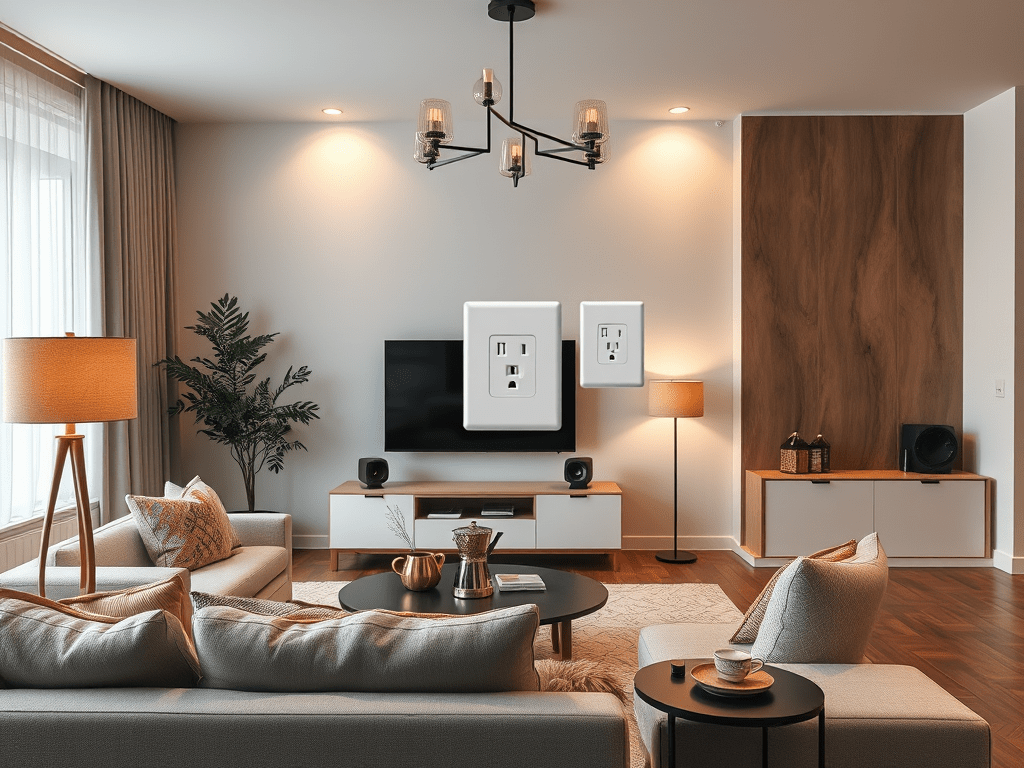
Technology has become part of nearly every corner of our homes. From smart speakers and lamps to automated blinds, cameras, and chargers, it feels like everything we use plugs into the wall. The downside? Cords everywhere and wall sockets that can’t keep up. But before you start rearranging your furniture just to hide outlets—or worse, piling on bulky power strips—there’s a better solution: smart outlets.

What Are Smart Outlets?
Smart outlets look like traditional wall plugs but with added intelligence. Instead of simply providing power, they connect to your Wi-Fi and allow you to control plugged-in devices through your smartphone or a voice assistant like Alexa or Google Home. Many also offer scheduling, energy monitoring, and remote control, giving you more flexibility than a basic outlet ever could.
Why Use Smart Outlets?
- Reduce Clutter: Instead of plugging multiple extension cords around your home, smart outlets often have dual or multi-port options, keeping things tidy.
- Energy Efficiency: Many models track energy usage so you can see which devices are drawing the most power—and turn them off when not in use.
- Convenience: Imagine turning off your coffee maker, lamp, or fan without getting up. Or scheduling your lights to turn on at sunset automatically.
- Safety: Smart outlets can reduce the risk of overheating by cutting off power when devices aren’t in use.
How to Avoid the “Cord Jungle”
Even with smart outlets, you’ll still want a strategy for preventing your walls from looking like charging stations gone wild. Here are a few tips:
- Plan Placement Wisely – Instead of plugging in everything at one location, spread out devices to the most logical outlets in each room. A smart outlet in the living room may handle your lamp and TV, while another in the kitchen could power your coffee maker and air fryer.
- Use Smart Power Strips – These are like smart outlets but with multiple plugs built in. They allow you to control each connected device separately, which is perfect for gaming setups or home offices.
- Hide Cables Strategically – Cord management boxes, under-desk trays, or adhesive cable clips can keep everything neat and hidden. Smart outlets paired with smart cable organization make the setup nearly invisible.
- Automate to Minimize Use – If you don’t need certain devices running 24/7, program your smart outlets to cut power during certain hours. Fewer cords constantly “in use” means fewer messes to manage.
Best Uses for Smart Outlets
- Living Room: Control lamps, TVs, sound systems, or space heaters.
- Bedroom: Schedule lamps to turn off at bedtime or heaters to warm up the room before you wake.
- Kitchen: Automate coffee makers, air fryers, or even the holiday lights you hang around the window.
- Home Office: Perfect for printers, chargers, and desk lamps without dealing with multiple cords.

Final Thoughts
As our homes become smarter, the last thing anyone wants is a tangle of cords ruining the look of a well-decorated room. Smart outlets don’t just give you control over your devices—they help you reclaim your space from the chaos of wires and overrun sockets. With just a little planning, you can keep everything powered, stylish, and stress-free.


 Discoveringlifellc
Leave a comment