
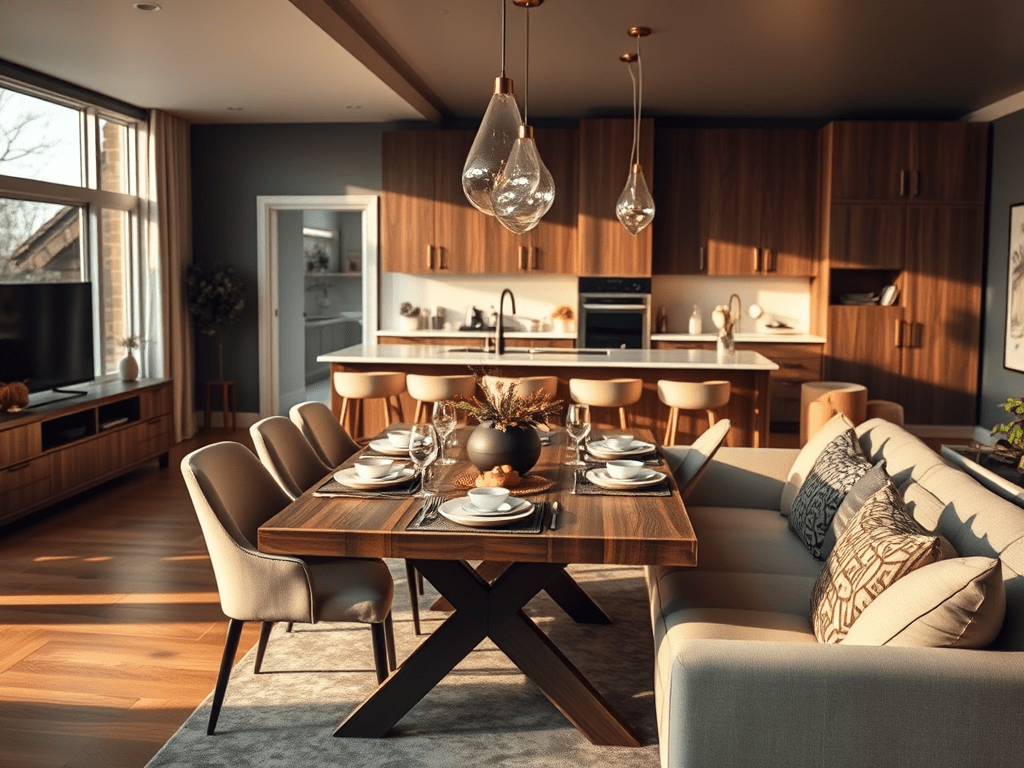
In today’s fast-paced world, the way we eat at home has changed just as much as the way we live. Once upon a time, every home had a formal dining room — a space reserved for family meals, special gatherings, and holidays. The dining table wasn’t just furniture; it was a symbol of togetherness. But now, many of us find ourselves eating dinner on the couch while catching up on a show, or even having breakfast in bed on a lazy weekend. So, what happened to the traditional dining room table — and does it still have a place in modern life?

Do You Have a Designated Eating Area?
Every home has its rhythm. For some, eating at a designated dining table still brings a sense of structure and comfort. For others, the kitchen island, breakfast bar, or even the coffee table in front of the TV has become the new “dining spot.”
Open-concept living has also changed how we define eating spaces. Many modern homes blur the line between the kitchen and living area, making casual dining more natural. Families might share a meal at the island while one person cooks, or snack together on the couch while watching a movie — proving that connection doesn’t always require formality.
Do People Still Use the Dining Room Table?
Surprisingly, yes — but not always every day. Many people still keep a dining room table as part of their home decor, even if it’s more for holidays, birthdays, or Sunday dinners. It’s often seen as a centerpiece, a gathering place for special moments rather than a daily necessity.
For smaller spaces, dining rooms have become multifunctional: part dining area, part home office, part craft zone. The modern dining table has evolved into a flexible piece of furniture that adapts to the way we live now.
Eating on the Couch (or Bed): The New Normal?
Let’s be honest — eating on the couch is often more comfortable and convenient. With busy schedules and on-demand entertainment, it’s no wonder so many people prefer to dine in front of a screen. The same goes for breakfast in bed or a late-night snack while scrolling through your phone.
While it’s cozy, it does change the dynamic. Meals become less about conversation and more about comfort. There’s nothing wrong with that — but it’s interesting to see how habits have shifted away from structured mealtime routines.
The Formal History of the Dining Room Table
The dining room table has deep roots in history. In medieval times, large wooden tables in great halls were used for communal feasts. Over the centuries, the dining room became a symbol of sophistication and family unity, particularly in the 18th and 19th centuries.
By the mid-20th century, eating together at a dining table became a daily ritual for many families — a time to share stories, reflect on the day, and strengthen relationships. It was as much about the experience as the meal itself.
Why Families Ate Together — and Is It Still Important?
Sharing a meal has always been about more than just eating. It was (and still is) a way to connect, communicate, and create memories. Studies have shown that families who eat together often have stronger relationships and better emotional well-being.
However, in our modern world — with different work hours, after-school activities, and digital distractions — family meals have become less frequent. But even if it’s just once or twice a week, sitting at a table together still holds value. It’s a small way to pause, reconnect, and make home feel like home.
So, Is the Dining Table Obsolete?
Not at all — it’s just evolving. The dining table may not be used daily, but it still represents connection, conversation, and community. Whether you gather around it for Sunday brunch, game night, or holiday dinner, it’s a reminder of how our homes bring us together.
And for those who prefer to dine on the couch or at the breakfast bar — that’s perfectly fine too. Home is all about what works best for you.

In the end, it’s not about where you eat — it’s about how you share those moments that make your house feel like home.




 Discoveringlifellc
Leave a comment