
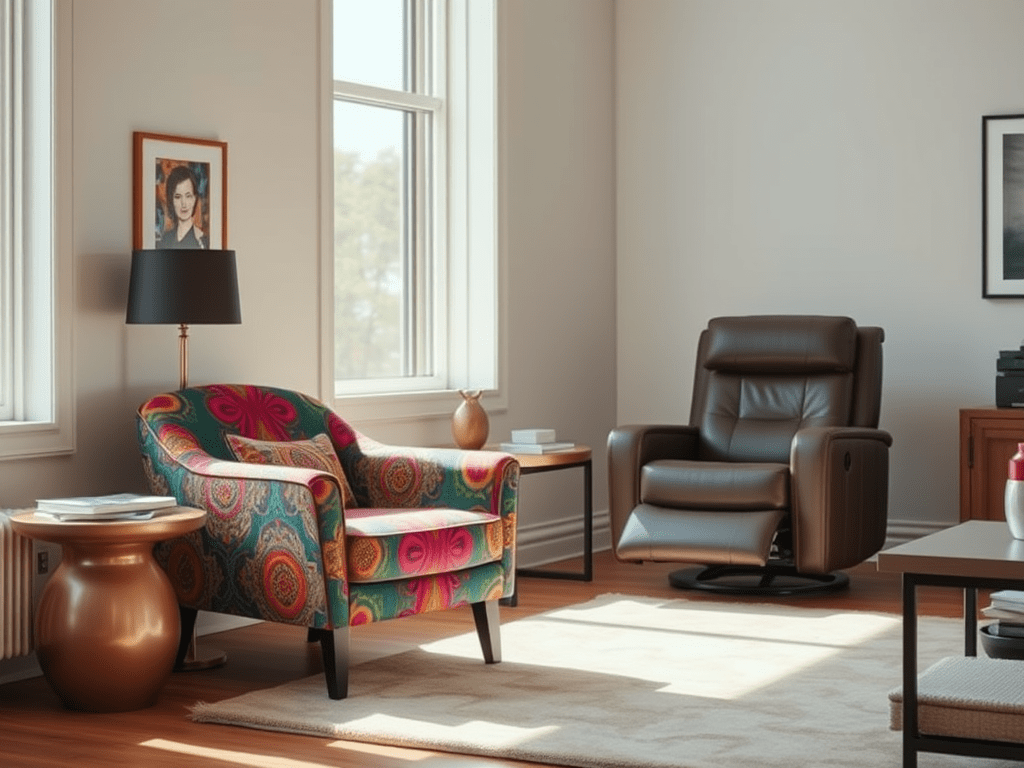
When it comes to choosing seating for your living room, reading nook, or bedroom corner, two popular contenders often come up: accent chairs and recliners. Both offer comfort and style, but in very different ways. Whether you want to make a statement or sink into pure relaxation, understanding the history, purpose, and placement of each can help you decide which one suits your home best.
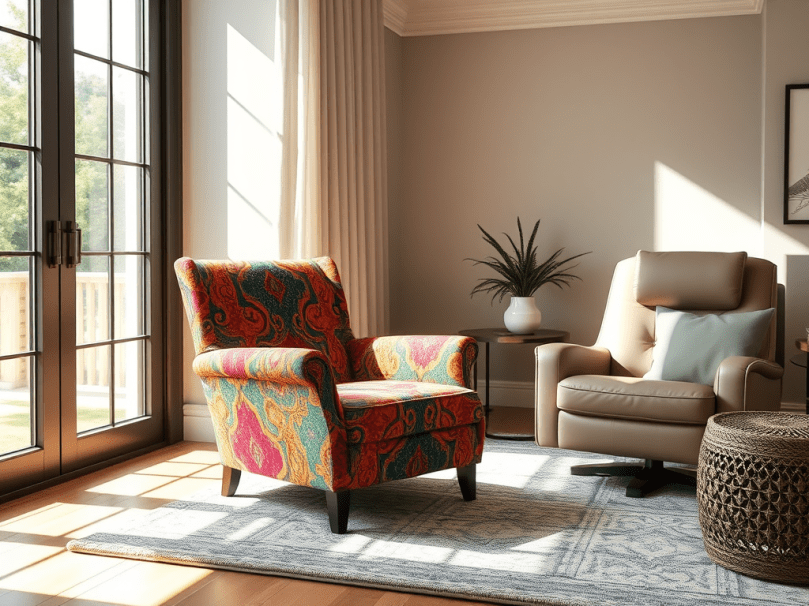
A Quick Look at Their History
Accent Chairs
Accent chairs have been around for centuries, dating back to the ornate furniture styles of European royalty. Think of the French fauteuils or bergères of the 17th and 18th centuries—beautifully crafted chairs with carved wood frames and elegant fabrics meant to enhance a room’s aesthetic. Over time, accent chairs evolved beyond luxury décor to become functional design pieces that add personality, color, and texture to a room.
Recliners
Recliners, on the other hand, are relatively modern. The first reclining chair was patented in the 1920s by cousins Edward Knabusch and Edwin Shoemaker—the founders of La-Z-Boy. Their creation transformed home comfort forever, offering an adjustable back and footrest for relaxation. Since then, recliners have become synonymous with comfort, convenience, and cozy evenings spent watching TV or reading.
Which One Is More Common—and Why
Accent chairs tend to be more common in modern homes, especially in smaller spaces or design-forward interiors. Their popularity stems from their versatility—they come in countless shapes, colors, and fabrics, making them ideal for tying a room’s look together. From minimalist and mid-century modern to farmhouse and boho, there’s an accent chair for every style.
Recliners, however, remain beloved for their comfort-first design. While they were once bulky and purely functional, today’s recliners are sleeker and more stylish, often blending easily with contemporary décor. Yet, due to their larger size and specific use, they are less common in rooms where design aesthetics take precedence over lounging comfort.
Which One Works Best in Different Spaces
Living Room
- Accent Chair: Perfect for creating a conversational setup or adding a pop of color next to a sofa.
- Recliner: Best for TV watching, reading, or relaxing at the end of the day. Great for family rooms or entertainment areas.
Bedroom
- Accent Chair: Ideal for a reading nook or as a decorative piece near a window.
- Recliner: Works well in master bedrooms or nurseries where comfort and function matter most.
Office or Study
- Accent Chair: Adds style and professionalism without taking up much space.
- Recliner: Not typically used unless the space doubles as a personal retreat or reading lounge.
Why People Prefer One Over the Other
People who prefer accent chairs usually focus on design, balance, and the overall flow of a room. Accent chairs are an easy way to experiment with texture and color without overwhelming a space. They also make rooms feel intentional and well-curated.
Those who prefer recliners, however, value comfort and practicality. They’re drawn to furniture that supports relaxation—especially in homes where unwinding is a priority. With modern technology, many recliners now include massage features, built-in USB ports, and power reclining options—making them both stylish and smart.
The Perfect Balance
The truth is, there’s no clear “winner” between accent chairs and recliners. The best choice depends on how you live and what you want your space to express. Many homeowners even incorporate both—an accent chair for visual interest and a recliner for pure comfort.
If your home is your sanctuary, it’s all about finding the right balance between style and relaxation. An accent chair draws the eye. A recliner draws you in.
Both have a place in the modern home—it’s just a matter of which one feels more you.

Final Thought:
Whether you lean toward the timeless charm of an accent chair or the indulgent comfort of a recliner, both can elevate your home when chosen with intention. Think about how you want to use your space, and let that guide your decision—not just what looks good, but what feels right.




 Discoveringlifellc
Leave a comment