
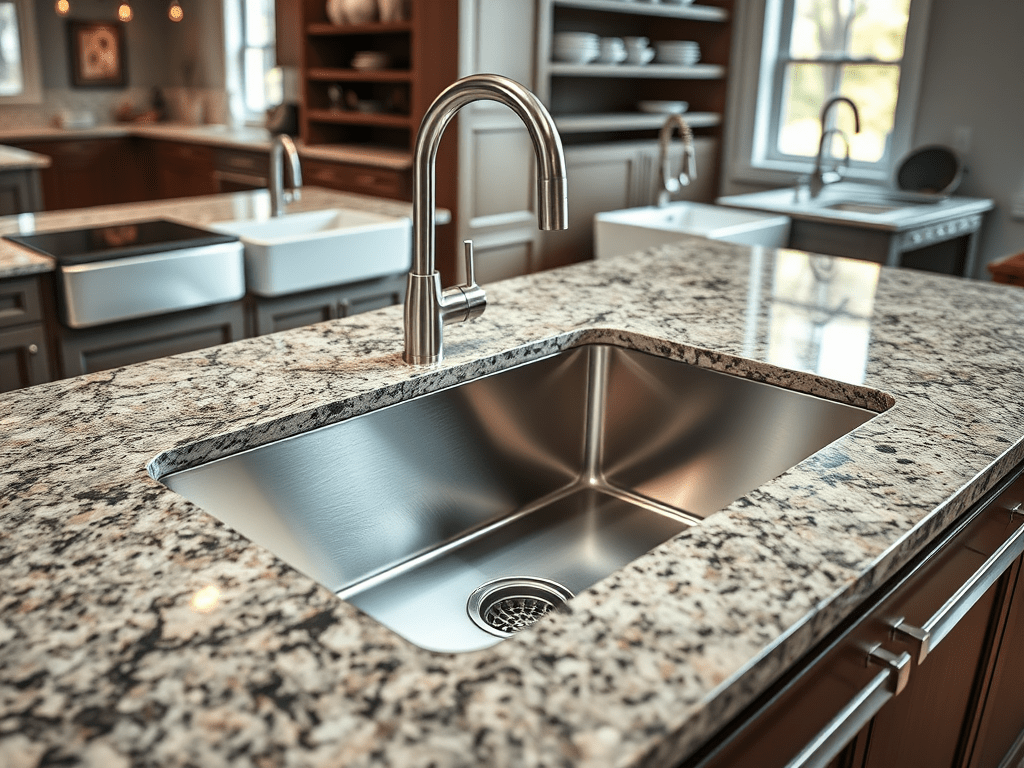
Why picking the right kitchen sink matters
When you plan a kitchen upgrade — after selecting appliances, countertops, fixtures — the sink is more than a functional necessity. It sits at the center of daily kitchen life: from washing dishes and prep work to meal-clean up. The wrong sink can make everyday tasks annoying, limit your counter space, or clash with your overall design. The right sink, however, can improve workflow, enhance aesthetics, and become a subtle but important component of the style and feel of your kitchen.

Because sinks come in many types, styles, materials, and sizes — what works for one kitchen might not work for another. That’s why it’s worth spending time choosing wisely.
Types of Kitchen Sinks & Materials
Here’s a breakdown of the most common sink types and materials — plus what they offer (and what to watch out for).
🔸 Mount style: how the sink sits in/on your countertop
- Undermount sinks — These are installed under the countertop, so the rim is hidden. The result is a clean, seamless surface, making it easy to wipe crumbs or spills directly into the sink. They’re especially great with solid countertops like granite, quartz, or solid surface. (Engineers and Architects of America)
- Top-mount (drop-in) sinks — With this style, the sink’s rim sits on top of the counter. These are easier to install (often cheaper), and good if you’re replacing a sink without changing countertops. (Modernize)
- Apron-front / Farmhouse sinks — Also sometimes undermount (though not always), these sinks have a front panel (the “apron”), often extending slightly beyond the counter’s edge or cabinet line. They make a bold design statement and usually offer a deep, wide basin. (Engineers and Architects of America)
- Workstation sinks — A more multipurpose option: these combine the basin with built-in ledges or features that hold cutting boards, drying racks, colanders, prep bowls — turning the sink into a mini-prep / cleanup station. Great for busy cooks or smaller kitchens to maximize function. (Engineers and Architects of America)
🔸 Sink materials — what the sink is made of
Your sink’s material affects durability, maintenance, appearance, and how it matches with your countertops / kitchen style. Some common materials:
- Stainless steel — Probably the most popular because it’s durable, easy to clean, bacteria-resistant, and works with many design styles. Works particularly well with stone countertops. Heavier-gauge stainless (like 16–18 gauge) is more dent-resistant and durable. (Modernize)
- Granite / Quartz (composite) — Composite sinks (made from stone dust + resin) offer the look of natural stone, resist scratches, heat, and stains, and often hide wear well. They give a more substantial, earthy, or high-end look. (The Dedicated House)
- Fireclay / Porcelain / Ceramic — These materials give a classic, timeless feel. Fireclay sinks are durable and resistant to stains, while porcelain or ceramic sinks offer a glossy, clean look. They pair beautifully with farmhouse or traditional kitchen styles. (The Dedicated House)
- Cast iron (enameled) — Offers vintage or classic appeal, with a glossy finish and sturdy feel. However, because of their weight, they often require reinforced cabinetry and care to avoid chipping. (The Dedicated House)
- Natural stone (granite, marble, soapstone) — Luxurious, unique, and often considered a statement piece. They provide a high-end, one-of-a-kind look. But they tend to be expensive, heavy, and may require sealing or special maintenance. (Leading Indicators)
How to Choose the Right Sink for Your Space
When you pick a sink, think about:
✅ 1. Your lifestyle & kitchen usage
- If you cook often, use large pots, or do big meal prep — a single-basin sink (especially deeper or wider) may be ideal. It’s easier to clean big items. (Modernize)
- If you multitask (e.g. wash dishes + rinse produce separately), a double-basin sink or a workstation sink can make sense. (Granite Depot)
- If space is limited — a more compact sink or a sink with integrated prep features helps. Workstation sinks especially maximize utility.
✅ 2. The style of your kitchen & overall aesthetic
- For modern, sleek kitchens — stainless steel undermount sinks or composite stone-look sinks can keep clean lines and simplicity.
- For traditional, farmhouse, rustic or cozy kitchens — fireclay, porcelain, or even cast iron apron-front sinks can add warmth and charm.
- For a statement centerpiece — apron-front (farmhouse) or natural stone sinks can draw the eye.
✅ 3. Countertop material & cabinetry
- Undermount sinks pair best with solid countertops like granite, quartz, or solid surface — they require the counter to be cut precisely and supported properly. (Engineers and Architects of America)
- If you want to avoid cutting new countertops (or easy DIY), a drop-in / top-mount sink might be more practical.
✅ 4. Maintenance & durability
- If you want low maintenance: stainless steel or composite sinks are easy to clean and quite durable. (Modernize)
- If you prefer classic looks but don’t mind some care: fireclay or porcelain give timeless charm but can chip or stain if heavy items are dropped. (The Dedicated House)
- If you like luxury and uniqueness and are okay with upkeep: natural stone can be a beautiful choice but often needs regular sealing / special care. (Leading Indicators)
What’s Trending in 2025: Top Sink Styles Homeowners & Designers Love
According to recent design-industry sources, the following sink styles & materials are especially popular in 2025:
- Stainless steel undermount sinks remain a top pick: durable, versatile, and blending easily with quartz, granite or solid surface countertops. Many new models also include improvements like sound-dampening and scratch-resistance. (SurfaceIQ)
- Farmhouse / Apron-front sinks — combining classic charm and practicality, they remain deeply popular in 2025, especially for kitchens aiming for cozy, rustic, or transitional vibes. (RTA Kitchen & Bath)
- Composite granite/quartz sinks — offering stone-like look with modern durability, these continue to grow in popularity as they deliver both performance and aesthetic flexibility. (The Dedicated House)
- Workstation sinks — sinks with built-in accessories (cutting boards, drying racks, colanders) that turn the sink into a multifunctional workspace. Great for efficiency, especially in smaller kitchens or for people who cook a lot. (Engineers and Architects of America)
- Natural / textured / earthy finishes — matte, stone-like, or warm finishes (not just shiny stainless). These complement modern farmhouse, Scandinavian, or transitional kitchens. (SurfaceIQ)
- Custom colors and bold statement sinks — darker composite sinks, fireclay farmhouse sinks, or stone-look sinks that stand out against lighter countertops, adding contrast and character. (Flavor365)
Examples: Great Sink Picks for Different Needs (2025)
Here are some sink options — from functional and budget-friendly to high-end and design-forward — that reflect current trends and different kitchen needs:
KRAUS Standart PRO 30 in. Undermount Single Bowl Stainless Steel Kitchen Sink
Modern Undermount
$523.19
KRAUS Kore Workstation Undermount Stainless Steel Kitchen Sink
Workstation / Functional
$604.88
SINKOLOGY Jackson 33 in. Drop-in Single Bowl Fireclay Kitchen Sink
Farmhouse Fireclay
$299.00
Allen + Roth Kaiden Double Equal Bowl Granite Composite Kitchen Sink
Composite Durable
$289.00
Glacier Bay 33 in. Drop-In Double Bowl Stainless Steel Kitchen Sink
Budget Stainless
$149.00
Signature Hardware Rowena 33″ Fireclay Farmhouse Kitchen Sink
Farmhouse Classic
$699.00
KOHLER Cursiva 33 in. Single Bowl Drop-In/Undermount Stainless Steel Kitchen Sink
Versatile Stainless
$399.00
ChokranBrass Unlacquered Copper Hammered Kitchen Sink
Unique Copper Statement
$386.05
Why these stand out
- KRAUS Standart PRO 30 in. Undermount Single Bowl Stainless Steel Kitchen Sink — A great modern, sleek option for minimalist or contemporary kitchens. Durable 16-gauge stainless construction and a clean undermount look that blends with quartz or granite counters.
- KRAUS Kore Workstation Undermount Stainless Steel Kitchen Sink — Great if you want to maximize kitchen efficiency. The built-in ledges and prep accessories make this sink a multitasking workhorse for cooking, prep, and cleanup.
- SINKOLOGY Jackson 33 in. Drop-in Single Bowl Fireclay Kitchen Sink — For those drawn to a more traditional or farmhouse-style kitchen, this fireclay sink delivers a timeless look with easy installation (drop-in), and a roomy basin for large pots and pans.
- Allen + Roth Kaiden Double Equal Bowl Granite Composite Kitchen Sink — A durable composite option that balances functionality and elegant design. The dual bowls are handy for multitasking, and composite material offers scratch, stain, and heat resistance.
- Glacier Bay 33 in. Drop-In Double Bowl Stainless Steel Kitchen Sink — Helpful for households needing separate bowls (e.g. one for rinsing, one for washing) while keeping an affordable price point.
- Signature Hardware Rowena 33″ Fireclay Farmhouse Kitchen Sink — Ideal if you’re going for classic farmhouse charm or a timeless kitchen vibe. The large basin makes washing big cookware easier, and fireclay gives a traditional, cozy aesthetic.
- KOHLER Cursiva 33 in. Single Bowl Drop-In/Undermount Stainless Steel Kitchen Sink — Versatile in installation and fits both contemporary and transitional kitchens. Its deep bowl and easy-clean stainless make it a good all-rounder.
- ChokranBrass Unlacquered Copper Hammered Kitchen Sink — If you want the sink itself to be a statement piece: a copper sink adds warmth, uniqueness, and a distinctive character to a kitchen. Great for rustic, vintage, or artisan-style kitchens.
My Advice — How You, as a Homeowner or Decor Designer, Should Approach This Choice
Since you already think a lot about home style, budget, and how decor evolves — here’s how I’d suggest you choose:
- Start with your kitchen’s overall style & vibe. Are you going for modern-minimalist, cozy farmhouse, transitional, or something eclectic? Let that guide sink shape, material, and finish.
- Think about function and daily use. Do you cook a lot? Use big pots? Entertain? Then a deep single-bowl or a workstation sink might be worth investing in. If you seldom cook and use a dishwasher, simpler options may suffice.
- Match sink and countertop / cabinet materials. Undermount sinks work best with solid countertops — so consider your countertop choice first (or vice versa). Cabinets may need reinforcement if you choose heavy sink materials (cast iron, fireclay, stone).
- Balance budget and longevity. Stainless and composite sinks tend to be cost-effective and low-maintenance. If you love luxury finishes (fireclay, stone, copper), be ready for higher upfront cost and possibly more maintenance.
- Think of the sink as decor. The trend in 2025 sees sinks not just as functional — but as part of the overall kitchen aesthetic. So treat it like another design element: an accent, a statement, part of the story your kitchen tells.
Final Thoughts
Your kitchen sink is more than a basin for dishes — it’s part of the foundation of your daily home life. Choosing the right sink means balancing your cooking habits, cleaning needs, kitchen style, and the kind of maintenance you’re willing to commit to.
I encourage you to treat the sink decision as a design decision, not just a functional one. Analyze what the kitchen needs and what you want it to say. With 2025’s trending shift toward durability, workstations, and statement pieces, the ideal sink is likely one that blends function with personal style.




 Discoveringlifellc
Leave a comment