
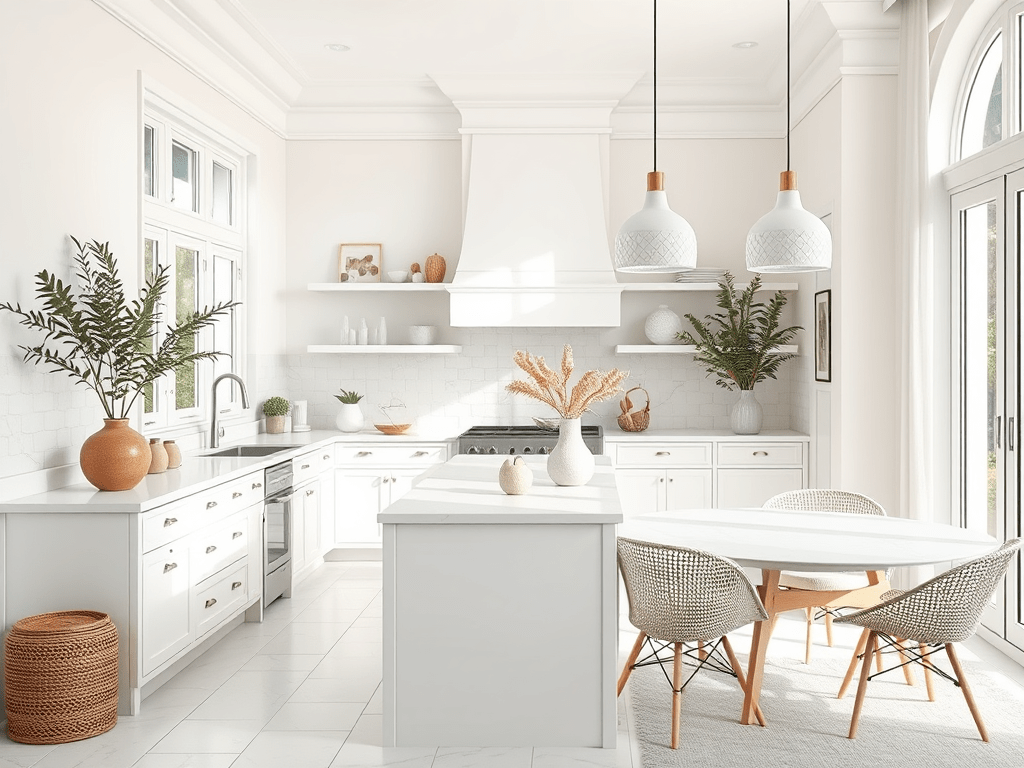
White has always held a special place in home décor. It’s the color of simplicity, purity, clarity—and yet its role in interior design has evolved drastically over time. What began as a practical backdrop has transformed into a deliberate design choice embraced by homeowners, stylists, and architects across every style imaginable.

Today, white is more than a neutral. It’s a statement. But how did we get here?
Let’s explore the evolution of white in home décor—from its humble beginnings to its modern-day dominance.
White as the Original Blank Canvas
Historically, white walls became popular largely out of practicality. Before the advent of richly pigmented, long-lasting paints, whitewash was an affordable and accessible option for most households. It brightened dim rooms, reflected limited natural light, and created a clean, sanitary appearance—something especially valued in older homes without modern lighting and ventilation.
White wasn’t a style choice. It was a necessity.
But this simplicity created something designers would later come to appreciate: a spacious, airy feeling that made even the smallest rooms feel open.
The Shift Toward Minimalism
As the 20th century progressed, design philosophies began to evolve. Movements like Scandinavian minimalism and mid-century modern embraced white not just for function, but for the emotion it evoked.
White suddenly became synonymous with:
- Calm
- Order
- Light
- Space
Designers realized something important: white acts as a reset button, allowing the architecture and furnishings to take center stage.
Scandinavian homes in particular used white to combat long, dark winters. White walls maximized light, made rooms feel uplifting, and allowed natural materials—wood, leather, wool—to truly shine.
White as a Modern Luxury
Fast forward to the early 2000s, and white entered a new chapter: the era of luxury minimalism.
Think:
- White marble countertops
- High-gloss white cabinetry
- White bedding in boutique-style bedrooms
- Crisp, gallery-like living rooms
White signaled sophistication. It was clean, crisp, and associated with high-end design. Magazines and home makeover shows emphasized how white could make a home look “expensive” without adding cost—simply by appearing bright, clean, and curated.
This is when white shifted from merely functional to deeply aspirational.
White in Today’s Homes: Still the Go-To Color
Despite new trends—earth tones, bold accent walls, and even the return of deep, moody palettes—white continues to be a go-to color for homeowners. Why?
1. It Works With Every Style
Farmhouse? Modern? Coastal? Boho? Industrial?
White adapts effortlessly. It complements wood tones, pairs beautifully with metallics, and softens bold colors.
2. It Makes Spaces Feel Larger
White visually expands the walls, ceilings, and corners of a space. In smaller homes and apartments, this effect is invaluable.
3. It Highlights Personal Style
White doesn’t compete with décor—it supports it. Wall art, plants, rugs, and furniture all pop against a white backdrop.
4. It Offers Seasonal Flexibility
With white as a base, it’s easy to switch décor seasonally:
- Warm throw blankets in winter
- Bright floral accents in spring
- Natural textures in summer
- Deep jewel tones in fall
White makes every transition cohesive.
5. It Feels Fresh and Clean
After decades of shifting design trends, one thing hasn’t changed: people want their homes to feel clean, calming, and bright. White still delivers that better than any other color.
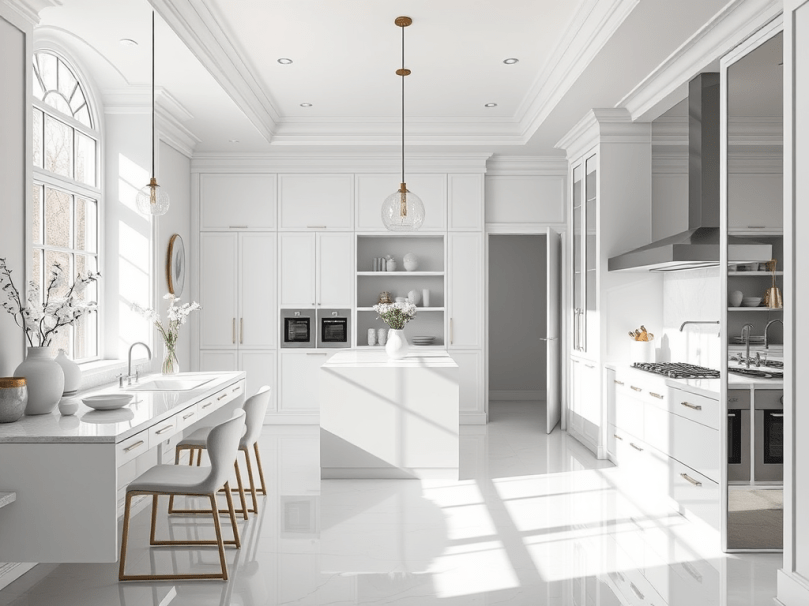
The Future of White in Home Décor
While future décor trends may lean into warmer neutrals or moodier palettes, white will always remain a foundation in interior design. Its adaptability, light-enhancing qualities, and timeless appeal make it irreplaceable.
Whether used as a backdrop or as the main star, white brings a sense of peace and possibility into any space—and that’s something homeowners won’t be giving up anytime soon.
 Discoveringlifellc
Leave a comment