
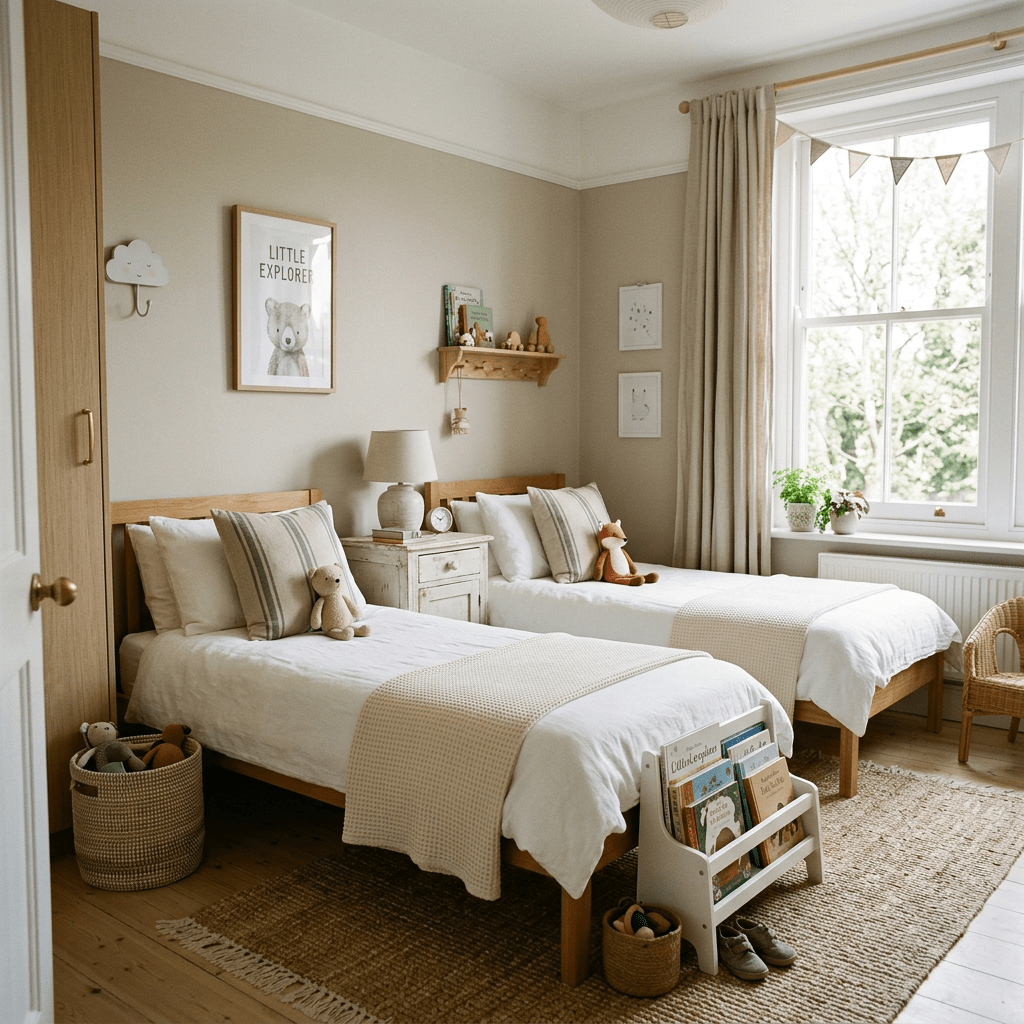
Sharing a bedroom can be a wonderful experience for siblings, but decorating that room becomes a challenge when the children have completely different tastes. Maybe one child loves bright colors and unicorns while the other prefers sports and neutral tones. Perhaps one dreams of a princess-inspired retreat while the other wants a modern gaming space.
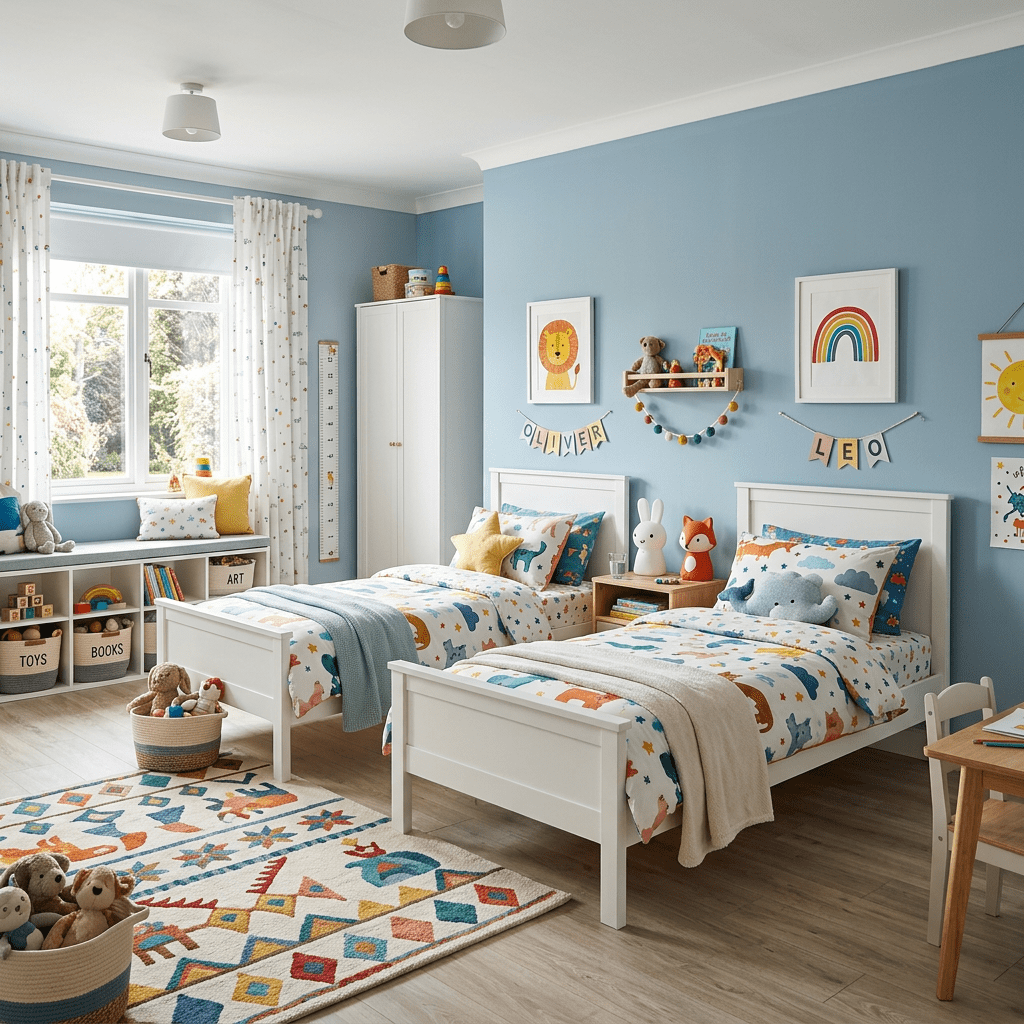
The good news is that a shared bedroom doesn’t have to feel like a decorating compromise. With thoughtful planning, you can create a cohesive room that celebrates each child’s personality while maintaining a stylish, harmonious look.
Start with What They Have in Common
Before focusing on differences, identify what the children share.
Ask questions such as:
- Do they both enjoy reading?
- Do they both like certain colors?
- Is there a theme they both appreciate?
- Do they prefer cozy or minimalist spaces?
Finding common ground helps establish a foundation for the room’s design.
For example, if one child loves pink and the other loves blue, you might choose a soft gray or white base palette and use their favorite colors as accents.
Create a Neutral Foundation
The secret to designing a shared room with different styles is to keep the major elements neutral.
Consider:
- White walls
- Soft gray walls
- Beige or greige tones
- Natural wood furniture
- White bedding
A neutral backdrop allows individual personalities to shine without creating visual chaos. Think of the room as a blank canvas. The larger pieces should unify the space while smaller details showcase individuality.
Divide the Room into Personal Zones
Each child deserves a space that feels uniquely theirs.
You can accomplish this by:
Personalized Bedding
Choose matching bedding styles in different colors or patterns.
For example:
- Child A: Floral bedding
- Child B: Geometric bedding
Both sets can share the same color family to maintain cohesion.
Individual Wall Art
Hang artwork above each bed that reflects each child’s interests.
Ideas include:
- Sports prints
- Animal artwork
- Inspirational quotes
- Favorite hobbies
- Customized name signs
This creates personal expression without overwhelming the room.
Dedicated Storage
Provide separate storage bins, baskets, and shelving. Labeling storage not only keeps things organized but also gives children ownership of their space.
Use Color Strategically
A common mistake is splitting the room directly down the middle with completely different colors.
Instead, choose:
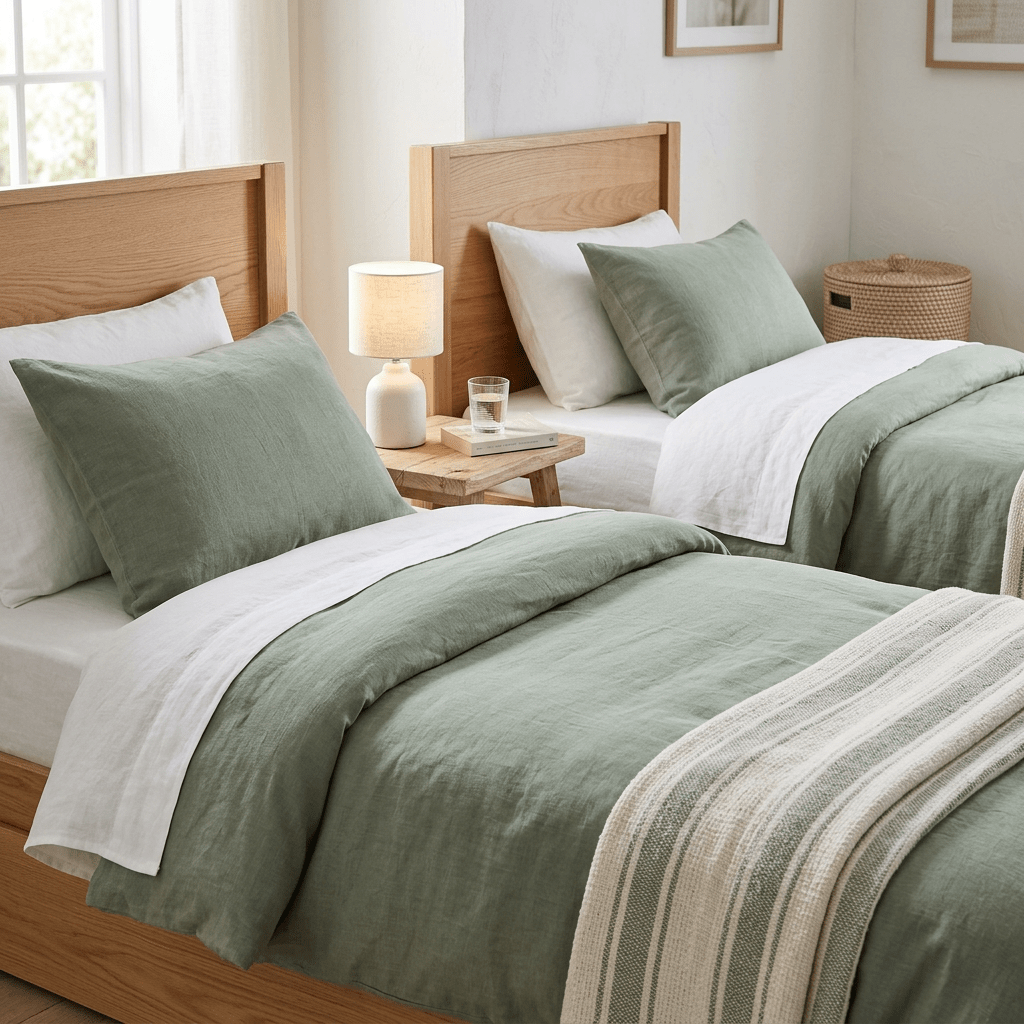
One Main Color Palette
For example:
- White
- Light gray
- Sage green
Then incorporate each child’s favorite colors through:
- Pillows
- Throws
- Artwork
- Rugs
- Decorative accessories
This approach feels intentional rather than divided.
Match Furniture, Not Accessories
When furniture styles are consistent, the room feels unified even if accessories differ.
Try using:
- Matching beds
- Matching dressers
- Matching desks
- Matching nightstands
The accessories can then showcase each child’s unique interests. This balance prevents the room from looking cluttered or mismatched.
Consider Symmetry
Symmetry naturally creates visual harmony.
Examples include:
- Two matching beds on opposite walls
- Matching lamps
- Identical bookshelves
- Coordinated curtains
Even when decorations differ, symmetrical layouts help the room feel balanced.
Use Shared Elements Throughout the Room
Repeating certain design elements ties everything together.
Examples:
Matching Textures
- Woven baskets
- Velvet pillows
- Cotton bedding
Matching Materials
- Wood furniture
- Black metal accents
- Rattan details
Matching Patterns
- Stripes
- Stars
- Polka dots
Using repeating elements creates a designer-inspired look.
Create a Shared Activity Area
Not every part of the room needs to be divided.
Consider creating a shared zone such as:
- Reading nook
- Craft station
- Homework desk
- Play corner
This common area encourages bonding while reinforcing the room’s cohesive design.
Let Each Child Help Design
One of the most important aspects of a shared bedroom is allowing each child to feel heard.
Create a simple decorating plan together:
- Choose the room’s base colors.
- Let each child select their bedding.
- Allow them to choose wall art.
- Give them control over accessories.
When children participate in the decorating process, they are more likely to appreciate and care for the space.
Avoid Theme Overload
While themed bedrooms can be fun, combining multiple themes often creates visual clutter.
Instead of fully themed rooms, use themed accents.
For example:
- A dinosaur pillow
- A princess-inspired lamp
- Sports artwork
- Space-themed bedding
This keeps the room looking stylish while still reflecting personal interests.
Focus on Function First
A beautiful room should also work well for everyday life.
Consider:
- Adequate storage
- Easy-to-clean surfaces
- Comfortable study areas
- Room for growth
Children’s interests change quickly, but a functional room can evolve with them.
The Beauty of Individuality
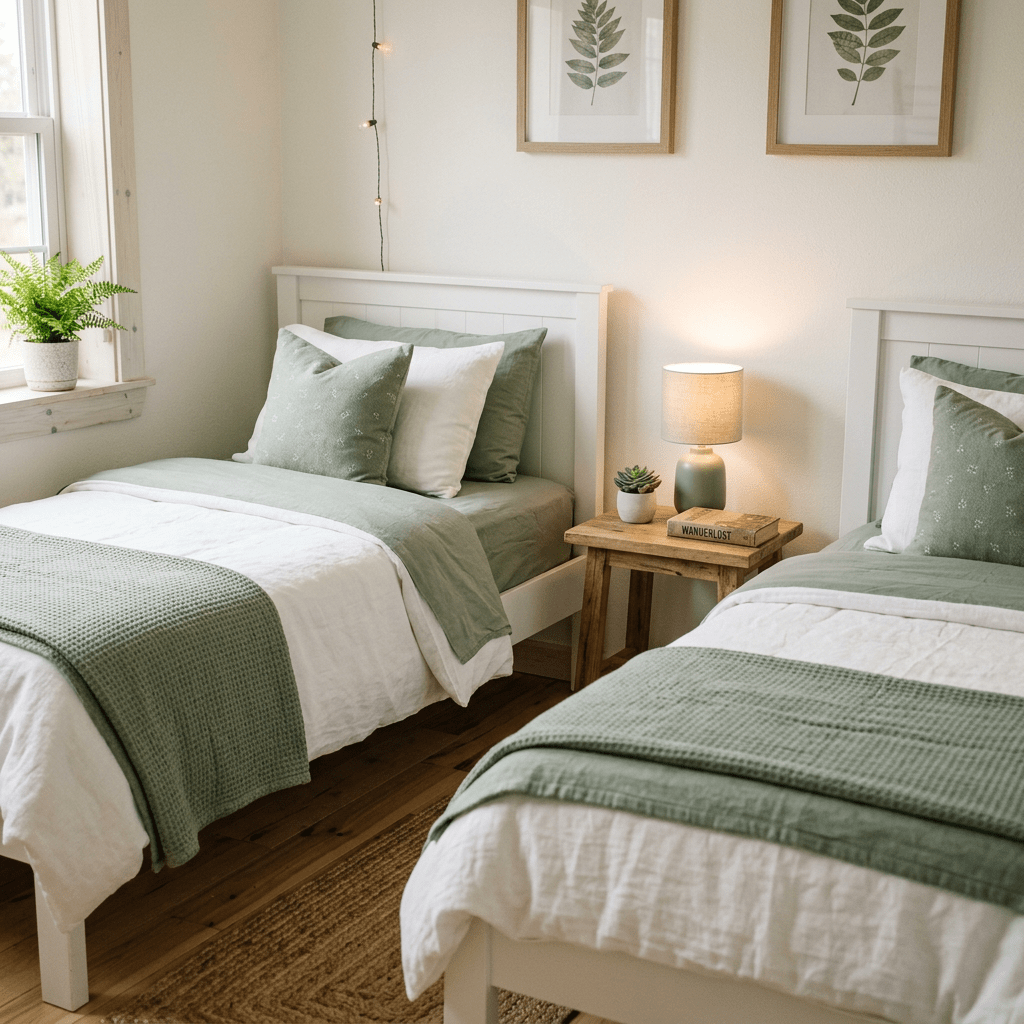
A shared bedroom doesn’t have to force siblings into the same style. In fact, some of the most charming children’s rooms celebrate individuality while maintaining overall harmony.
By using a neutral foundation, coordinating furniture, strategic color choices, and personalized accents, you can create a space where both children feel represented and comfortable.
The goal isn’t to make the room identical for both children—it’s to create a space where two unique personalities can coexist beautifully. When done thoughtfully, a shared bedroom becomes more than just a place to sleep. It becomes a reflection of family, creativity, and the wonderful differences that make each child special.
After all, great design isn’t about making everything match. It’s about making everything belong together.

 Discoveringlifellc
Leave a comment