
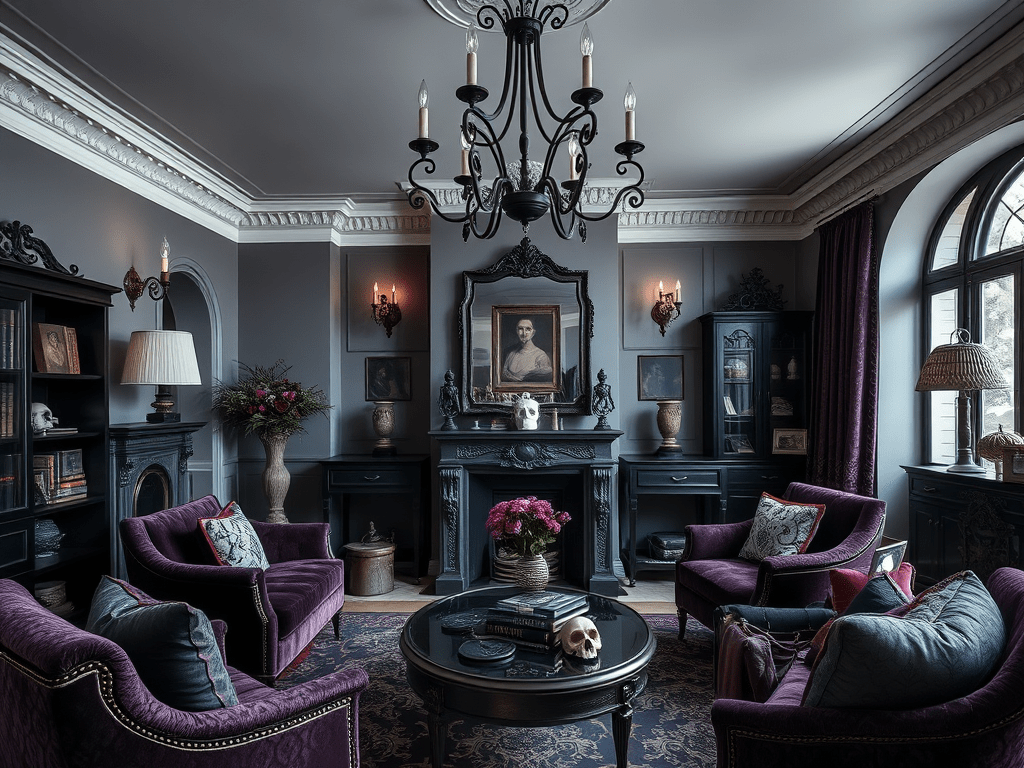
Goth style is often associated with dark, dramatic, and moody aesthetics, drawing inspiration from Gothic architecture, Victorian elements, and alternative subcultures. While the thought of incorporating goth style into your home may evoke images of pitch-black walls and heavy velvet drapes, it’s entirely possible to embrace this aesthetic without overwhelming your space. The key is balance and intention—creating a look that is darkly elegant rather than overly oppressive. Here’s how you can incorporate goth style into your home with finesse.

1. Start with a Subtle Base
To keep the goth aesthetic from dominating your space, begin with a neutral or lighter base. Shades like charcoal gray, deep plum, or muted navy can set a moody tone without feeling overbearing. You can even use lighter hues such as off-white or cream for contrast, allowing the goth elements to stand out as accents rather than overwhelming the space.
2. Focus on Key Materials
Materials play a significant role in goth-inspired decor. Incorporate:
- Velvet and Lace: Use these fabrics for curtains, throw pillows, or upholstery to evoke a rich, luxurious feel.
- Iron and Metalwork: Think wrought iron light fixtures, candleholders, or decorative elements with intricate designs.
- Dark Wood: Furniture in dark-stained wood—such as mahogany or ebony—adds a timeless and gothic touch.
- Glass and Crystal: Chandeliers, mirrors, or even small decor items can bring a dramatic and reflective quality to the room.
3. Curate Thoughtful Accents
Accents are where goth style can shine without dominating your space. Consider:
- Artwork: Choose pieces featuring Gothic architecture, moody landscapes, or dark, surreal imagery.
- Candles and Holders: Opt for black, deep red, or white taper candles in ornate holders.
- Books: Leather-bound or antique books can serve as both decor and functional pieces on shelves or coffee tables.
- Skulls, Ravens, and Bats: Use these motifs sparingly as thematic nods rather than turning your space into a Halloween set.
4. Play with Patterns
Introduce gothic-inspired patterns subtly through wallpaper, area rugs, or upholstery. Damask, baroque, or intricate floral designs in dark tones can add depth and texture. Pair these with solid-colored items to avoid overwhelming the room.
5. Layer Lighting
Lighting is essential to achieving a balanced goth aesthetic. Incorporate:
- Dramatic Fixtures: Think chandeliers or candelabra-inspired sconces.
- Layered Lighting: Use dimmable lamps, fairy lights, or LED candles to create a soft, moody glow.
- Accent Lighting: Highlight specific elements, such as art or architectural details, to add intrigue.
6. Use Color Strategically
While black is the hallmark of goth style, incorporating accent colors can keep the look from becoming too one-note. Deep reds, purples, emerald greens, and golds work beautifully as secondary colors, adding richness and variety to the palette.
7. Embrace Greenery
Adding plants can soften the intensity of goth decor. Opt for darker, dramatic plants like monstera, snake plants, or black succulents. Their organic shapes provide contrast to the structured elements of goth design while keeping the space vibrant.
8. Keep It Personal
A gothic-inspired home doesn’t have to be a carbon copy of a Victorian manor. Incorporate elements that reflect your personal style, whether it’s modern minimalism or eclectic bohemian. Blend pieces from different eras and styles to make the space truly your own.

Final Thoughts
Goth style in home decor is all about creating an atmosphere of mystery, elegance, and depth. By using a restrained approach and focusing on balance, you can incorporate gothic elements into your home without it feeling overwhelming. Whether it’s a single room or subtle touches throughout your home, embracing goth style can result in a space that is both unique and sophisticated.

 Discoveringlifellc
Leave a comment