
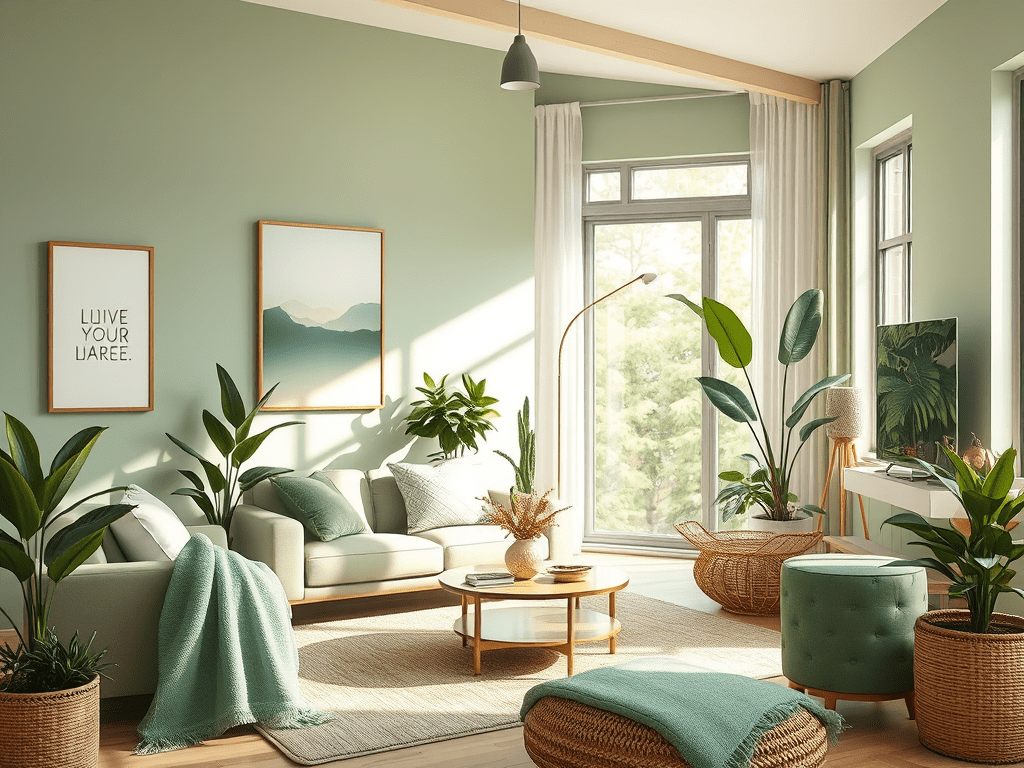
Green is one of the most calming and adaptable colors in interior design. It represents renewal, nature, and harmony — making it a perfect choice for creating a soothing home environment. But with so many shades of green to choose from, it can be tricky to know where to start or how to use the color without it taking over your space.

Let’s explore the different shades of green, how to incorporate them into your home, and some design inspiration to help you find the right balance.
Different Shades of Green
Green isn’t just “green” — it’s a spectrum that ranges from soft, muted tones to deep, dramatic hues. Here are some of the most popular shades and how they can influence the feel of a room:
- Sage Green: A soft, muted tone that’s perfect for modern farmhouse, minimalist, or Scandinavian-inspired spaces. Sage is subtle and relaxing, often used in kitchens, bedrooms, or bathrooms.
- Olive Green: Earthy and sophisticated, olive green pairs beautifully with neutrals and wood accents. It adds warmth and depth without being overwhelming.
- Emerald Green: Rich, luxurious, and bold — emerald brings drama and elegance to any space. It’s stunning on accent walls, velvet furniture, or statement decor pieces.
- Mint Green: Fresh and airy, mint gives rooms a light, uplifting feel. It works wonderfully in bathrooms, nurseries, or small kitchens.
- Forest Green: Deep and moody, this shade evokes a sense of coziness and connection to nature. It pairs well with natural textures like rattan, leather, and stone.
- Chartreuse: A lively mix between green and yellow, this shade adds vibrancy and energy to modern spaces. It works best as an accent color rather than a main hue.
How to Use Green in Your Home
Green can be incorporated in countless ways — from paint to furniture to accessories. The key is to choose the right shade and placement for your style and comfort level.
- Start Small:
If you’re new to using color, begin with green accessories — like throw pillows, curtains, or vases. This lets you introduce the shade without committing to a full wall or furniture piece. - Bring Nature Indoors:
Add indoor plants! They naturally introduce shades of green while improving your air quality and adding texture. Group a few different-sized plants together for a lush, balanced look. - Use Green as a Neutral:
Muted greens like sage and olive work almost like neutrals. They blend beautifully with beige, gray, and white, making them ideal for walls or cabinetry. - Incorporate Green in Patterns:
Floral prints, botanical wallpaper, or geometric designs that include green can add color and interest without feeling overpowering. - Paint an Accent Wall:
Choose one wall to highlight in a rich shade like emerald or forest green. Balance it with lighter neutrals or natural textures around the room.
Design Inspiration
- Living Room: Pair a deep emerald sofa with gold accents, cream walls, and a jute rug for a refined yet cozy space.
- Bedroom: Create a calming retreat with sage green walls, white bedding, and wooden furniture. Add a few leafy plants for a fresh touch.
- Kitchen: Olive or moss green cabinets with brass hardware and white marble countertops make for a timeless, elegant look.
- Bathroom: Go for mint or seafoam tiles paired with white fixtures and bamboo accessories for a spa-like atmosphere.
- Dining Area: Use green upholstered chairs around a wooden table, paired with a soft linen table runner in neutral tones.
How to Use Green Without Overpowering Your Home
Green is powerful, so balance is key. Here’s how to keep your space feeling fresh — not overwhelming:
- Mix with Neutrals: Pair greens with whites, grays, tans, and wood tones to keep the color grounded.
- Limit Your Palette: Choose one or two shades of green and stick to them throughout your space for consistency.
- Play with Texture: Combine green in different materials — velvet, ceramic, linen, or glass — to create depth without overdoing it.
- Use Lighting Wisely: Natural and warm lighting enhance green’s natural beauty. Harsh lighting can make it look too intense.

Final Thoughts
Green is the color of balance and renewal, making it a beautiful choice for any home. Whether you love the subtlety of sage or the richness of emerald, there’s a shade that can complement your style and bring your space to life.
The key is to start small, balance bold shades with neutrals, and let the natural inspiration of green guide your decor choices. When done right, green doesn’t just decorate your home — it rejuvenates it.

 Discoveringlifellc
Leave a comment