
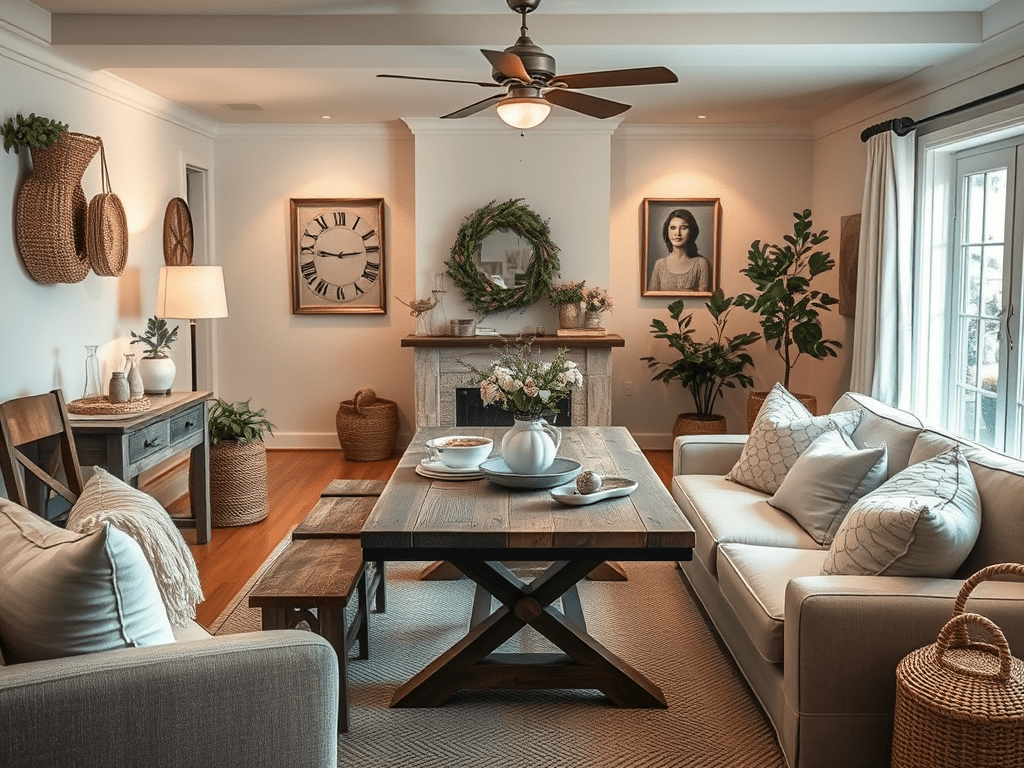
There’s something about farmhouse style that feels like an exhale. Like kicking off your shoes at the door, pouring a cup of coffee, and finally slowing down. I didn’t fall in love with farmhouse decor because it was trendy—I fell in love with how it made me feel. Calm. Grounded. At home. In a world that’s constantly rushing, farmhouse spaces remind us that home doesn’t have to be perfect to be beautiful. It just has to feel lived in, loved, and welcoming.
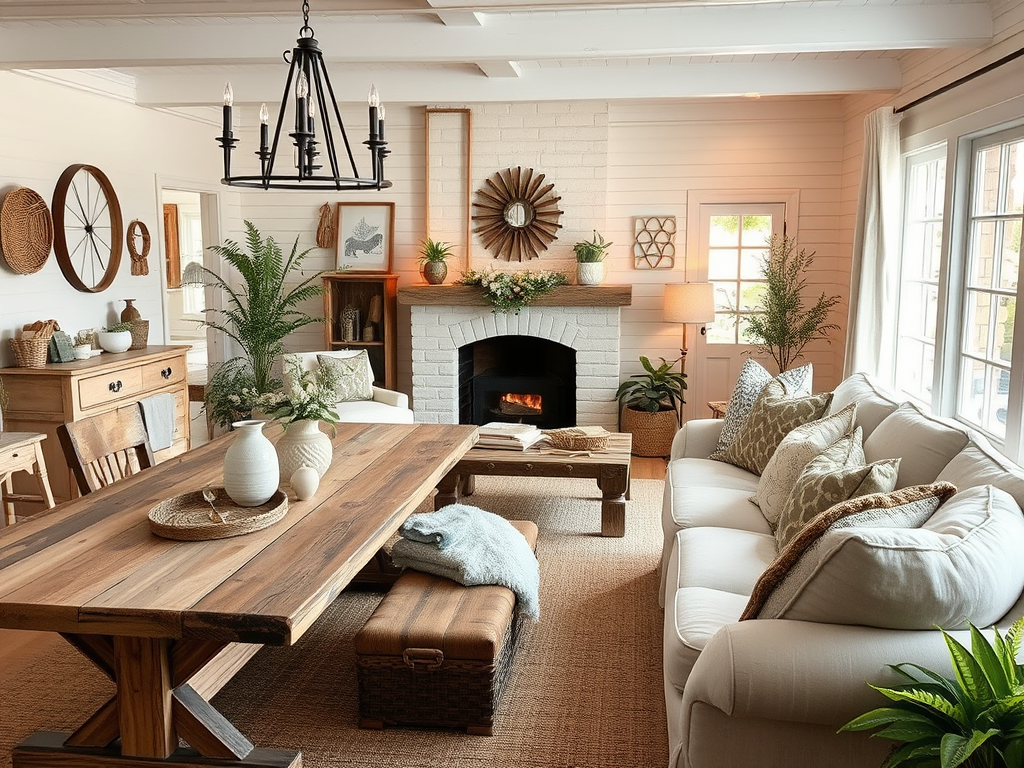
I remember walking into my space one day and realizing it didn’t reflect me anymore. It was styled, sure—but it didn’t feel warm. That’s when I started leaning into farmhouse touches: soft neutrals, natural textures, imperfect wood pieces, and decor that told a story instead of shouting for attention. Slowly, my home began to feel like a place meant for real life—messy mornings, quiet evenings, and moments worth remembering.
This blog is for anyone who wants their home to feel like a sanctuary, whether you’re decorating a house, an apartment, or just one small corner of your life. Farmhouse style isn’t about rules—it’s about intention. It’s about creating a space that welcomes you back every single day and gently reminds you that comfort, warmth, and beauty can exist all at once.
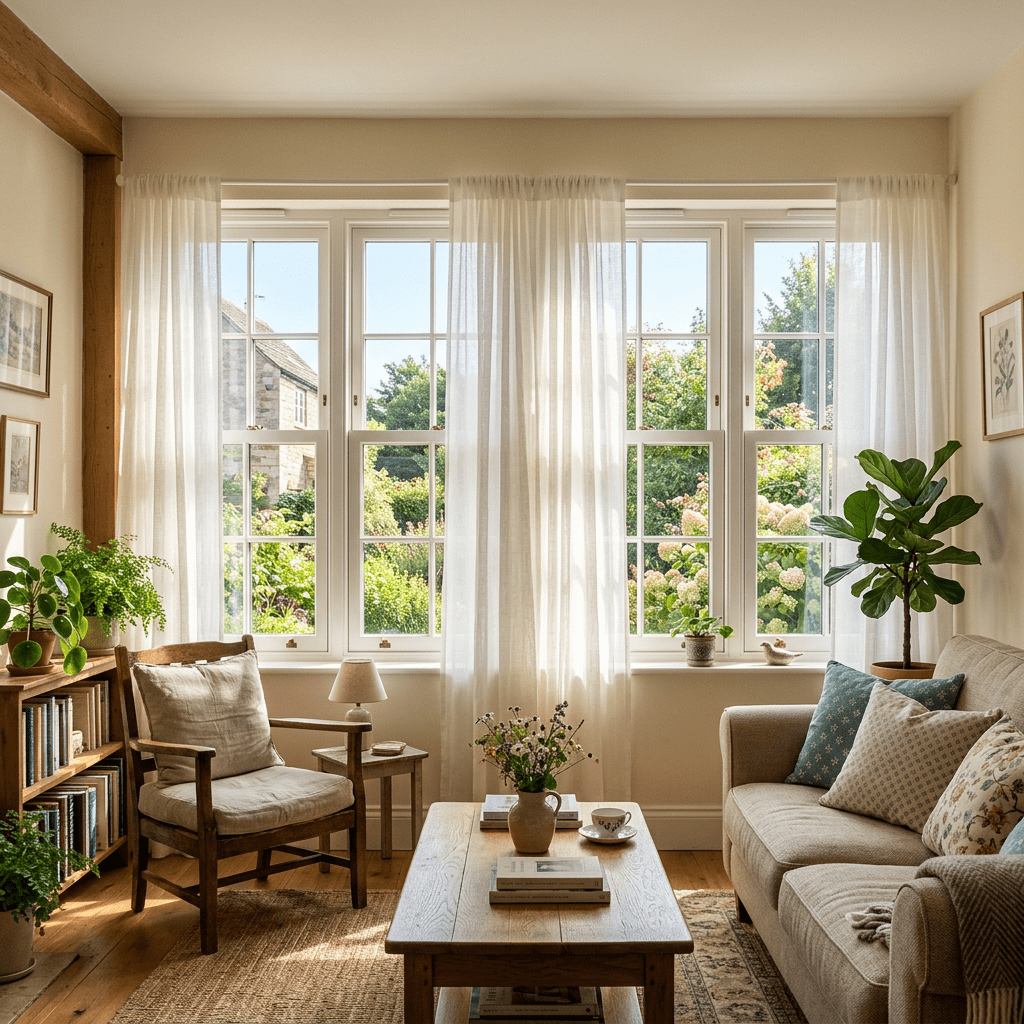
Farmhouse style isn’t about perfection—it’s about warmth, comfort, and a space that feels lived-in and loved. Think cozy textures, natural materials, and a mix of old and new that tells a story. The good news? You don’t need a farmhouse or a big renovation budget to pull it off.
Let’s break it down step by step.
Step 1: Start With a Neutral Foundation
Farmhouse spaces feel calm and inviting because they rely on soft, neutral color palettes.
Key colors to use:
- Warm whites
- Creams
- Soft grays
- Greige or light beige
- Muted earth tones
In a Home:
Paint main living areas a warm white or light neutral to create a clean backdrop. Use this consistency throughout open spaces like the kitchen, dining, and living room.
In an Apartment:
If you can’t paint, use neutral furniture, curtains, and rugs to create the same effect. Slipcovers, removable wallpaper, and neutral throws go a long way.
Step 2: Choose Furniture With Character
Farmhouse style loves furniture that feels sturdy, timeless, and slightly imperfect.
Look for:
- Wood furniture (natural, distressed, or whitewashed)
- Simple silhouettes
- Vintage-inspired or rustic pieces
In a Home:
A large farmhouse dining table, a wood coffee table, or a bench with visible grain instantly anchors the space.
In an Apartment:
Scale is key. Choose smaller wood pieces like a compact dining table, a console table, or accent chairs with wood legs to avoid overcrowding.
Step 3: Layer Natural Textures
Texture is what makes farmhouse spaces feel cozy instead of plain.
Textures to include:
- Linen
- Cotton
- Jute
- Wicker
- Wood
- Metal accents (black or aged bronze)
In a Home:
Layer rugs (like a jute rug under a patterned one), add chunky knit throws, and use wood beams or shiplap if available.
In an Apartment:
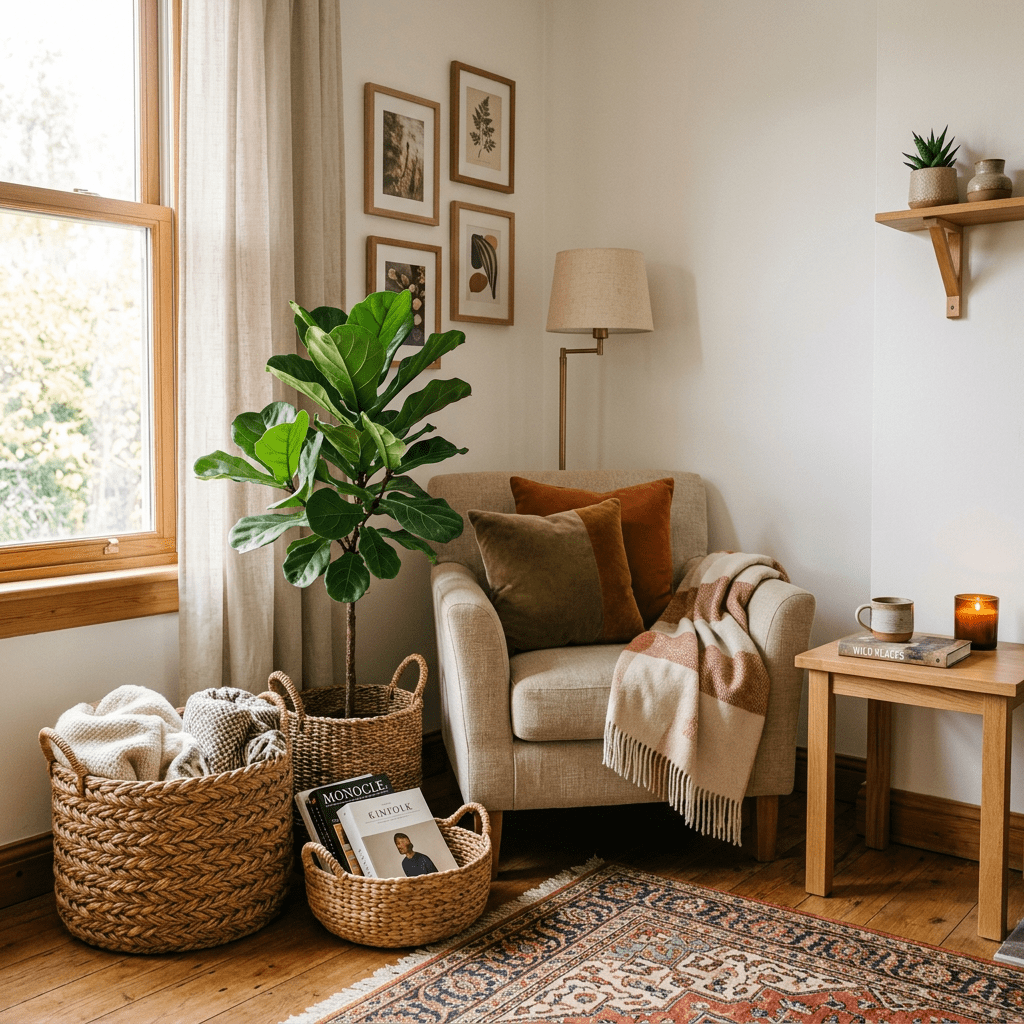
Add texture through pillows, baskets, wall hangings, and rugs. Even one jute rug or woven basket can change the entire feel of a room.
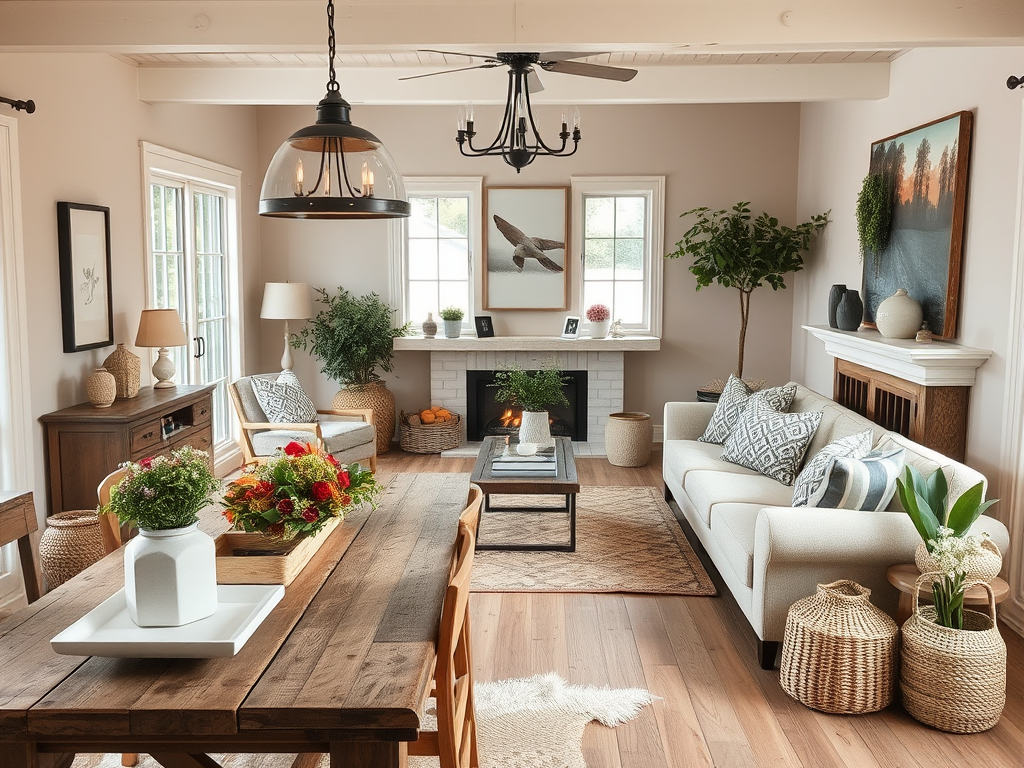
Step 4: Add Farmhouse Decor (Less Is More)
Decor should feel meaningful—not cluttered.
Farmhouse decor staples:
- Ceramic vases
- Wooden trays
- Antique-style frames
- Simple wall art
- Glass jars or lanterns
In a Home:
Use open shelving to display curated decor in kitchens or living rooms. Style entryway tables with trays, greenery, and a statement mirror.
In an Apartment:
Focus on vertical space—floating shelves, wall art, or mirrors—to decorate without sacrificing floor space.
Step 5: Bring in Greenery
Nothing softens a farmhouse space like plants.
Great options:
- Faux olive trees
- Eucalyptus stems
- Simple potted plants
- Dried florals
In a Home:
Use larger plants in corners and smaller arrangements on tables or shelves.
In an Apartment:
Stick to low-maintenance or faux greenery. One statement plant can make a small space feel fresh and styled.
Step 6: Use Farmhouse-Style Lighting
Lighting plays a huge role in creating that cozy farmhouse glow.
Popular farmhouse lighting:
- Black metal fixtures
- Lantern-style pendants
- Warm bulbs
- Table and floor lamps
In a Home:
Swap builder-grade fixtures for farmhouse pendants or chandeliers in dining and kitchen spaces.
In an Apartment:
Use lamps—lots of them. Table lamps, floor lamps, and even battery-operated wall sconces add warmth without permanent changes.
Step 7: Add Personal, Lived-In Touches
This is where farmhouse style truly comes to life.
Ideas:
- Family photos in simple frames
- Vintage books
- Handmade or thrifted items
- Cozy blankets and pillows
In a Home:
Create moments—like a reading nook, a styled mantel, or a welcoming entryway.
In an Apartment:
Personal touches matter even more in small spaces. A styled coffee table, a cozy couch setup, or a thoughtfully decorated bedroom makes the space feel like home.
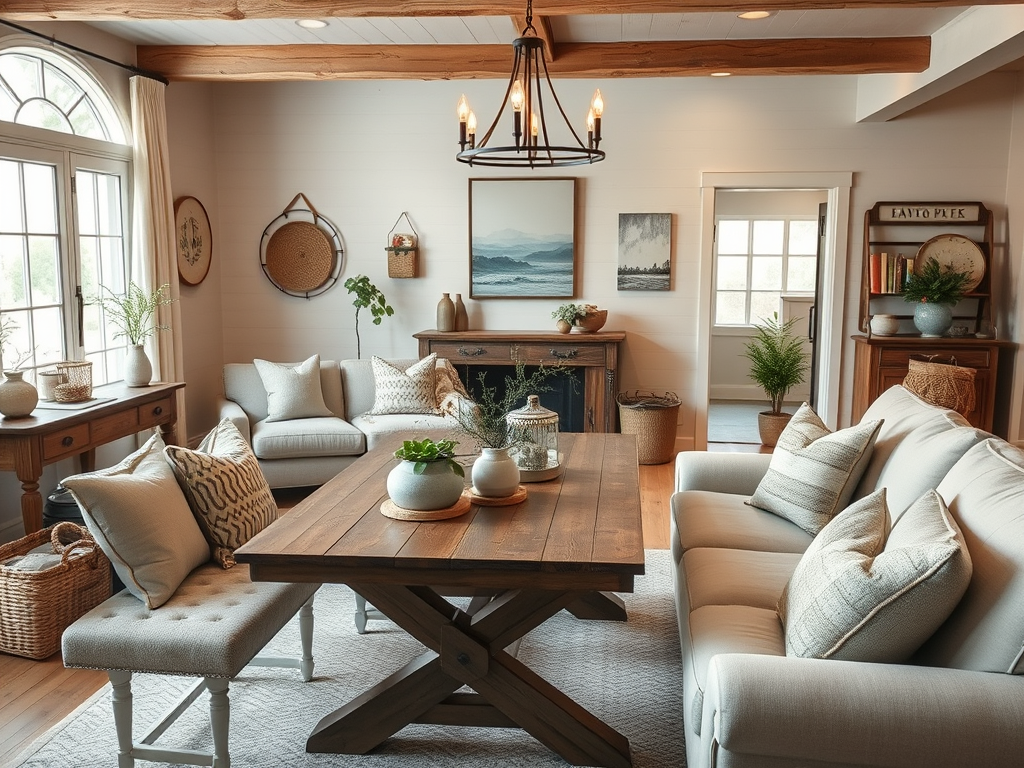
Final Thoughts: Farmhouse Style Is a Feeling
Farmhouse decorating isn’t about copying a picture—it’s about creating a space that feels warm, welcoming, and real. Whether you’re decorating a house or an apartment, the heart of farmhouse style stays the same: comfort, simplicity, and intention.
Start small. Layer slowly. Choose pieces you love.
That’s how farmhouse style becomes your style
 Discoveringlifellc
Leave a comment