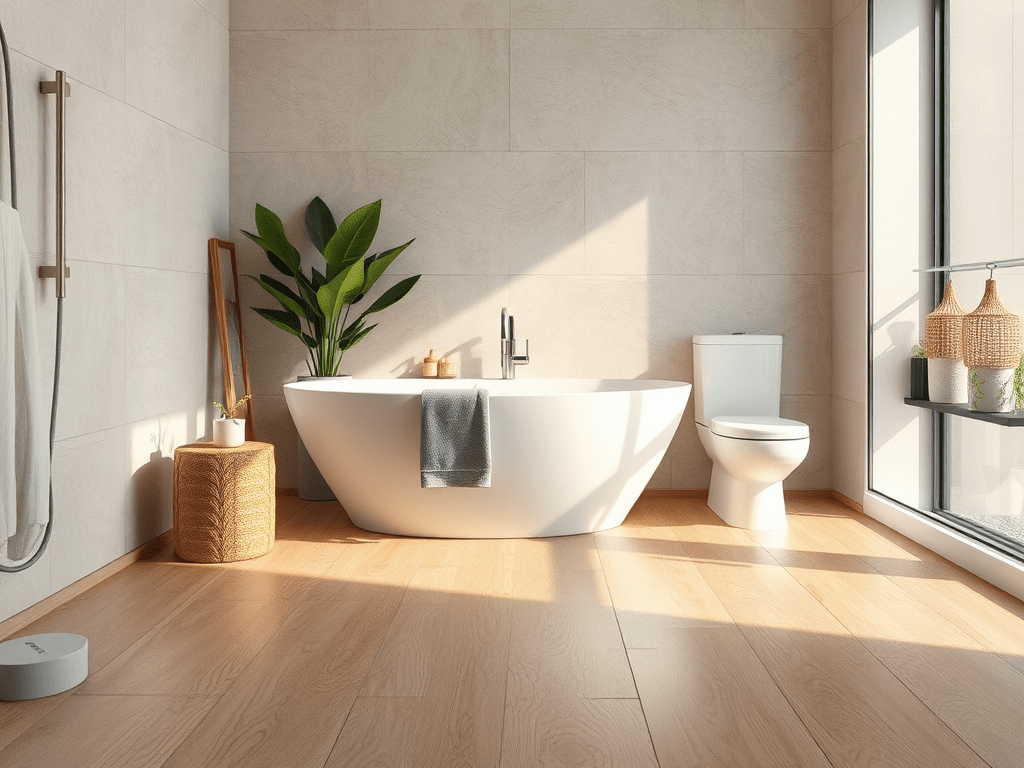
Why Invest in a Bathroom Floor Upgrade?


Bathrooms are high-moisture, high-traffic zones, so the flooring you choose really matters. The right material can:

  • Prevent water damage
  • Resist mold and mildew
  • Be comfortable underfoot
  • Elevate the style of a small space

But doing a full flooring makeover doesn’t have to mean hiring pros or blowing your budget.


Step 1: Pick the Right Material

Here are some of the best flooring options for a bathroom remodel — especially for DIYers — along with pros, cons, and when they make sense.

Luxury Vinyl (LVP / LVT)

One of the top picks for bathroom use. (GoFlooring)

  • Pros: 100% waterproof when you choose the right products. (byretreat.com)
  • Feel: Softer and warmer than tile. (Arko Flooring)
  • Installation: Click-lock or glue-down makes it very DIY-friendly. (DareKaou Floor)
  • Durability: With quality installation, can last a long time. (Some vinyl lasts 10–20 years.) (Better Homes & Gardens)

Peel-and-Stick Vinyl Tiles

  • Very DIY friendly; especially good for quick upgrades. (DexDecor)
  • Seamless, water-resistant designs. (byretreat.com)
  • Cost-effective and works over many subfloors.

Sheet Vinyl

  • Comes in large rolls, minimizing seams. (ClingTiles –)
  • Fewer joints = fewer places for water to seep in.
  • Comfortable underfoot and relatively inexpensive.

Ceramic or Porcelain Tile

  • Extremely water-resistant. (Coohom)
  • Very durable, but requires more skill for tile layout, grout, sealing, etc. (Coohom)
  • Grout lines must be sealed to prevent moisture intrusion. (America\’s Dream HomeWorks)

Other Options (if you’re feeling adventurous)


Step 2: Prep & Waterproofing — Don’t Skip This

Good prep is everything. Here’s a step-by-step for setting up your floor so it lasts.

  1. Remove Old Flooring (If Needed):
    If you’re ripping out old tile or vinyl, get down to a clean, stable subfloor.
  2. Level & Clean the Subfloor:
    Make sure it’s even — bumps or dips will cause problems later.
  3. Seal Seams & Joints:
    Use mesh tape at seams, especially where walls meet floors. (America\’s Dream HomeWorks)
  4. Apply a Liquid Waterproofing Membrane:
    Products like RedGard or other bathroom-rated membranes help protect your subfloor. (America\’s Dream HomeWorks)
  5. Edge Details:
    Once the flooring is in, caulk all the edges (floor-to-wall, around tub, etc.) with 100% silicone so water can’t sneak underneath. (America\’s Dream HomeWorks)
  6. Grout if Using Tile:
    After tile is down, seal the grout so it doesn’t absorb water. Re-seal annually. (America\’s Dream HomeWorks)

Step 3: Install the Flooring

How you install depends on your material:

  • Click-Lock LVP / LVT: These planks or tiles snap together. Great for DIY because you don’t need to mess with messy adhesives.
  • Glue-Down Vinyl: Needs a strong, even subfloor and adhesive, but gives a very solid, permanent feel.
  • Peel-and-Stick: Just peel off the backing and press into place! But make sure your floor is totally clean.
  • Sheet Vinyl: You’ll need to roll it out, trim to fit, and carefully secure it around edges.

As you finish, replace things like the toilet wax ring (if needed), and caulk around baseboards and plumbing fixtures. (Coohom)


Step 4: Care & Maintenance

  • Wipe up standing water quickly — don’t let puddles sit. (Coohom)
  • Use mild, non-abrasive cleaners so you don’t damage the flooring. (Coohom)
  • Check and re-caulk or re-seal grout lines as needed (especially in tile) to prevent water damage. (America\’s Dream HomeWorks)

Step 5: Stylish Product Picks (DIY-Friendly)

Here are some flooring products you can buy now, with different styles and budgets:

Lifeproof Marble LVP

Durable stone look

$58.13

Lifeproof Navarra Maple Plank

Classic wood plank

$66.12

Pergo Rome Marble LVT

Stone look luxury

$71.80

Shaw Rocklyn Tile Click‑Lock

Textured stone tile

$66.33

Mystic Marble Peel-and-Stick

Easy stick‑down marble

$1.38

Seashore Peel-and-Stick Tile

Budget tile stick

$29.00

Moroccan Tile Sheet Vinyl

Patterned vintage

$96.23

White Wood‑Effect Sheet Vinyl

Bright wood look

$137.63

Here are a few highlights and why you might pick them:


Design Tips for Your New Bathroom Floor

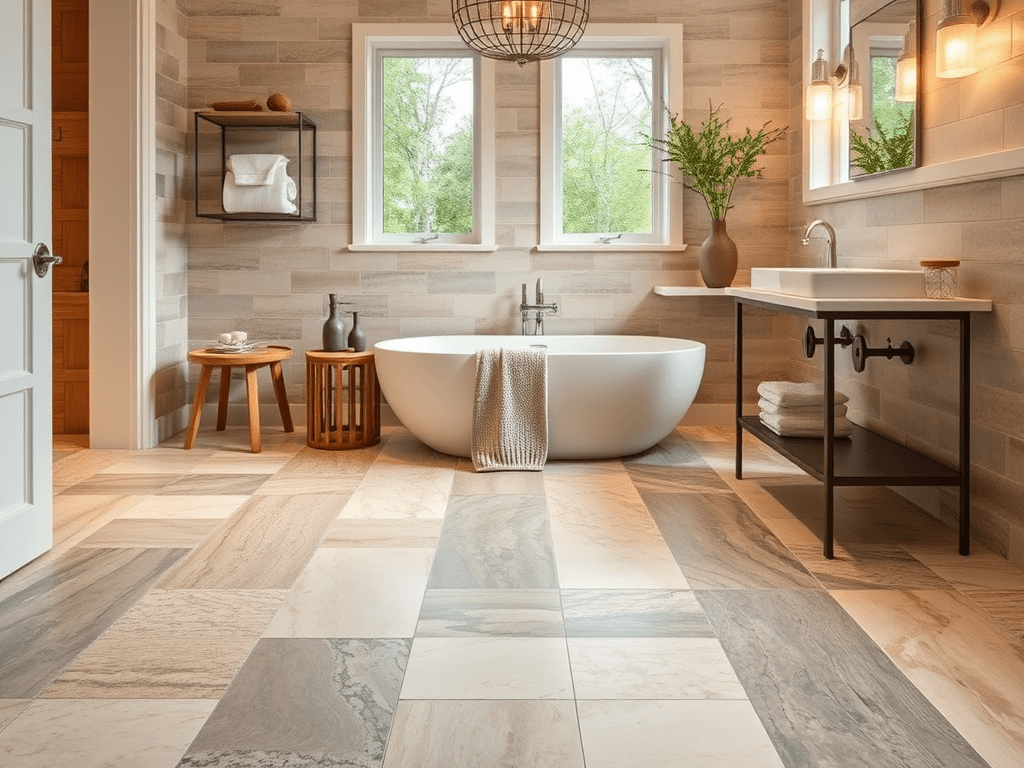
  • Go Large to Make the Space Feel Bigger: Bigger planks or large-format tiles help visually stretch a small bathroom.
  • Stick to a Cohesive Palette: If your walls or vanity are patterned or bold, pick a neutral, complementary floor.
  • Add Rugs or Mats: Use non-slip bath mats where needed — especially near tubs.
  • Mix Textures: Combine glossy tile-look flooring with matte wall finishes or painted walls for contrast.

Final Thoughts

Upgrading your bathroom floor yourself can be one of the most cost-effective and transformative DIY projects. With the right waterproof materials, solid prep, and a few smart design choices, you can get a floor that looks professional — without paying for pro labor.

If you’re ready to start: measure your bathroom, pick a water-safe product, and plan for at least one full weekend (or more) depending on the complexity. And don’t skip the waterproofing steps — they’ll pay off in longevity.


How to Choose the Right Rugs for Your Bathroom


When it comes to bathroom decor, rugs are often one of the most overlooked elements — yet they can make a huge difference in both comfort and style. The right bathroom rug not only adds warmth and texture but also provides safety, absorbs water, and ties your entire design together. Whether your bathroom has a spa-like aesthetic or a minimalist look, choosing the right rug requires a little thought about materials, function, and style.

Let’s break down how to choose the perfect bathroom rug, the different types available, why they’re worth adding to your space, and some of the best brands on the market.


Why People Choose Bathroom Rugs

Bathroom rugs serve several purposes beyond just looking pretty. Here’s why they’re so popular:

  1. Comfort: Stepping out of the shower or tub onto a soft, plush rug is a luxurious feeling — especially on cold mornings.
  2. Safety: Rugs help prevent slips on wet tile or vinyl floors.
  3. Absorbency: High-quality bathroom rugs soak up excess water, helping keep your floors dry and mold-free.
  4. Design & Warmth: Rugs add color, texture, and coziness to a space that can otherwise feel sterile.
  5. Noise Reduction: They help muffle sound, creating a quieter and more relaxing atmosphere.

The Different Types of Bathroom Rugs

Bathroom rugs come in a variety of materials and styles — each offering its own benefits. Here are the most common types:

1. Cotton Rugs

  • Pros: Soft, absorbent, and easy to wash.
  • Best For: Everyday use in family bathrooms.
  • Style Tip: Choose colorful cotton rugs to add a cheerful pop to your bathroom decor.

2. Microfiber Rugs

  • Pros: Extremely soft and quick-drying. Microfiber holds water well without feeling soggy.
  • Best For: High-traffic bathrooms or those without great ventilation.
  • Style Tip: Opt for a thick microfiber mat near the shower for maximum comfort and absorbency.

3. Memory Foam Rugs

  • Pros: Plush and cushioned, offering a spa-like experience underfoot.
  • Best For: Master bathrooms or anyone who loves extra comfort.
  • Style Tip: Pair with neutral tones and candles to enhance the “at-home spa” vibe.

4. Bamboo or Teak Bath Mats

  • Pros: Non-slip, eco-friendly, and resistant to moisture.
  • Best For: Modern, minimalist, or coastal-style bathrooms.
  • Style Tip: Use bamboo mats near the tub and pair with woven baskets or natural accessories.

5. Chenille Rugs

  • Pros: Super soft with a thick texture, excellent water absorption.
  • Best For: Busy households with frequent use.
  • Style Tip: Choose solid neutrals for a classic look or patterned options for a touch of fun.

6. Quick-Dry or Anti-Fatigue Mats

  • Pros: Great for those who prioritize functionality. Some models use diatomaceous earth or special foam that dries instantly.
  • Best For: Households that want clean, hygienic flooring with minimal maintenance.

How to Choose the Right Bathroom Rug

When selecting the best rug for your bathroom, keep these factors in mind:

  1. Size & Placement
    • Measure your space before buying. Common placements include in front of the sink, tub, or shower.
    • Consider sets if you want matching pieces for different zones.
  2. Material
    • Cotton and microfiber are best for absorbency.
    • Memory foam offers comfort.
    • Bamboo or teak are ideal for style and durability.
  3. Maintenance
    • Choose machine-washable rugs for easy care.
    • Look for non-slip backing to prevent accidents.
  4. Style & Color
    • Match your rug to your bathroom theme — whether it’s modern, boho, coastal, or minimalist.
    • Neutral colors keep things calm, while bold patterns make a statement.
  5. Durability & Drying Time
    • If your bathroom sees daily use, opt for quick-drying materials that can handle moisture without mildewing.

Top Bathroom Rug Brands on the Market

When it comes to quality and style, these brands consistently get high marks from homeowners:

  1. Utopia Towels – Affordable, plush, and easy to wash cotton sets.
  2. Gorilla Grip – Known for their durable, non-slip backing and wide color selection.
  3. H.VERSAILTEX – Offers stylish, machine-washable rugs in a variety of colors and textures.
  4. LuxUrux – Memory foam rugs with a soft, spa-like feel and quick-drying capability.
  5. Brooklinen – A luxury option that pairs minimalist style with high-quality materials.
  6. BambooMN – Perfect for natural-style bathrooms, offering eco-friendly bamboo and teak mats.
  7. MAYSHINE – Highly rated for their microfiber rugs that stay in place and dry quickly.

Final Thoughts

Bathroom rugs may seem like a small detail, but they can transform your bathroom from simple to sophisticated — or from cold to cozy. Whether you prefer the soft touch of cotton, the modern look of bamboo, or the comfort of memory foam, there’s a perfect rug to match your bathroom’s personality.

When chosen thoughtfully, a bathroom rug isn’t just a functional accessory — it’s a finishing touch that brings your space together.


Finding the Best Shower Head for Your Home


Upgrading your shower head may seem like a small change, but it can completely transform your bathroom experience. Whether you’re aiming for a spa-like escape, a water-saving upgrade, or just a simple replacement, the right shower head makes all the difference. With so many options available, it’s important to understand the different types, functions, and trusted brands before making a purchase.


Types of Shower Heads

  1. Fixed Shower Heads
    • Mounted directly to the wall.
    • Simple, reliable, and often budget-friendly.
    • Perfect for those who want a no-fuss option.
  2. Handheld Shower Heads
    • Attached to a hose for flexibility.
    • Great for rinsing, cleaning the shower, or bathing kids and pets.
    • Often comes with multiple spray settings.
  3. Dual Shower Heads
    • Combines a fixed head and a handheld unit.
    • Offers versatility—you can use one or both at the same time.
  4. Rain Shower Heads
    • Typically mounted on the ceiling or high wall arm.
    • Provides a gentle, wide water flow that mimics rainfall.
    • Creates a spa-like experience.
  5. High-Pressure Shower Heads
    • Designed to boost water flow.
    • Ideal for homes with low water pressure.
  6. Filtered Shower Heads
    • Built-in filters remove chlorine, minerals, and impurities.
    • Helpful for people with sensitive skin or hair concerns.
  7. Smart Shower Heads
    • Equipped with Bluetooth speakers, LED lighting, or digital temperature controls.
    • Perfect for tech enthusiasts who want to modernize their bathroom.

Functions of a Shower Head

Modern shower heads come with a variety of features to enhance your shower:

  • Spray Settings – Options like full body spray, massage, mist, and pulse.
  • Water-Saving Mode – Low-flow technology designed to reduce water use without sacrificing pressure.
  • Adjustable Angles – Tilt or rotate the head to customize your spray direction.
  • Pause Function – Allows you to temporarily stop water flow (great for shaving or lathering up).
  • LED Lighting – Some shower heads change color with water temperature or create ambiance.

Popular Shower Head Brands

When it comes to shower heads, some brands consistently stand out for their durability, style, and performance:

  1. Moen
    • Known for stylish designs and advanced features.
    • Recommended Option: Moen Engage Magnetix Handheld Shower Head – features magnetic docking and multiple spray settings.
  2. Kohler
    • Offers sleek, modern designs with innovative spray technology.
    • Recommended Option: Kohler Forte Multifunction Shower Head – strong spray performance and easy installation.
  3. Delta
    • Popular for versatility and affordable options.
    • Recommended Option: Delta In2ition 2-in-1 Shower Head – combines handheld and fixed shower in one.
  4. Hansgrohe
    • Premium European brand known for luxury fixtures.
    • Recommended Option: Hansgrohe Raindance Select – spa-like rainfall with multiple spray modes.
  5. Waterpik
    • Famous for high-pressure shower heads.
    • Recommended Option: Waterpik High-Pressure PowerPulse Massage Shower Head – excellent for muscle relief.
  6. Speakman
    • Often used in hotels for powerful water flow.
    • Recommended Option: Speakman Anystream Icon – classic, durable, and adjustable spray patterns.

Final Thoughts

When choosing a shower head, think about your bathroom setup, your water pressure, and the experience you want. If you crave luxury, a rain shower head might be your best bet. If practicality is key, a handheld or dual shower head may be ideal. And if water conservation is a priority, look for WaterSense-certified models.

A shower is one of the most refreshing parts of the day—why not make it something you truly look forward to?


Choosing the Right Bed Frame for Your Mattress: A Complete Guide


A bed frame does more than just hold your mattress — it supports your comfort, extends the life of your mattress, and plays a major role in the overall style of your bedroom. But if you’ve already chosen the perfect mattress and find yourself stuck on which frame to choose, don’t worry. We’ll walk through how to pick the right frame, explore different style options, and match them to the mattresses they suit best.

Step 1: Match the Frame to Your Mattress Size & Type

Before thinking about aesthetics, you’ll need to focus on compatibility.

  • Size matters: If your mattress is queen-size, your frame should be built for a queen — no exceptions. Even a small mismatch can cause poor support or mattress slippage.
  • Mattress type matters too:
    • Memory foam & latex: These require solid support, so choose a frame with either a solid platform base or slats spaced no more than 3 inches apart.
    • Hybrid mattresses: Typically heavier, hybrids do well on sturdy platform frames or adjustable bases.
    • Innerspring mattresses: These work well with most frames, especially those with box springs or slatted designs.

Step 2: Decide on the Functionality You Need

Ask yourself: Is storage important? Do you want a minimal look? Are you planning to move the bed often?

  • Need extra storage? Go for a storage bed frame with built-in drawers or lift-up under-bed compartments.
  • Want flexibility? A simple metal frame on wheels makes moving easier.
  • Prefer a minimal aesthetic? Platform beds or low-profile frames keep things sleek.

Step 3: Explore the Different Bed Frame Options

Here are the most common styles and why they might be right for you:

  1. Platform Bed
    • Best for: Memory foam, latex, hybrid mattresses
    • Why it works: Offers a sturdy, flat surface (slatted or solid) that doesn’t require a box spring. Perfect for a modern, minimal look.
  2. Panel Bed
    • Best for: Innerspring or hybrid mattresses (often with a box spring)
    • Why it works: Comes with both a headboard and footboard, offering a traditional, cozy style. Works well in classic or farmhouse interiors.
  3. Sleigh Bed
    • Best for: Innerspring or hybrid mattresses
    • Why it works: The curved headboard and footboard create a statement piece. Great if you want a more luxurious, traditional bedroom.
  4. Adjustable Base
    • Best for: Memory foam, latex, or hybrid mattresses
    • Why it works: Allows you to raise or lower the head and foot for comfort, reading, or health reasons (like easing acid reflux).
  5. Storage Bed (Ottoman or Drawer)
    • Best for: Small spaces, apartments
    • Why it works: Maximizes storage without sacrificing comfort. Ideal for keeping extra bedding or seasonal clothes out of sight.
  6. Metal Bed Frame
    • Best for: Any mattress type (with proper support)
    • Why it works: Lightweight, often more affordable, and works as a foundation for other styles if you want to add a headboard later.
  7. Canopy or Four-Poster Bed
    • Best for: Innerspring or hybrid mattresses
    • Why it works: Adds height and drama. Perfect for larger rooms or creating a romantic, luxurious atmosphere.

Step 4: Style Considerations

If you’re stuck on what style to choose:

  • Match your decor: Minimalist home? Go for a simple platform. Traditional or rustic? Choose a panel or sleigh bed.
  • Think about headboard height: Higher headboards make a statement but can overwhelm small rooms.
  • Consider materials: Wood for warmth, metal for modern industrial, upholstered for softness and luxury.

Step 5: Don’t Forget Practical Details

  • Check weight capacity: Heavier mattresses need stronger frames.
  • Measure your space: Some frames add bulk — be sure your room can handle it.
  • Assembly: If you’re not handy, choose a frame that’s easy to assemble or comes with professional setup.

Bottom line: Choosing the right bed frame isn’t just about looks — it’s about support, functionality, and matching your lifestyle. If you already have your mattress, start with the basics (size and support needs) and then choose a style that complements your space. The right frame will not only keep your mattress in top shape but also turn your bedroom into a place you truly love.


Shower or Bathtub: Which One is Right for Your Bathroom?


Discover What Works Best for Your Space

When it comes to bathroom design, one of the biggest decisions homeowners face is whether to install a shower, a bathtub—or both. It might seem like a simple choice, but this decision can impact your home’s style, functionality, and even resale value. So, let’s dive into the pros and cons of showers vs. bathtubs and help you decide what’s best for your space and lifestyle.


The Shower: Sleek, Efficient, and Modern

Showers have become the go-to option for many homeowners, especially in homes where space is at a premium or the bathroom needs a modern, minimalist touch.

Pros of a Shower:

  • Saves Space: Great for small bathrooms or en-suites.
  • Quick and Convenient: Perfect for busy mornings.
  • Water Efficient: Uses less water than most traditional bathtubs.
  • Accessible: Walk-in showers with no threshold are ideal for aging in place or for anyone with mobility issues.
  • Modern Appeal: Frameless glass doors and rain showerheads add an elegant, spa-like feel.

Cons of a Shower:

  • No Soaking Option: If you love to soak, a shower might feel like it’s missing something.
  • Less Kid-Friendly: Bathing young children can be trickier in a shower.
  • Lower Resale Appeal (sometimes): Families often look for homes with at least one bathtub.

The Bathtub: Classic Comfort and Relaxation

Bathtubs offer a nostalgic, luxurious feel. Whether it’s a freestanding clawfoot tub or a deep soaking tub, bathtubs can create a relaxing escape within your home.

Pros of a Bathtub:

  • Ideal for Relaxation: A long soak in warm water is therapeutic for both body and mind.
  • Great for Kids: Easier for bathing toddlers and small children.
  • Higher Resale Value in Some Markets: Homes with at least one tub are often more appealing to families.
  • Variety of Styles: Freestanding, alcove, corner, whirlpool—lots of options for different aesthetics.

Cons of a Bathtub:

  • Takes Up More Space: Not always ideal for small bathrooms.
  • Uses More Water: Less eco-friendly than a quick shower.
  • Not as Accessible: Climbing in and out can be difficult for some people.
  • Slower Experience: Not the best choice if you’re always in a rush.

Shower or Bathtub: What’s Right for Your Home?

When deciding between a shower or a bathtub, ask yourself the following:

  • How much space do I have? If you’re limited on square footage, a shower may be more practical.
  • Who lives in the home? Families with young kids may prefer a tub, while singles or couples may lean toward a sleek shower.
  • How do I relax? If baths are your go-to for stress relief, a tub might be non-negotiable.
  • Am I planning to sell soon? Think about what will appeal to future buyers in your market.
  • What style do I love? Showers can feel high-end and modern; bathtubs bring charm and tradition.

The Best of Both Worlds?

If space and budget allow, having both a shower and a tub gives you flexibility and boosts your home’s value. A popular option is the shower-tub combo, which combines practicality and comfort, especially in smaller bathrooms. For luxury bathrooms, a separate walk-in shower and freestanding tub is the dream.


So, What Do You Prefer?

Are you or ? Let us know in the comments! And if you’re planning a bathroom renovation, take time to think about how your space works for you—not just what looks good in a magazine. After all, your bathroom should be a place of both function and peace.