
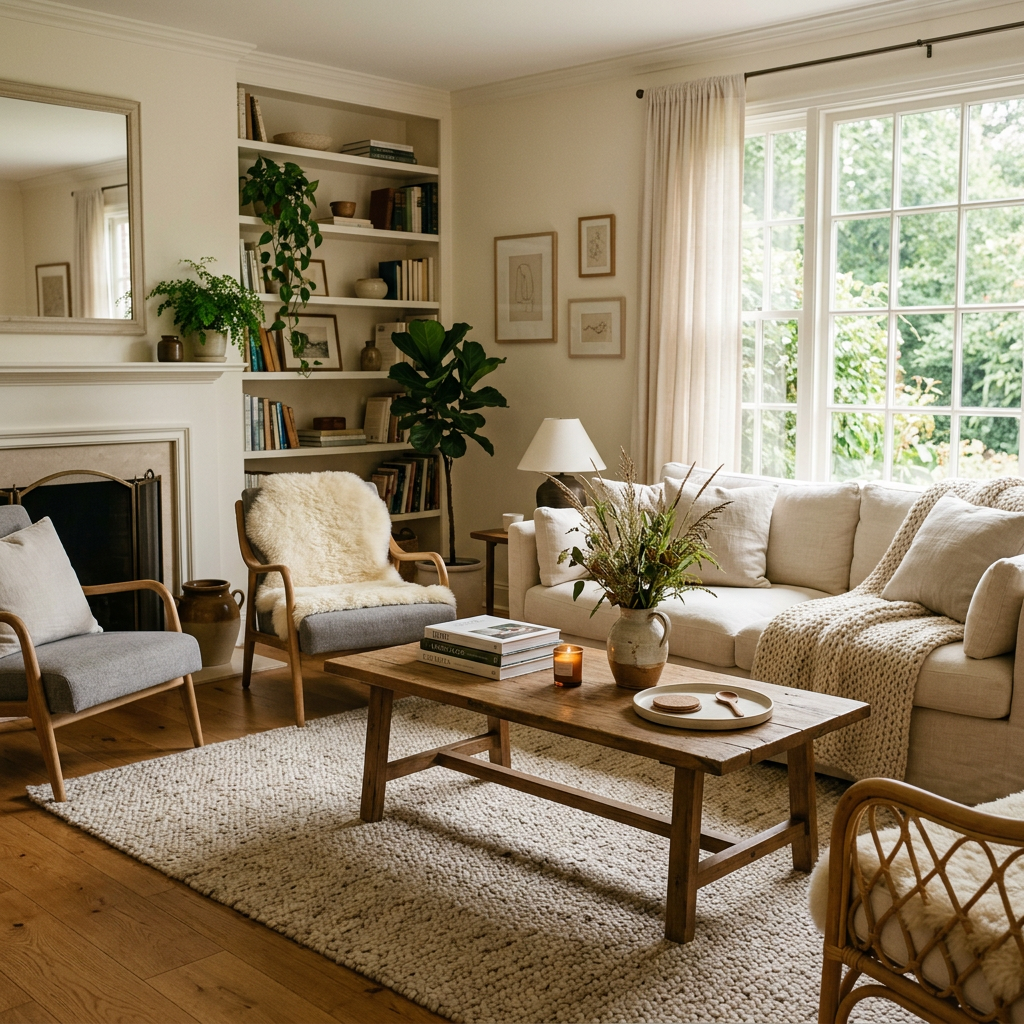
When it comes to decorating a living room, there are certain pieces of furniture that seem almost mandatory. You need a sofa, of course, a television or entertainment area. Additionally, perhaps an area rug, accent chairs, pillows, and somewhere to place drinks and other items. Traditionally, that “somewhere” has been the coffee table.
For decades, the coffee table has been considered one of the defining pieces of a living room. However, decorating today is becoming much more personal, finding the right coffee table. Homeowners and renters are beginning to ask whether they actually need a coffee table. Alternatively, there might be another piece of furniture that better fits the way they live.

The truth is, there is no universal answer to the question of whether you need a coffee table. A coffee table can be beautiful, functional, decorative, practical, or all of those things at once. It can also take up valuable floor space, become a place where clutter collects, or simply not make sense for the way you use your living room. The better question isn’t necessarily, “Should I have a coffee table?” Instead, ask yourself, “Would having a coffee table make my living room more comfortable, functional, and enjoyable?”

Maya’s Search for the Perfect Coffee Table
Maya was excited when she moved into her first apartment. For the first time, she had a space that was completely her own. She couldn’t wait to decorate it. While planning, she considered finding the right coffee table to anchor the room. Over weeks, she spent time examining living room inspiration and saving pictures of beautiful spaces. Imagining how she wanted her apartment to feel, she planned.
Ultimately, she found a comfortable sofa, a beautiful area rug, and several plants. They brought the room to life. Everything seemed to be coming together perfectly. However, the middle of the living room was empty.
At first, Maya actually liked the open space. Her apartment wasn’t particularly large, so having an open area made the living room feel bigger and easier to move through. She could walk from the sofa to the kitchen without bumping into furniture, and she liked having room to stretch out. Eventually, however, she started noticing the inconvenience of not having a table. When she sat on the sofa with her morning coffee, she had nowhere to put her mug. Her laptop ended up on the floor, her books were constantly being moved from one surface to another, and her remote control seemed to disappear underneath the sofa cushions. When friends came over, everyone seemed to be balancing drinks on the sofa. That’s when Maya decided she needed a coffee table.
Like many people, Maya assumed choosing a coffee table would be simple. She went online and immediately fell in love with a sleek rectangular table with a beautiful top and thin metal legs. It was modern, sophisticated, and exactly the kind of table she had imagined in her living room. She ordered it and couldn’t wait to see it in place. Unfortunately, once she positioned it in front of her sofa, she realized that something wasn’t right. The table was simply too large for her space. It narrowed the walking area and made the room feel more crowded than it had before. Within a few days, the beautiful tabletop had also become a magnet for clutter. Books, candles, mail, remotes, coffee cups, and miscellaneous items seemed to accumulate there almost immediately.
Maya eventually realized that she had made a common decorating mistake. She had chosen a table because she loved how it looked rather than choosing a table based on how she actually lived. Once she understood that, she returned the table and started her search again, but this time she asked herself a much better question: “What do I actually need my coffee table to do?” She realized that she wanted a convenient place for her coffee and laptop, somewhere to display a few decorative pieces, and a little additional storage for things like books and remotes.
She also occasionally ate dinner while sitting on the sofa. Because her apartment was small, she didn’t want another oversized piece of furniture taking up valuable floor space. Suddenly, her search became much more focused. She wasn’t simply looking for a coffee table anymore. She was looking for the right coffee table for her lifestyle.
Do You Really Need a Coffee Table?
Before you start shopping, take a moment to determine whether a coffee table is actually necessary in your living room. Think about how you use the space every day. If you regularly drink coffee, eat snacks, work from the sofa, entertain guests, play games, or decorate your living room with books and accessories, a coffee table can be extremely useful. Having a surface within easy reach can make the room more comfortable and functional.
On the other hand, you may discover that you don’t need one at all. If your living room is small, you may not need a table. If you rarely use a table or want open floor space, a traditional coffee table may reduce function. You might already have side tables beside your sofa. A large sectional may provide enough room for drinks and other necessities.
In some homes, an ottoman or two small tables may make more sense than one large coffee table. There is no decorating rule that says every sofa must have a coffee table.
Think About How You Live
One of the biggest mistakes people make when buying furniture is choosing based entirely on appearance. A table may look incredible in a showroom or in a perfectly styled photograph online, but that doesn’t necessarily mean it will work in your home. Before choosing a coffee table, think about what actually happens in your living room.
Regularly dining while watching television may require a sturdy table with enough surface area to hold plates and drinks. When you work from your sofa, a lift-top coffee table may serve as a temporary workspace without an additional desk. You may opt for a piece that is durable and easy to clean if you have children or pets. If you entertain frequently, you may want a larger surface for drinks and appetizers. If you are constantly trying to hide clutter, a coffee table with drawers or shelves could become one of the most useful pieces of furniture in your home.
Your furniture should support your lifestyle rather than forcing you to change the way you live. The prettiest coffee table in the world won’t feel like the perfect choice if you are constantly working around it.

Choosing the Right Size Coffee Table
Once you decide that a coffee table belongs in your living room, one of the most important decisions you’ll make is choosing the right size. A coffee table that is too small can look disconnected from the sofa and surrounding furniture, while a table that is too large can make the room feel crowded and interfere with movement.
Start by considering the size and shape of your sofa. Your coffee table should feel proportional to the seating area rather than looking like an unrelated piece of furniture dropped into the center of the room. You also need enough space to comfortably walk around it. As a general starting point, leaving approximately 14 to 18 inches between the coffee table and sofa can provide a comfortable amount of space for movement while still keeping the table within easy reach.
Height matters as well. A coffee table generally looks best when it is around the same height as the sofa seat or slightly lower. A table that is significantly higher can feel awkward, while a table that is extremely low may not be practical for everyday use. These measurements aren’t rigid decorating laws, but they provide a useful starting point when you’re trying to create a comfortable arrangement.
Exploring Coffee Tables
Maya soon discovered that coffee tables come in far more varieties than she had originally imagined. The traditional rectangular wooden table is only one option. Today, you can find coffee tables in virtually every shape, size, material, and configuration imaginable, which means you can choose one based on both your decorating style and your practical needs.
Traditional coffee tables remain popular because they’re simple and dependable. They provide a flat surface for drinks, books, decorative objects, remotes, and other everyday items without adding complicated features. If you want something timeless that can work with a variety of decorating styles, a traditional coffee table can be an excellent choice.
Lift-top coffee tables are particularly useful for people who work, study, or eat from their sofas. The tabletop can be raised to create a more comfortable working or dining surface, essentially allowing one piece of furniture to serve multiple purposes. For people living in apartments or smaller homes, this type of versatility can be incredibly valuable because it eliminates the need for additional furniture.
Storage coffee tables are another practical option. Depending on the design, they may include drawers, shelves, cabinets, baskets, or hidden compartments. These features can provide a convenient place to store blankets, books, magazines, remotes, games, toys, and other items that tend to make their way into the living room. If keeping the room organized is important to you, choosing a table with built-in storage can make a significant difference.
Ottoman coffee tables are another interesting alternative. A large ottoman can function as a coffee table when paired with a decorative tray, while also providing a comfortable place to put your feet or additional seating when guests arrive. This makes an ottoman an excellent option for anyone who values flexibility and comfort.
Nesting tables can also be a smart choice, particularly in smaller spaces. Instead of having one large table permanently occupying the center of the room, you can use two or more smaller tables that fit together. When you need additional surface space, you can separate them, and when you don’t, you can tuck them back together.
The shape of your coffee table can also influence the overall appearance of your living room. Rectangular tables are classic and work well with many sofas, while round and oval tables can soften a room filled with straight lines. Square tables can work especially well with large sectionals. Glass tables can create a lighter visual appearance because the surface allows you to see through to the floor, while wood can bring warmth and natural texture into the space. Metal, stone, acrylic, and mixed-material tables can each create an entirely different aesthetic.
Should Your Coffee Table Be Functional or Beautiful?
This is where furniture shopping becomes personal. Does your coffee table need to be functional? Not necessarily. Sometimes you see a piece of furniture and simply fall in love with it. Maybe it has a sculptural shape, an unusual material, an incredible wood grain, or a sophisticated design that immediately catches your attention. There is absolutely nothing wrong with choosing a coffee table because you love how it looks.
The key is making sure that its beauty doesn’t come at the expense of your lifestyle. If you need storage but purchase a table with nowhere to put anything, you may eventually become frustrated. If you regularly eat from the sofa but choose a table that isn’t comfortable for dining, you may wish you had considered functionality more carefully. The ideal situation is when beauty and function meet.
A coffee table can be a statement piece while still being practical. It can hold your morning coffee, display your favorite books, hide your remotes, provide additional storage, and still look beautiful in the room. When you find a piece that accomplishes both goals, you’ve found something special.

Can a Coffee Table Have More Than One Function?
Absolutely. In today’s homes, multifunctional furniture can be one of the smartest ways to make the most of your space. A coffee table doesn’t have to have one permanent purpose. It can change depending on what you need at the moment.
Your coffee table can serve as a place for drinks and snacks, a temporary workspace, a dining surface, a storage solution, a display area, a place for books and magazines, a game table, or even additional seating when the design allows it. A lift-top table can become a desk. An ottoman can become seating. A storage table can help keep the room organized. A nesting table can expand your available surface area when guests arrive.
This is why multifunctional furniture has become so appealing. People want their homes to be beautiful, but they also want their furniture to earn the space it occupies.
Maya Finally Found the Right One
After weeks of searching, Maya finally found a coffee table that felt right. It wasn’t the largest table, the most expensive table, or even the first table she had fallen in love with. Instead, she chose a round coffee table with a simple design and a lower shelf.
The size worked beautifully with her sofa, and the round shape made it easier to move around the room. The lower shelf provided space for books and a few baskets, while the tabletop was large enough for her coffee, laptop, and a small decorative arrangement. Most importantly, it didn’t overwhelm her apartment.
Standing in the middle of her living room, Maya realized that she had finally found what she had been looking for. She hadn’t simply purchased a coffee table. She had chosen a piece of furniture that fit her space, her decorating style, and the way she actually lived.
That was the difference.
What If You Don’t Want a Coffee Table?
Maybe you’re reading this and thinking, “I still don’t want one.” That’s perfectly okay. Sometimes the best choice for a living room is not adding another piece of furniture but intentionally leaving space open.
When space is tight, removing the coffee table can make the entire area feel larger. A large sectional can benefit from an oversized ottoman, improving versatility. For those who value flexibility, nesting tables may provide the surface area you need without permanently taking up as much space. A C-table that slides underneath or alongside your sofa can provide a convenient surface without creating a visual barrier in the room.
The goal isn’t to fill every empty space. Empty space is an important part of interior design. Sometimes leaving an area open gives a room breathing room and allows the furniture you do have to stand out.
How Do You Choose a Coffee Table You’ll Love?
Choosing furniture you’ll love for years isn’t simply about finding something beautiful. It’s about finding something that makes sense for your home. Start by considering the size of your room and the furniture you already own. Think about how much walking space you need and how much surface area you actually use. Consider whether you need storage, whether you want the table to serve multiple purposes, and how much maintenance you’re willing to perform.
Then consider your decorating style. Wood can bring warmth and character to a room, glass can create an airy appearance, metal can add a contemporary edge, and stone can introduce texture and luxury. Think about whether you want the table to blend into the room or become a focal point.
Most importantly, don’t buy a coffee table simply because you think you’re supposed to have one. Buy it because it improves the way you use your space.

Coffee Table or No Coffee Table?
There really isn’t a wrong answer. The perfect living room isn’t the one that contains every piece of furniture traditionally associated with a living room. It’s the one that works for the people who live there.
Those who love a surface in the room’s center should choose a coffee table that complements your lifestyle. When you need storage, choose storage. Consider a lift-top design if you work from your sofa. To gain flexibility, consider nesting tables. For premium comfort, consider an ottoman. And if you love the open feeling of a room without a coffee table, leave it out.
Maya’s experience is a reminder that decorating isn’t about checking boxes on a furniture list. It’s about discovering what works for you. The perfect coffee table often acts as a beautiful statement piece. Sometimes it’s a practical storage solution. Sometimes it’s a multifunctional table that becomes a workspace, dining surface, and storage area all in one. And sometimes, the perfect decision is realizing that you don’t need a coffee table at all.
Your home doesn’t need to follow someone else’s decorating rules. It needs to work for the life you’re living.
So, coffee table or not to coffee table? That is the question.
But the answer is yours to discover.

Deja un comentario