
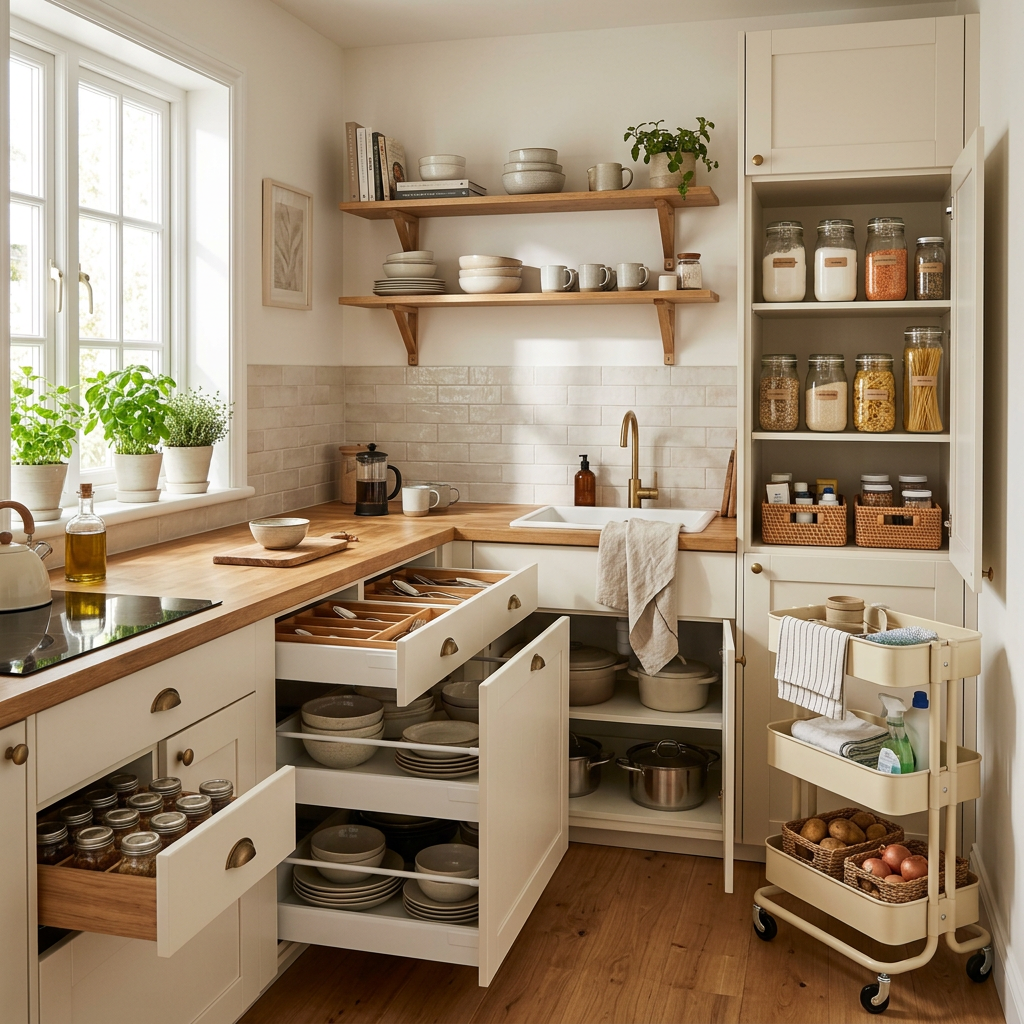
Opening a kitchen cabinet and realizing there is nowhere left to put anything frustrates you. Moreover, the dishes are stacked as high as they can go, and the pots fight for space. Additionally, you have three drawers dedicated to things you barely use.

This highlights ADDING CABINET SPACE challenges in small kitchens. However, every time you walk into a home store, you find yourself looking at another kitchen gadget. You would love to have it.

The problem isn’t always that you have too much stuff. Sometimes, you simply don’t have enough storage. ADDING CABINET SPACE is something we don’t think about until we run out of it. Cabinet space is one of those things we overlook.
Your cabinetry may be limited if you live in a small apartment, a starter home, or an older house. You don’t necessarily need a complete kitchen renovation to create more storage. Sometimes, the best solution is learning how to use the space you already have differently.
Start by Looking at the Space You Already Have
Before buying another cabinet, take a close look at your existing kitchen. Open every cabinet and drawer. What is actually inside? Are there items taking up valuable space that you rarely use? Do you store items wherever they fit, or are your cabinets organized efficiently? You may discover that you don’t necessarily need more cabinets—you need better organization.
Shelf risers can turn one cabinet shelf into two. Pull-out organizers can make the back of deep cabinets usable. Drawer dividers can keep utensils from becoming one giant pile. Small bins can group similar items together and make it easier to find what you need. Sometimes a few inexpensive organizational changes can make a surprisingly large difference.
Add a Rolling Kitchen Cart
One of the easiest ways to create additional storage is with a rolling kitchen cart. A kitchen cart can provide cabinet space, drawers, shelving, and sometimes even a countertop surface. Because it is movable, you can position it where you need it and move it when you need additional floor space.
A cart can be especially useful for appliances, baking supplies, cookware, or pantry items. It can also become a small prep station. Instead of simply thinking of it as additional storage, think of it as a piece of furniture that gives your kitchen another functional workspace.
Bring in a Freestanding Cabinet
If you have a little more room available, consider adding a freestanding cabinet. A narrow pantry cabinet can give you valuable vertical storage without requiring a major renovation. A freestanding buffet or sideboard can provide storage for dishes, serving pieces, linens, and entertaining supplies. This is also an opportunity to add personality to your kitchen.
Your additional storage doesn’t have to look like it came from the same cabinet company as the rest of your kitchen. A beautiful vintage cabinet, painted cupboard, or furniture-style storage piece can actually become one of the most interesting features in the room.

Don’t Forget the Walls
If floor space is tight, look up. Your walls are valuable real estate.
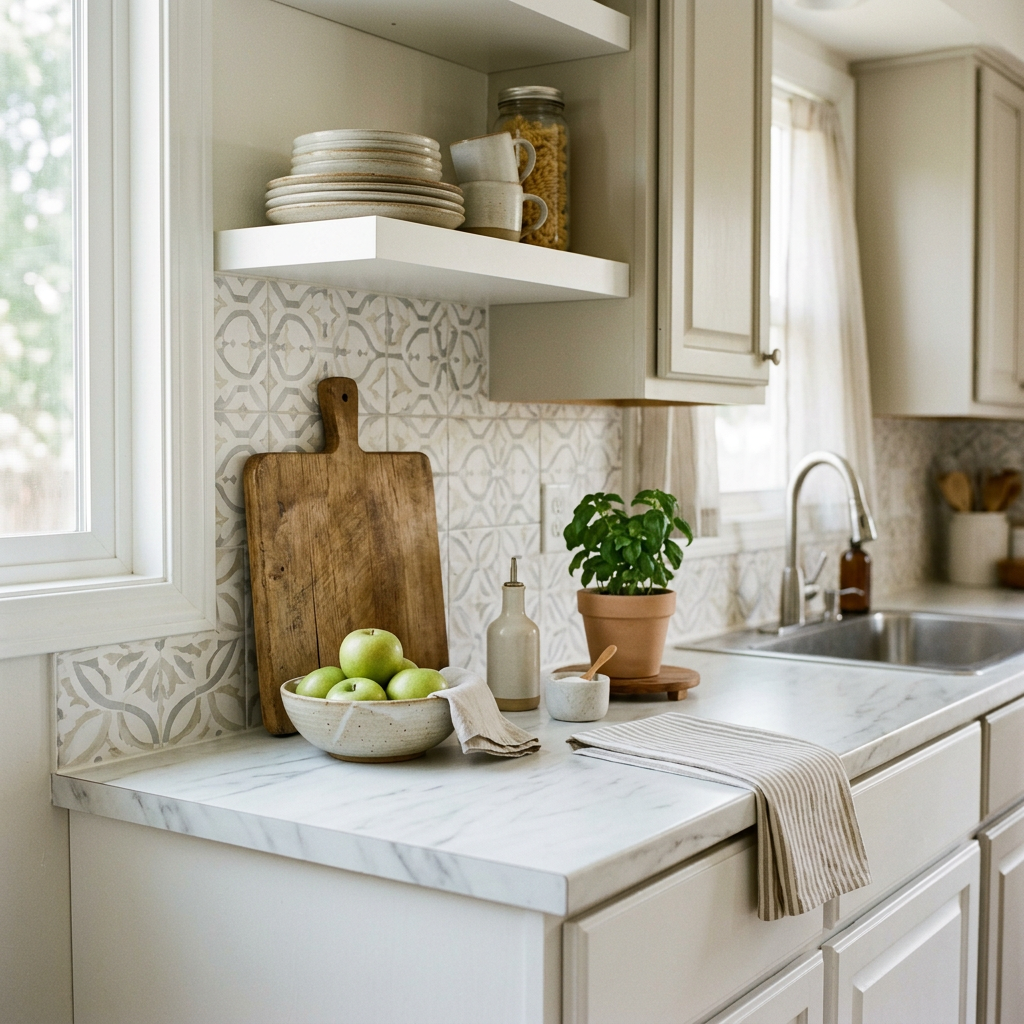
Floating shelves can provide a place for dishes, glasses, cookbooks, baskets, or decorative pieces. A wall-mounted rack can hold pots and pans. Pegboards can organize cooking tools while adding a little personality to the room.
Open shelving can also make a small kitchen feel less closed in because it eliminates some of the visual heaviness created by upper cabinets.
The key is to avoid turning your walls into another cluttered storage area. Keep frequently used items organized and consider using attractive containers or baskets to keep everything looking intentional.
Use the Space Above Your Cabinets
That empty space between the top of your cabinets and the ceiling may be able to help.
If your cabinets don’t extend all the way to the ceiling, consider using attractive baskets or storage boxes for items you don’t use every day.
This is a great location for holiday dishes, seasonal serving pieces, entertaining supplies, or small appliances that only come out occasionally. Because these items are higher and less convenient to reach, this area should be reserved for things you don’t need regularly.
Add a Pantry Where You Can
Not every kitchen has a traditional pantry, but that doesn’t mean you can’t create pantry storage.
A narrow rolling pantry can fit into surprisingly small spaces. A tall freestanding pantry cabinet can take advantage of vertical space. Even a section of an unused wall may be large enough for a slim storage cabinet.
Think vertically. A tall cabinet that is only a foot or so wide can provide considerably more storage than a short cabinet that takes up the same amount of floor space.
Make the Inside of Your Cabinet Doors Work
One of the most overlooked storage opportunities in a kitchen is the inside of the cabinet door. Depending on the cabinet and what you’re storing, you can add small racks or organizers to hold cutting boards, measuring cups, pot lids, cleaning supplies, spices, or other small items.
This is particularly helpful for people who have plenty of cabinet volume but struggle with organization. Instead of allowing the inside of the cabinet door to remain unused, turn it into another storage surface.
Take Advantage of the Corners
Kitchen corners can be awkward, but they don’t have to be wasted. Lazy Susans, corner organizers, and rotating shelves can make difficult-to-reach areas much more functional.
If you are planning a kitchen renovation, corner cabinet solutions are worth considering carefully. But if you’re working with the kitchen you already have, even a simple rotating organizer can make a deep corner cabinet much easier to use. The goal isn’t simply to store more. It’s to make the storage you already have accessible.
Consider a Kitchen Island
If your kitchen has enough floor space, a kitchen island can be one of the most valuable additions you make. An island can provide cabinets, drawers, countertop space, seating, and additional workspace all in one piece.
You don’t necessarily need a permanent, built-in island either. A furniture-style island can provide many of the same benefits without requiring a contractor.
For smaller kitchens, choose an island that is appropriately sized for the room. The biggest island isn’t necessarily the best island. You still need enough room to comfortably move around it.
Store Some Kitchen Items Outside the Kitchen
This may sound strange, but not everything needs to live in the kitchen. If your kitchen is small, consider storing certain items in another nearby area.
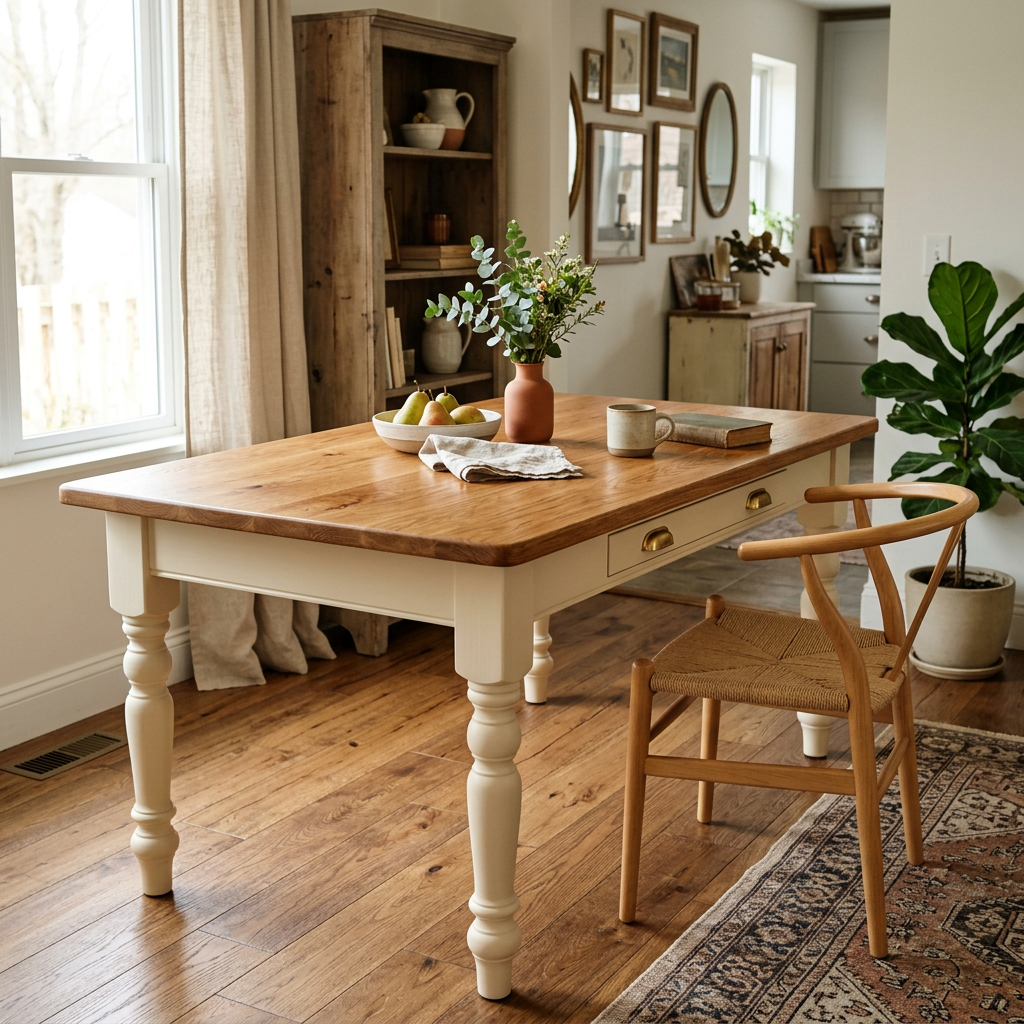
A dining room cabinet can hold serving dishes, table linens, glassware, or entertaining supplies. A nearby closet can store appliances that aren’t used regularly. A dining room sideboard can become an extension of your kitchen storage.
The important thing is accessibility. If you use something every day, you probably don’t want it stored three rooms away. But if something only comes out during holidays or special occasions, it doesn’t necessarily need prime kitchen real estate.
Rethink Your Countertop Appliances
One of the quickest ways to make a kitchen feel like it has no storage is allowing appliances to take over the countertops. Coffee makers, air fryers, toasters, mixers, blenders, and other appliances can quickly consume your available workspace. Take an honest look at what you actually use.
If an appliance is used every day, keeping it accessible may make sense. But if something is only used once every few weeks, consider storing it somewhere else. Your countertops are not technically cabinets, but clearing them can make your kitchen feel significantly more spacious and functional.
Use Baskets to Create Order
Baskets are an inexpensive way to make open storage look intentional.
Instead of having individual packages scattered across a shelf, group similar items together. One basket might hold snacks, another baking supplies, and another breakfast foods.
Baskets are particularly useful when you’re adding storage to open shelves because they hide visual clutter while keeping everything easy to access.
Choose baskets that complement your kitchen style. Storage doesn’t have to look purely functional. It can contribute to the overall design of the room.
Don’t Automatically Assume You Need a Bigger Kitchen
Sometimes we convince ourselves that the only solution to a storage problem is a larger kitchen. But more square footage doesn’t automatically mean better storage. A large kitchen can still be poorly organized, while a small kitchen can work beautifully when every inch is used intentionally. Before considering an expensive renovation, ask yourself three questions:
What do I actually need to store?
What am I currently storing that I don’t use?
Where am I wasting available space?
Those three questions can completely change the way you approach your kitchen.

The Goal Is Functional Storage, Not Just More Storage
Adding cabinet space isn’t really about filling your home with more cabinets. It’s about creating a kitchen that works for the way you live.
Adding a pantry cabinet might be the solution. Maybe it’s a rolling cart. Maybe it’s a beautiful sideboard in the dining room. Or perhaps the answer is simply reorganizing the cabinets you already have. The best storage solution is the one that makes your daily life easier.
Your kitchen doesn’t have to be enormous to be functional. It doesn’t have to have custom cabinetry from floor to ceiling. And you don’t have to spend thousands of dollars remodeling the room. Sometimes the answer is already there—you just have to look at your kitchen differently.
Because when you don’t have enough cabinet space, the solution isn’t always adding more cabinets. Sometimes it’s discovering the storage space you didn’t know you had.



Leave a Reply