
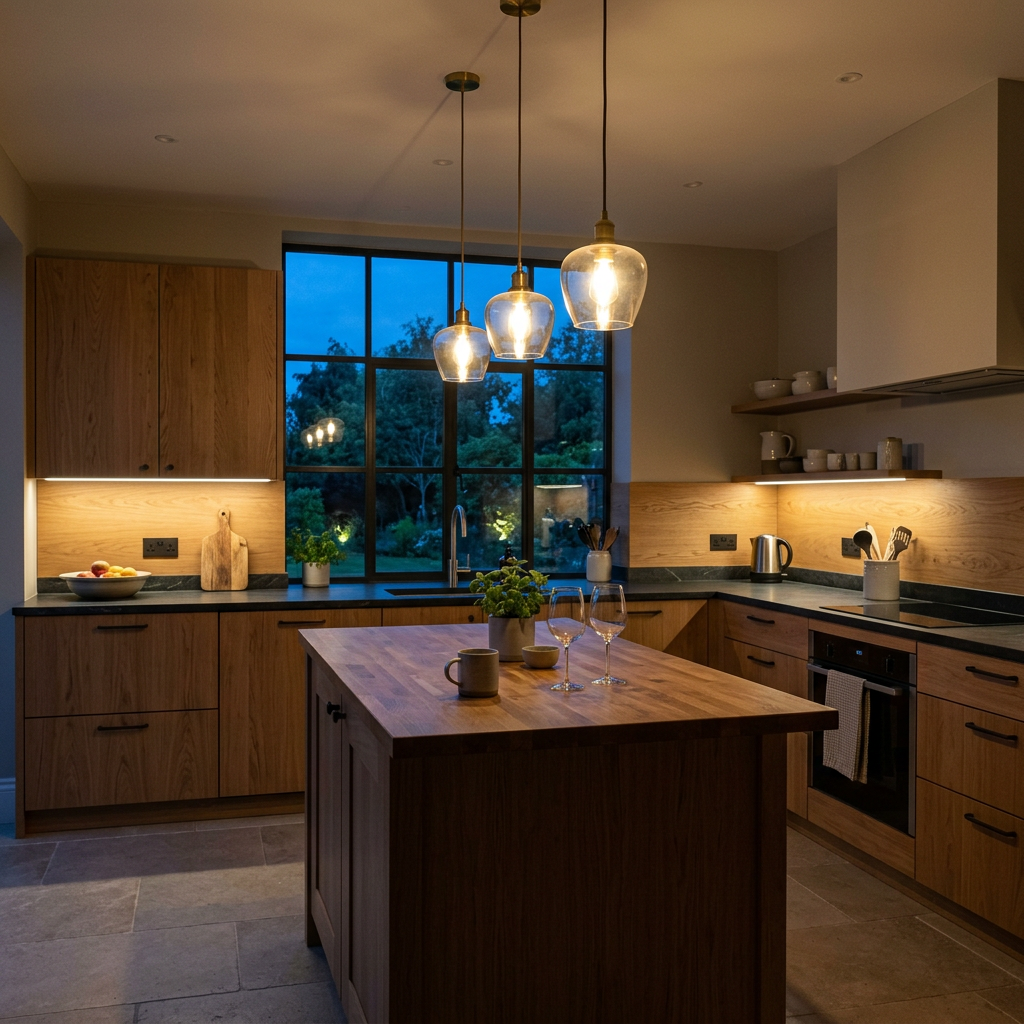
Have you walked into a room in your home and thought something feels off? The furniture is nice, and the walls are painted a color you love. You have added décor that reflects your personality, but the room still lacks that finished, comfortable feeling you hoped for. Before you start buying new furniture or repainting, review your lighting to learn how to improve your home’s lighting.

Lighting is one of the most overlooked parts of decorating a home. It can completely change the way a space looks. The right lighting can make a small room feel larger. It can also make a bedroom feel cozy. It can make a kitchen feel more functional.

Inexpensive décor can look more expensive. The good news is that you can improve your home’s lighting without hiring an electrician or spending thousands. Sometimes, a few strategic changes can make a surprisingly big difference.
Why Does Lighting Matter So Much?
Think about the different places you spend time throughout the day. You probably don’t want your bedroom to have the same bright lighting as your kitchen, and you probably don’t want your living room to feel like a doctor’s office. Different rooms serve different purposes, which means they need different types of lighting.
Lighting also affects how we perceive color. A paint color that looks warm and beautiful during the afternoon might look completely different under a cool white light at night. Your furniture, artwork, flooring, countertops, and accessories can also appear different depending on the type of light shining on them.
This is why simply putting one bright ceiling light in the middle of every room isn’t always the best solution.
Your home needs options.
The Three Types of Lighting Every Home Should Have
A well-lit room usually has more than one source of light. Designers often think about lighting in three basic categories: ambient, task, and accent lighting.
Ambient lighting is your general room lighting. This is the light that allows you to move around and see the overall space. Ceiling fixtures, chandeliers, recessed lights, and flush-mount fixtures can all provide ambient lighting.
Task lighting is designed to help you perform a specific activity. Think about the lamp beside your favorite reading chair, the lighting underneath your kitchen cabinets, or a desk lamp in your home office. Task lighting doesn’t necessarily need to illuminate the entire room. Its job is to put light exactly where you need it.
Then there’s accent lighting, which is where things start getting fun. Accent lighting draws attention to something you want people to notice. It could highlight artwork, a beautiful fireplace, architectural details, bookshelves, plants, or even a decorative wall.
When you combine all three, your room becomes much more flexible.
You can turn on all the lights when you’re cleaning, use task lighting when you’re working, and turn down the lights and use accent lamps when you’re relaxing in the evening.
Stop Depending on the Ceiling Light
One of the easiest ways to improve your home’s lighting is to stop relying entirely on the overhead fixture. There is nothing wrong with a ceiling light, but it shouldn’t have to do all the work. Try adding a table lamp to your living room. Put a floor lamp next to a sofa or reading chair. Add a small lamp to your bedroom nightstand. Consider a lamp on a console table in the entryway. Suddenly, your room has multiple layers of light.
This can also make your home feel more expensive. Have you ever walked into a hotel lobby or upscale restaurant and noticed that there isn’t one giant bright light illuminating everything? Instead, there are multiple sources of soft, intentional lighting throughout the space. You can create the same feeling at home.

Add Lamps Where You Need Them
Lamps are probably one of the most affordable ways to improve your lighting because you don’t need to change your home’s electrical wiring. If your living room feels dark, don’t immediately assume you need recessed lighting. You may simply need a floor lamp in a dark corner. Consider adding matching bedside lamps or wall-mounted sconces to warm your bedroom.
A small lamp on a console table can refresh your entryway. To soften a harsh home-office environment, replace the bright overhead light with a desk lamp that provides focused illumination. Sometimes the problem isn’t that your home doesn’t have enough light. It’s that the light isn’t in the right places.
Don’t Forget Your Kitchen
Kitchen lighting deserves special attention because this is one room where appearance and functionality have to work together.
If you’re chopping vegetables, reading a recipe, washing dishes, or preparing dinner, you need enough light to see what you’re doing. Unfortunately, one ceiling fixture may leave parts of your countertop in shadow.
This is where under-cabinet lighting can make a huge difference. And you don’t necessarily need an electrician to install it. Battery-powered and rechargeable LED light strips and puck lights can provide additional illumination without requiring permanent electrical work. They can also make your kitchen look surprisingly high-end.
Imagine walking into your kitchen at night and turning on soft lighting underneath your cabinets instead of turning on every bright overhead light. It’s practical, but it also creates atmosphere.

Change Your Light Bulbs Before Changing Your Fixtures
Here’s one of the cheapest lighting upgrades you can make: change your bulbs. Seriously. Before spending hundreds of dollars replacing fixtures, experiment with different bulbs.
The color temperature of a bulb can dramatically affect the atmosphere of a room. Warm light tends to create a cozy and inviting feeling, while cooler light can feel brighter and more energetic.
For bedrooms and living rooms, many people prefer warmer lighting because it creates a relaxing atmosphere. Kitchens, bathrooms, laundry rooms, and home offices may benefit from brighter, more neutral lighting.
And don’t assume that every bulb in your house needs to be identical. Your home can have different lighting temperatures in different spaces based on how each room is used.
Install Dimmer Switches
If you’re looking for a relatively inexpensive upgrade that gives you more control, consider installing dimmer switches where appropriate.
Think about your dining room. During dinner with the family, you may want comfortable, moderate lighting. But if you’re hosting a special dinner, you may want the room to feel softer and more intimate. A dimmer allows one fixture to serve multiple purposes.
The same idea works in bedrooms, living rooms, and other spaces where you want flexibility. Just make sure the bulbs and fixtures you use are compatible with dimming and follow appropriate electrical safety practices when replacing switches.
Use Mirrors to Make a Room Feel Brighter
Here’s a decorating trick that doesn’t actually involve adding more lights: use mirrors. A strategically placed mirror can reflect natural and artificial light around a room, helping the space feel brighter and more open.
Try placing a mirror across from a window or near a lamp where it can reflect light. This is particularly useful in smaller rooms, hallways, apartments, and spaces with limited natural light. And unlike installing new electrical fixtures, a mirror can also become a beautiful piece of décor.
Make the Most of Natural Light
Before purchasing another lamp, look at the natural light your home already receives. Are your windows covered with heavy curtains all day? Are dark blinds blocking sunlight? Is furniture positioned directly in front of a window? Sometimes improving your home’s lighting starts with letting more natural light inside.
Consider lightweight curtains or layering window treatments so you can control privacy without completely blocking sunlight. Clean your windows, trim anything outside that’s blocking light, and avoid placing large pieces of furniture directly in front of your brightest windows when possible. Natural light is free, so take advantage of it.
Try Battery-Powered Lighting
If you live in a rental or simply don’t want to deal with electrical work, battery-powered lighting can be your best friend. Today’s options go far beyond the old-fashioned stick-on lights you may remember. You can find rechargeable puck lights, LED strips, closet lights, motion-activated lights, portable table lamps, and even decorative cordless lamps.
These are particularly useful for closets, bookshelves, cabinets, stairways, bathrooms, kitchens, and dark corners. They’re also perfect for renters because you can improve your lighting without making permanent changes.
Don’t Forget the Bathroom
Bathroom lighting is another area where one overhead fixture isn’t always enough. If you have ever tried getting ready in the morning only to discover that the lighting makes it difficult to see your face clearly, you know exactly what I’m talking about.
Lighting near the mirror can be much more useful than relying solely on a ceiling fixture. Wall sconces or appropriately installed vanity lighting can provide more balanced illumination around the face and reduce harsh shadows.
And if you’re replacing bathroom fixtures, choose something that provides the right amount of light for your space rather than simply choosing the biggest or brightest fixture available.
Make Your Home Feel More Expensive With Accent Lighting
Want one of my favorite tricks for making a home look more upscale? Add lighting to places people don’t expect it. Place a small lamp inside an open bookshelf. Add LED lighting underneath a floating cabinet. Illuminate artwork. Put a portable lamp on a console table. Add lighting behind a television or underneath a bed frame.
These little details create depth. Luxury isn’t always about having the most expensive furniture. Sometimes it’s about creating an environment that feels intentional. Lighting can do exactly that.
What If You’re on a Tight Budget?
If your lighting budget is small, don’t worry. You don’t have to change everything at once. Start with the rooms you use the most. For example, you might spend $20–$40 replacing outdated bulbs and adding a couple of affordable LED lights. Then add a table lamp when you find one you love. Later, you could replace an outdated ceiling fixture or add a floor lamp. You can also shop secondhand.
Thrift stores, Facebook Marketplace, estate sales, discount home stores, and clearance sections can be great places to find lamps and lighting fixtures for less. And remember that the lamp itself doesn’t always have to be expensive. A simple lamp can look completely different with the right shade.
A Simple Lighting Makeover You Can Do This Weekend
If you want to improve your home’s lighting without turning it into a major project, start with one room. Walk into the room during the evening and turn on every light. Then ask yourself three questions:
Where is the room too dark?
Where is the light too harsh?
What area deserves more attention?
Once you’ve identified the problem areas, start layering. Add a lamp to a dark corner. Replace harsh bulbs with warmer ones. Add task lighting where you work. Use accent lighting to highlight something beautiful. Open the curtains and let natural light in during the day. You may be surprised by how much of a difference these small changes make.

Your Home Doesn’t Need More Light. It Needs Better Lighting.
There is a difference between having a lot of light and having good lighting. Good lighting gives you choices.
A bright light helps you clean efficiently. When you’re working, you need focused light. You want softer light when you’re relaxing. You want flattering light when you’re getting ready. And sometimes, you simply want the warm glow of a lamp in the corner while you’re watching television.
That’s why having multiple lighting options matters. You don’t have to completely remodel your home to achieve it. Start small, work with what you already have, and make affordable changes over time. Because sometimes the easiest way to transform a room isn’t buying a new sofa, repainting the walls, or replacing your furniture.
Sometimes, you just need to turn on the right light.


Leave a Reply