

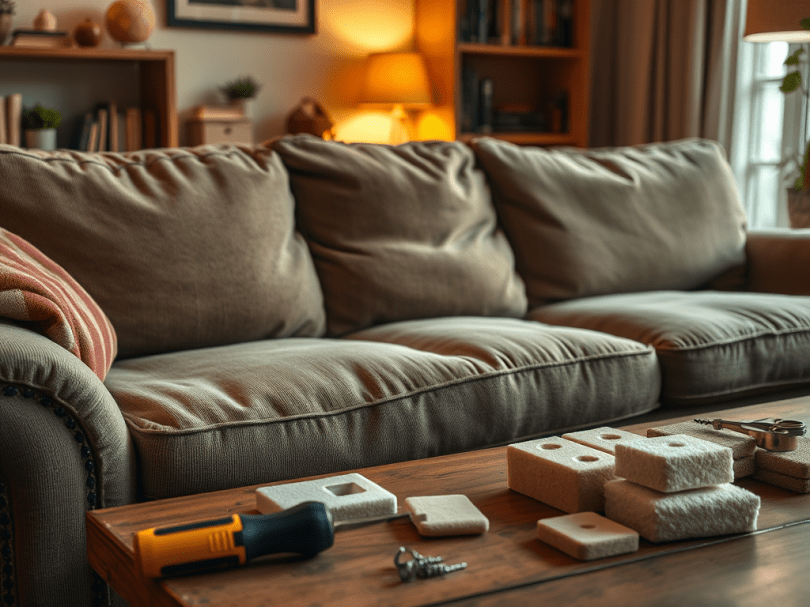
If your couch has seen better days—sagging cushions, creaky springs, or worn-out fabric—it doesn’t necessarily mean it’s time to toss it out. A broken-down couch can often be fixed with a little creativity, patience, and elbow grease. Repairing your sofa not only saves you money but also gives you the satisfaction of breathing new life into a beloved piece of furniture. Here’s how to fix your couch rather than replacing it.
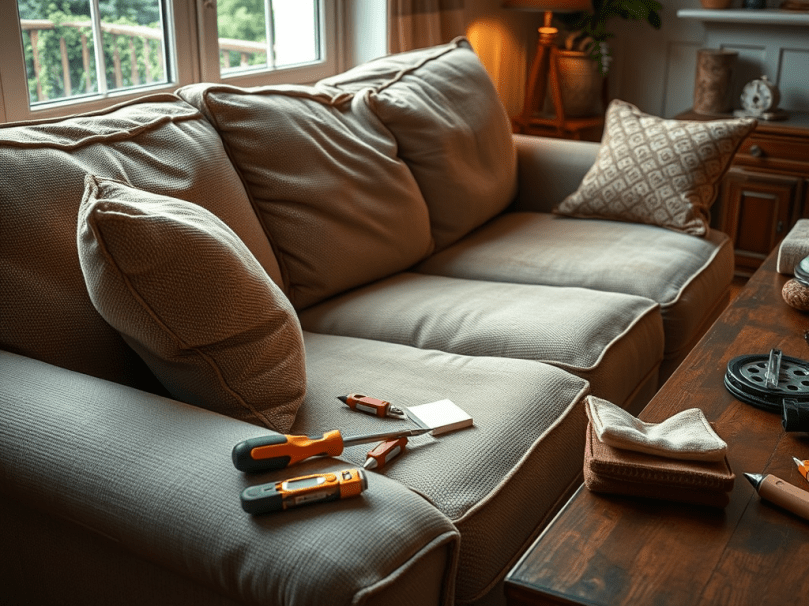
1. Identify What’s Actually Broken
Before you start any repairs, figure out what’s causing the problem. Is it the frame, the cushions, the springs, or the fabric?
- Frame issues usually show as sinking or uneven support.
- Spring problems make the couch feel bouncy or lumpy.
- Cushion issues often mean sagging or flattened seats.
- Upholstery problems include tears, stains, or thinning fabric.
Understanding the root cause helps you decide which repair approach will actually work.
2. Fixing a Sagging Couch Frame
If your couch dips in the middle or one side feels lower than the other, the wooden frame might be loose or cracked.
Here’s what you can do:
- Tighten loose screws or bolts: Flip the couch over and check for any hardware that’s come loose. Tightening it might be all it takes.
- Reinforce weak spots: Use metal brackets, corner braces, or wood glue to strengthen cracked areas.
- Replace broken slats: If the wooden support slats are split, remove and replace them with new wood pieces cut to the same size.
These fixes can bring back that sturdy support without the cost of a new frame.
3. Restoring Couch Springs
Springs are key to comfort, and they often wear down before the rest of the couch does.
- Check the zigzag or coil springs underneath the cushions.
- Reattach loose springs using pliers and strong twine or metal clips.
- Replace damaged ones—most hardware stores carry standard replacement springs for furniture.
If your couch has webbing instead of springs, consider re-stretching or replacing it entirely for firmer support.
4. Fluffing and Refilling Flattened Cushions
Over time, cushions lose their shape and support. Instead of buying new ones, you can refill them:
- Open the zipper (if it has one) and add new foam inserts or polyester fiberfill.
- For extra firmness, wrap the foam in batting before inserting it back into the cover.
- If your cushions aren’t removable, add padding underneath by tucking folded blankets or foam sheets under the seat cushions to lift them up.
Your couch will instantly feel more supportive and comfortable.
5. Refreshing the Upholstery
Sometimes the couch itself is fine, but the fabric tells another story.
- Patch small tears or holes using a matching fabric patch and fabric glue.
- Steam clean or shampoo the upholstery to remove stains and odors.
- For a bigger update, use a slipcover. It hides damage, updates the look, and can be easily removed for cleaning.
If you’re feeling ambitious, you can even reupholster the couch—but that’s a project best suited for those comfortable with tools and sewing.
6. Tighten Wobbly Legs or Replace Missing Ones
A wobbly or uneven couch can be fixed quickly by tightening leg screws or adding washers to stabilize them. If a leg is broken or missing, you can replace it with a new set—many furniture stores sell universal replacement legs that easily screw into place.
7. Add Finishing Touches
Once the structure and comfort are restored, give your couch a little style refresh:
- Add decorative throw pillows or a textured blanket.
- Apply fabric protector spray to help prevent future stains.
- If you repaired wood elements, sand and restain them for a clean, cohesive look.

Final Thoughts
Fixing a broken-down couch might take a weekend’s worth of work, but it’s worth it. You’ll save money, keep a beloved piece in your home, and help reduce waste by keeping furniture out of the landfill. With a few basic tools and materials, your couch can go from tired and sagging to stylish and comfortable again—ready for many more movie nights and cozy afternoons.
Tip: If you love the results, consider applying the same approach to other worn-out pieces—like chairs, ottomans, or benches. A little restoration can go a long way in transforming your space affordably and sustainably.












 Discoveringlifellc