

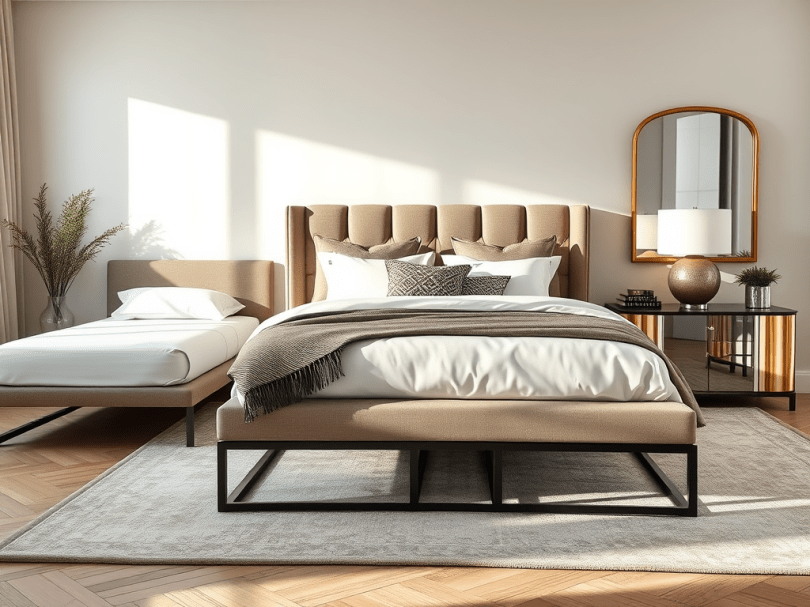
Choosing the Right Size Bed for Your Room: Queen vs. King


When it comes to choosing a new bed, size matters—both for your comfort and for how your room functions. The bed is the centerpiece of any bedroom, setting the tone for your overall design and layout. But when you’re deciding between a queen and a king, it’s not always easy to know which one will truly fit your space and lifestyle.

Let’s break down the key differences between these two popular sizes and help you figure out which one is the perfect fit for your room.


The Basics: Queen vs. King Size Beds

Before diving into style and space, it’s important to know the exact dimensions:

  • Queen Bed: 60 inches wide x 80 inches long
  • King Bed: 76 inches wide x 80 inches long

That’s 16 inches of extra width with a king bed—about the width of a standard nightstand. While both beds are the same length, that extra width can make a big difference in comfort, room layout, and how much space you have to move around.


Queen Size Beds: The Versatile Favorite

A queen bed is often the go-to choice for many homeowners because it fits comfortably in most rooms without feeling overwhelming.

Best suited for:

  • Master bedrooms or guest rooms measuring 10’ x 10’ to 12’ x 12’
  • Couples who like to sleep close or single sleepers who love extra space
  • Apartments, condos, or homes with smaller bedrooms

Pros:

  • Offers plenty of sleeping space for one or two people
  • Easier to move and more affordable than a king
  • Leaves room for additional furniture (like a dresser, vanity, or reading chair)

Cons:

  • May feel cramped for couples who prefer extra space to stretch out

Design Tip:
If you want your queen bed to make a statement without crowding your room, consider a platform or low-profile frame to create an open, airy feeling.


King Size Beds: The Luxury Option

A king bed brings hotel-style comfort home—it’s spacious, luxurious, and perfect for spreading out.

Best suited for:

  • Master bedrooms measuring at least 12’ x 12’ or larger
  • Couples who like personal space while sleeping
  • Families who co-sleep with children or pets

Pros:

  • Offers maximum comfort for two sleepers
  • Ideal for larger rooms or open-concept primary suites
  • Comes in many styles, including split kings for adjustable bases

Cons:

  • Requires more space and can dominate smaller rooms
  • Bedding and frames tend to cost more
  • Harder to move through tight hallways or up staircases

Design Tip:
Balance the scale of a king bed by placing it on a feature wall with nightstands and wall art that extend the width of the bed. This creates a cohesive look without overwhelming the space.


How to Decide Which One Fits Your Space

When choosing between a queen and a king, ask yourself these questions:

  1. What are your room’s dimensions?
    • If your room is under 12 feet wide, a king bed might feel too tight once you add other furniture.
    • You should have at least 2–3 feet of space around the bed on all sides for easy movement.
  2. Who’s using the bed?
    • If you sleep alone or prefer cozy spaces, a queen is more than enough.
    • For couples—or anyone who values extra room to stretch—a king is worth the upgrade.
  3. What’s your furniture layout?
    • Sketch or tape out your bed’s dimensions on the floor.
    • Consider where your dresser, side tables, and windows are positioned to ensure a balanced layout.
  4. What’s your comfort priority?
    • Do you want cozy or spacious?
    • The answer often decides it—queen for a snug fit, king for sprawling comfort.

Final Thoughts: It’s About Balance

Your bed should complement both your comfort level and your room’s design. A queen bed provides flexibility and balance in smaller spaces, while a king bed turns larger bedrooms into a true retreat.

The best choice ultimately depends on your lifestyle, room size, and design goals. So, measure carefully, visualize the layout, and choose the bed that lets you sleep—and style—comfortably.

Because at the end of the day, the right bed doesn’t just fit your room—it fits you.


Choosing the Right Bed Frame for Your Mattress: A Complete Guide


A bed frame does more than just hold your mattress — it supports your comfort, extends the life of your mattress, and plays a major role in the overall style of your bedroom. But if you’ve already chosen the perfect mattress and find yourself stuck on which frame to choose, don’t worry. We’ll walk through how to pick the right frame, explore different style options, and match them to the mattresses they suit best.

Step 1: Match the Frame to Your Mattress Size & Type

Before thinking about aesthetics, you’ll need to focus on compatibility.

  • Size matters: If your mattress is queen-size, your frame should be built for a queen — no exceptions. Even a small mismatch can cause poor support or mattress slippage.
  • Mattress type matters too:
    • Memory foam & latex: These require solid support, so choose a frame with either a solid platform base or slats spaced no more than 3 inches apart.
    • Hybrid mattresses: Typically heavier, hybrids do well on sturdy platform frames or adjustable bases.
    • Innerspring mattresses: These work well with most frames, especially those with box springs or slatted designs.

Step 2: Decide on the Functionality You Need

Ask yourself: Is storage important? Do you want a minimal look? Are you planning to move the bed often?

  • Need extra storage? Go for a storage bed frame with built-in drawers or lift-up under-bed compartments.
  • Want flexibility? A simple metal frame on wheels makes moving easier.
  • Prefer a minimal aesthetic? Platform beds or low-profile frames keep things sleek.

Step 3: Explore the Different Bed Frame Options

Here are the most common styles and why they might be right for you:

  1. Platform Bed
    • Best for: Memory foam, latex, hybrid mattresses
    • Why it works: Offers a sturdy, flat surface (slatted or solid) that doesn’t require a box spring. Perfect for a modern, minimal look.
  2. Panel Bed
    • Best for: Innerspring or hybrid mattresses (often with a box spring)
    • Why it works: Comes with both a headboard and footboard, offering a traditional, cozy style. Works well in classic or farmhouse interiors.
  3. Sleigh Bed
    • Best for: Innerspring or hybrid mattresses
    • Why it works: The curved headboard and footboard create a statement piece. Great if you want a more luxurious, traditional bedroom.
  4. Adjustable Base
    • Best for: Memory foam, latex, or hybrid mattresses
    • Why it works: Allows you to raise or lower the head and foot for comfort, reading, or health reasons (like easing acid reflux).
  5. Storage Bed (Ottoman or Drawer)
    • Best for: Small spaces, apartments
    • Why it works: Maximizes storage without sacrificing comfort. Ideal for keeping extra bedding or seasonal clothes out of sight.
  6. Metal Bed Frame
    • Best for: Any mattress type (with proper support)
    • Why it works: Lightweight, often more affordable, and works as a foundation for other styles if you want to add a headboard later.
  7. Canopy or Four-Poster Bed
    • Best for: Innerspring or hybrid mattresses
    • Why it works: Adds height and drama. Perfect for larger rooms or creating a romantic, luxurious atmosphere.

Step 4: Style Considerations

If you’re stuck on what style to choose:

  • Match your decor: Minimalist home? Go for a simple platform. Traditional or rustic? Choose a panel or sleigh bed.
  • Think about headboard height: Higher headboards make a statement but can overwhelm small rooms.
  • Consider materials: Wood for warmth, metal for modern industrial, upholstered for softness and luxury.

Step 5: Don’t Forget Practical Details

  • Check weight capacity: Heavier mattresses need stronger frames.
  • Measure your space: Some frames add bulk — be sure your room can handle it.
  • Assembly: If you’re not handy, choose a frame that’s easy to assemble or comes with professional setup.

Bottom line: Choosing the right bed frame isn’t just about looks — it’s about support, functionality, and matching your lifestyle. If you already have your mattress, start with the basics (size and support needs) and then choose a style that complements your space. The right frame will not only keep your mattress in top shape but also turn your bedroom into a place you truly love.