
Decorating a child’s bedroom can be one of the most rewarding experiences for parents — but it can also feel a little tricky when your child doesn’t yet have a clear sense of their own style. Maybe they’re too young to decide, or maybe they simply like a little bit of everything. Either way, creating a space that feels personal, functional, and adaptable can help nurture their developing sense of self without boxing them into one theme.

Here’s how to design a unisex child’s bedroom that grows with your child and helps them discover their unique style — all while keeping the process fun and pressure-free.
1. Start with a Neutral Foundation
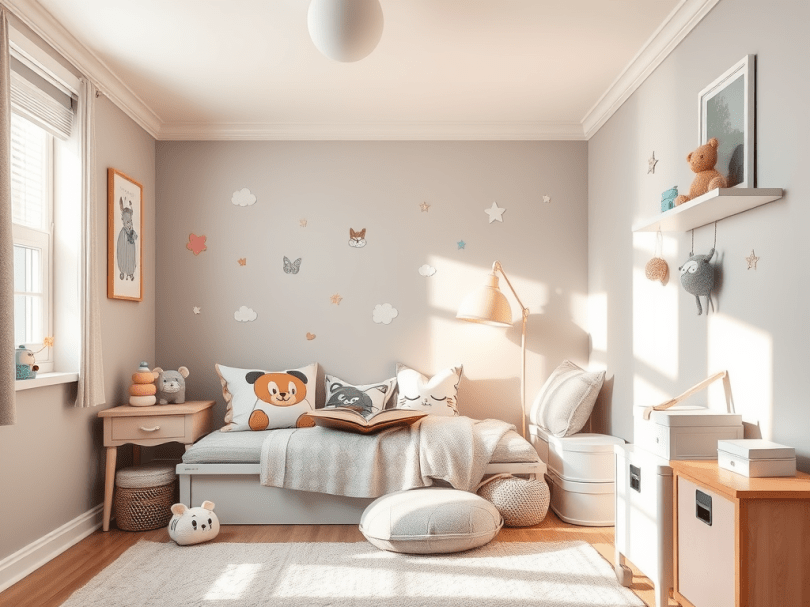
Before you add color or character, think about building a neutral base. Soft whites, warm grays, muted greens, or gentle taupes work beautifully for unisex spaces. These colors make it easy to adjust decor as your child’s interests evolve.
A neutral foundation also prevents the room from feeling overly gendered — and lets accessories, bedding, and wall art shine as your child’s personality develops.
Tip: Stick with neutral furniture pieces, like a natural wood bed frame or a white dresser. Then, layer in playful, interchangeable decor pieces.
2. Introduce Color Through Accents
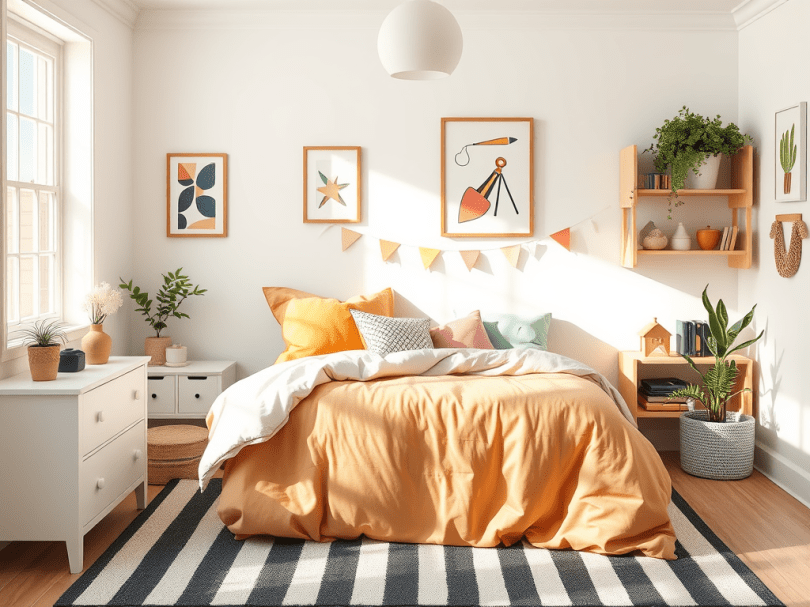
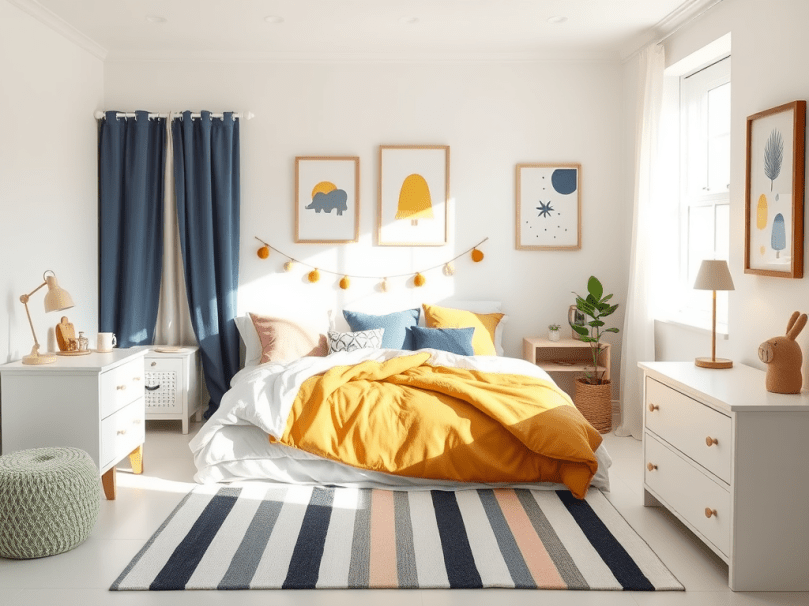
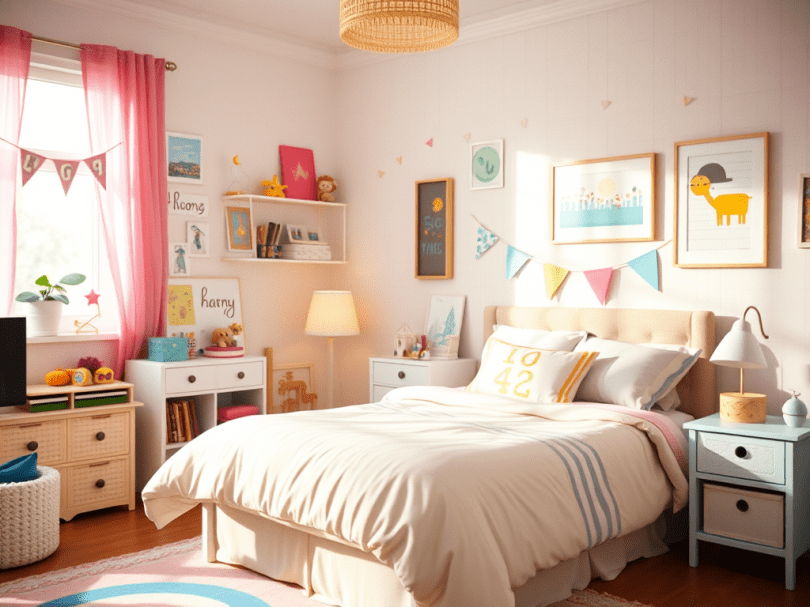
Instead of choosing a full room color based on a single theme, use color accents to add energy. Bedding, pillows, rugs, or curtains are great ways to introduce fun shades without locking into one look.
For example, a mix of soft teal, mustard yellow, and gray feels cheerful and balanced — while sage green and dusty blue can feel calming and timeless.
As your child’s tastes evolve, you can swap these pieces easily without repainting or redesigning the whole space.
3. Use Interests, Not Labels
Children may not know what “boho” or “modern” means, but they’ll respond to textures, shapes, and colors that make them feel good. Instead of asking, “Do you want a princess room or a superhero room?” try asking open-ended questions:
- “Do you like soft or bright colors?”
- “Do you like animals, stars, or shapes?”
- “What feels fun to you — cozy, colorful, or calm?”
Their answers will guide your design choices without steering them toward something they’re not ready to define.
4. Add Interactive Decor Elements
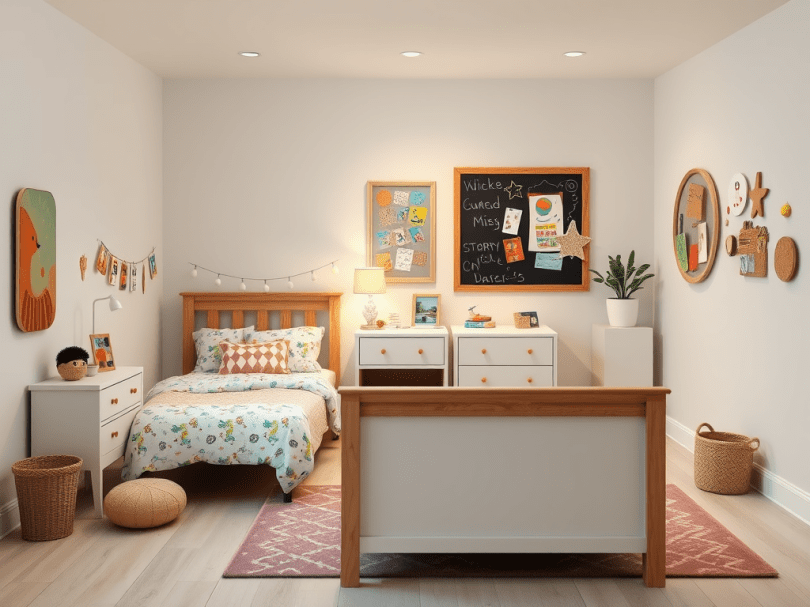
Give your child space to explore what they love. A chalkboard wall, pinboard, or magnetic display lets them show off their art, favorite characters, or new hobbies as they grow.
This not only adds personality but also helps your child connect with their room as a creative space that changes with them.
5. Keep It Flexible
A child’s room should grow with them — which means flexibility is key. Instead of committing to one theme, focus on interchangeable elements:
- Removable wall decals instead of murals
- Convertible furniture like a toddler bed that transforms into a twin
- Neutral bedding with themed accent pillows
- Floating shelves for rotating decor or collectibles
This approach gives you (and your child) freedom to evolve the space as their interests change.
6. Let Them Have Small Wins
If your child struggles to make choices, offer two or three simple options at a time. Too many choices can overwhelm them — but limited options help them feel confident.
For example:
- “Do you like this green pillow or this yellow one?”
- “Which lamp do you think looks better on your desk?”
When they choose something themselves, even small details, it helps build ownership and pride in their room.
7. Add a Touch of You — Carefully
It’s natural to want your child’s room to reflect your own taste, but it’s important to leave space for their personality to shine through. If you lean toward minimalist decor, balance it with their need for whimsy. If you love rustic tones, add playful textures like pom-pom garlands or colorful artwork to keep it kid-friendly.
Your role is to guide, not dictate — and that’s what makes the space feel special for both of you.

Final Thoughts
Decorating a unisex child’s bedroom doesn’t mean creating a bland or style-less space — it’s about designing a flexible foundation that grows with your child. By focusing on neutrals, layering color through accessories, and involving your child in small ways, you’ll help them naturally discover their style over time.
Most importantly, remember: their room is a reflection of their journey, not just your vision. And sometimes, watching their tastes develop is the most rewarding part of the design process.







 Discoveringlifellc