

So, you’ve finally decided to demo your kitchen — exciting, right? Nothing says “fresh start” quite like the sound of old cabinets coming off the wall. But once the dust settles, one big question remains: what kind of cabinets should you buy?
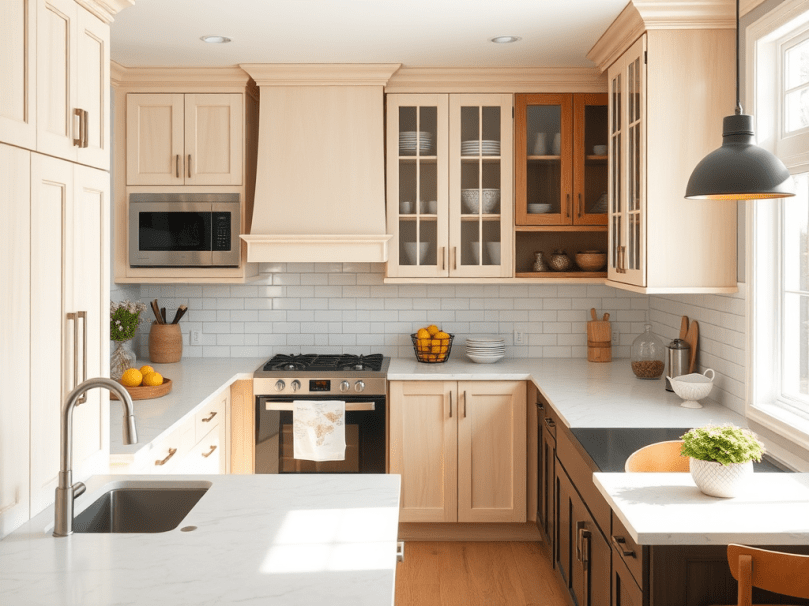
Choosing the right cabinets isn’t just about style; it’s about creating a kitchen that fits your lifestyle, storage needs, and overall design vision. Whether you’re going for modern minimalism, cozy farmhouse, or timeless traditional, your cabinets set the tone for your entire space. Let’s walk through how to choose the right ones — from type to color — and why it all matters.
1. Start with the Type of Cabinets You Need
Before you fall in love with a color or door style, think about function. Ask yourself:
- Do I want stock, semi-custom, or custom cabinets?
- Stock cabinets are budget-friendly and available in standard sizes — perfect for quick remodels.
- Semi-custom cabinets offer more flexibility in sizing, finishes, and storage options.
- Custom cabinets are built specifically for your kitchen, ideal if you have a unique layout or specific vision.
- How much storage do I need?
- If you cook often, prioritize deep drawers, pull-out shelving, and hidden organizers.
- For smaller kitchens, consider upper cabinets that go to the ceiling — maximizing every inch of space.
Your cabinet choice should make your kitchen work for you — not the other way around.
2. Choose the Right Cabinet Style
The cabinet door style is where your personal taste really shines. A few popular options include:
- Shaker style: Clean, simple, and timeless — great for almost any design.
- Flat-panel (slab) doors: Sleek and modern, ideal for contemporary kitchens.
- Raised-panel doors: Classic and elegant, often found in traditional homes.
- Glass-front doors: Perfect for showcasing dishware or adding an airy feel.
Think about how your cabinet style will complement other elements in your kitchen — like your backsplash, countertops, and flooring.
3. Picking the Perfect Cabinet Color
Color can completely transform your kitchen. It’s what creates mood and flow in the space. Here’s how to choose wisely:
- Go light if your kitchen is small or lacks natural light. White, cream, or soft gray cabinets can make the room feel more open.
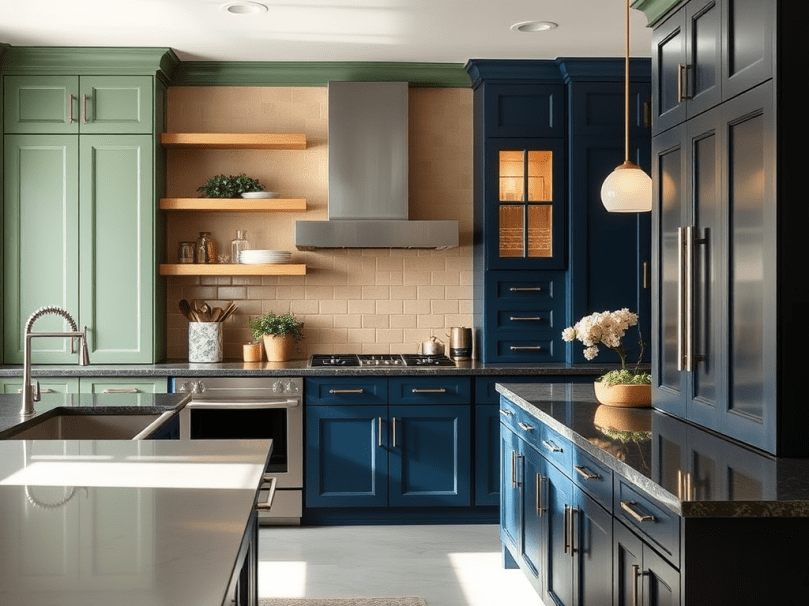
- Go dark if you want drama or contrast. Navy, charcoal, or black cabinets pair beautifully with lighter countertops.
- Mix it up with a two-tone look — white uppers and wood or colored lowers are a big trend that adds dimension and personality.
Before you commit, bring home samples and see how they look in your kitchen’s lighting. What seems perfect in the showroom may look completely different under your own lights.
4. Why It Matters Which Cabinets You Buy
Your cabinets are more than just storage — they’re a long-term investment in your home’s value and your daily happiness. High-quality cabinets hold up better over time, resist wear, and give your kitchen a polished, finished look.
Poorly made cabinets can warp, chip, and cause frustration every time you open a door or drawer. On the other hand, well-chosen cabinets make your kitchen both functional and beautiful — a space you actually enjoy spending time in.
Cabinet Brand Suggestions by Price Range
Here’s a breakdown of typical cabinet quality / budget tiers, and some brand suggestions for each. (Note: exact pricing will vary wildly based on size of the kitchen, finishes, installation, etc.)
1. Budget / Entry Level
- What this means: Basic materials, ready-to-assemble or stock sizes, fewer finish/customization options. Good for smaller remodels or if budget is tight.
- Brand examples:
- IKEA KNOXHULT Base Cabinet — IKEA is commonly listed as a budget option. Coohom+1
- Hampton Bay Base Cabinet — The brand Hampton Bay shows up as a budget friendly stock option. Lifestory Research+1
- What to watch: Make sure materials (plywood vs particle board), hardware (soft-close, drawers) and durability are acceptable. Even on a budget you don’t want something that will fall apart.
2. Mid-Range / Semi-Custom
- What this means: Better materials and construction (plywood boxes, better finishes), more color/door style options, possibly modifications to sizing.
- Brand examples:
- What to watch: Confirm what is included vs what is “upgrade” (for example, premium finish, built-in organizers). The mid-range often gives more flexibility for your style without fully custom costs.
3. High-End / Custom / Luxury
- What this means: Fully custom builds, premium woods, artisan finishes, unique configurations, possibly luxury/imported lines.
- Brand examples:
- Brands such as Wood‑Mode, Poggenpohl, SieMatic are cited as luxury cabinet brands. Today’s Homeowner+1
- What to watch: At this level you’re paying for craftsmanship, customization and long-term value. Make sure the investment aligns with your goals (resale, lifetime, “forever home”).
Final Thoughts
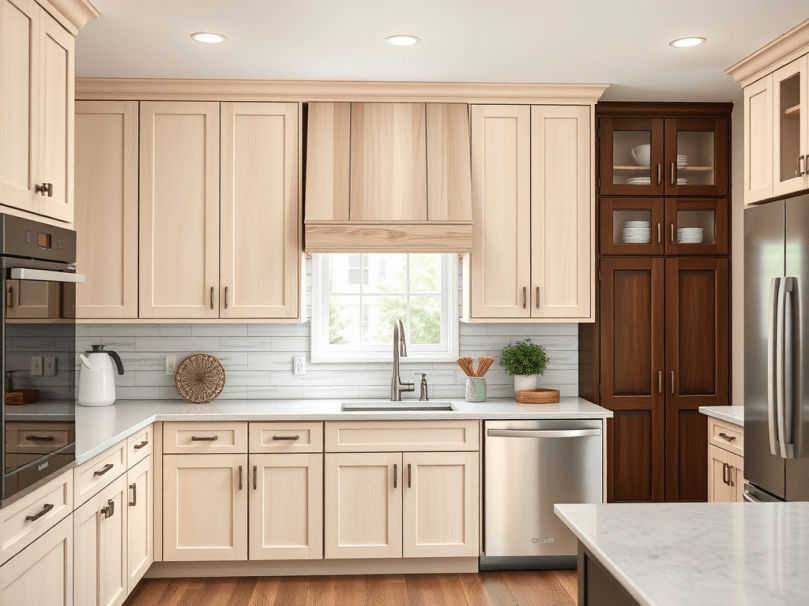
When you’re remodeling your kitchen, it’s easy to get caught up in the big picture — new floors, countertops, appliances. But your cabinets are truly the backbone of the space. Take your time, do your research, and invest in something that fits your lifestyle, taste, and budget.
The right cabinets don’t just store your dishes — they define your kitchen’s personality. So, before the next phase of your remodel begins, take a moment to envision how you want your kitchen to feel every time you walk in. That’s where your cabinet story begins.


 Discoveringlifellc