


As summer winds down and cooler temperatures roll in, your lawn begins to shift into a new growth cycle. Fall is actually one of the best times to give your grass some extra attention—it’s when roots grow strongest and set the stage for a lush, green yard next spring. By preparing your lawn properly during the transition from summer to fall, you can ensure it stays healthy and vibrant.
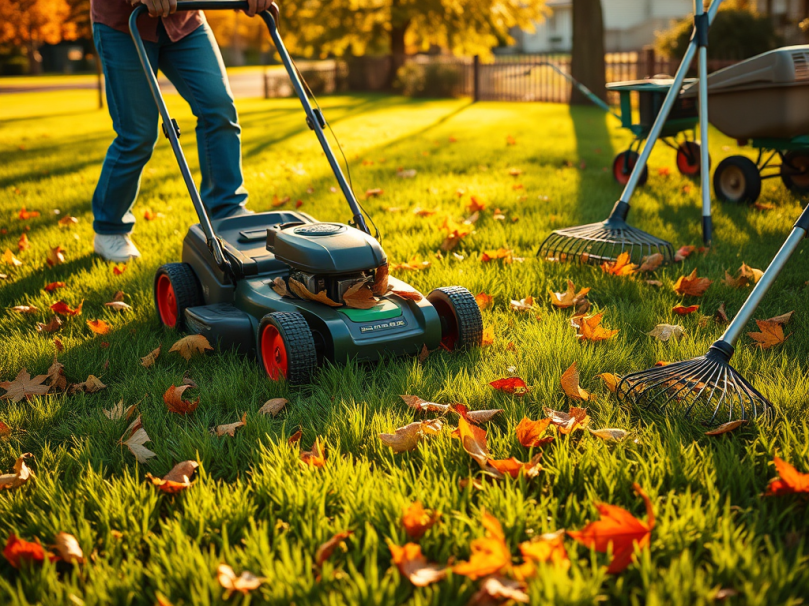
Here are the key steps for proper lawn care this season:
1. Keep Mowing, But Adjust the Height
Don’t put the mower away just yet! Grass still grows in the fall, though at a slower pace. Lower your mower blade slightly—usually around 2 ½ to 3 inches—to keep the lawn short enough to avoid matting but long enough to protect roots from upcoming cold. Cutting too short can stress the grass, while letting it grow too tall can invite disease.
2. Rake and Remove Leaves Regularly
Fallen leaves may look beautiful, but if left to pile up, they block sunlight, trap moisture, and can suffocate your grass. Rake often, or mulch the leaves with your mower to create a natural fertilizer. Keeping your lawn clear now helps prevent mold and patchy growth later.
3. Aerate the Soil
After a summer of foot traffic, your soil is likely compacted. Aeration—punching small holes into the lawn—allows water, nutrients, and oxygen to reach the roots more easily. Fall is the perfect time for this because the cooler weather encourages strong root growth.
4. Fertilize for Strong Roots
A fall-specific fertilizer provides essential nutrients that grass needs to strengthen its root system before winter. Look for a fertilizer higher in phosphorus and potassium, which promote root health and prepare your lawn to withstand the cold months.
5. Overseed Bare or Thin Spots
If summer heat or activity left your yard looking thin, overseeding in the fall can thicken it up. Cooler weather, moist soil, and less competition from weeds give grass seed the perfect environment to sprout and establish before winter.
6. Keep Watering (But Not as Much)
Even though temperatures drop, your lawn still needs consistent moisture. Water deeply once or twice a week, depending on rainfall, until the ground begins to freeze. This helps seeds germinate and supports strong root development.
7. Weed Control
Weeds don’t take the season off. Applying a targeted fall weed control treatment helps eliminate stubborn intruders before they have a chance to spread in spring. A little prevention now goes a long way.
8. Prepare Equipment for Storage
As you finish your fall lawn care routine, clean and maintain your mower, trimmer, and other lawn tools before storing them away. A little maintenance now will save you time and frustration when spring arrives.

Final Thoughts
Fall lawn care is all about strengthening your grass for the months ahead. By mowing, raking, aerating, fertilizing, seeding, and watering, you’re setting the foundation for a lush, green lawn next year. Think of it as tucking your lawn in for winter—give it the right care now, and it will reward you when spring blooms.
 Discoveringlifellc