
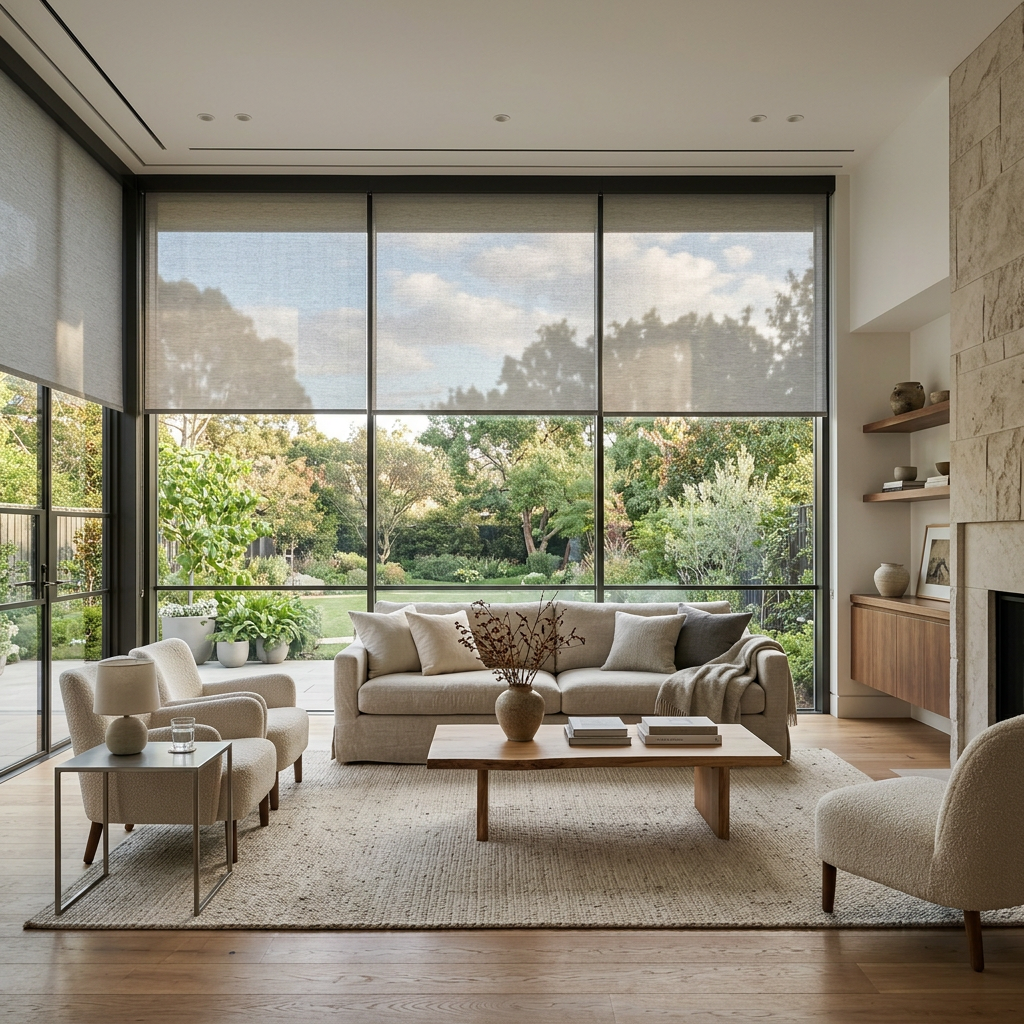
There was a time when pressing a button to open or close your window shades sounded like something reserved for luxury hotels. It seemed limited to high-end homes or futuristic movies.
Today, electric shades are becoming much more common in everyday homes.

Moreover, smart-home technology now moves beyond thermostats, doorbells, speakers, and lighting. Homeowners are asking a new question: Why am I still manually opening and closing every shade in my house?

Electric window shades, also called motorized or smart shades, are becoming a common home upgrade. With the touch of a button, a remote, or a smartphone app, they open and close. Voice command or an automated schedule can control them without you touching.
Some systems respond to the time of day, sunrise, or sunset. DIY and retrofit options have made electric shades more accessible. The technology is increasingly affordable for DIY projects and retrofits. As a result, more homeowners can choose electric shades for convenience and efficiency.
But just because something is trending doesn’t automatically mean it belongs in your home. Electric shades can be convenient, beautiful, and surprisingly practical, but they also come with higher costs, installation considerations, maintenance, and technology that can occasionally be more complicated than a traditional shade. So before you replace every window in your house, let’s look at why electric window shades are becoming so popular, what homeowners love about them, and the downsides you should know before making the investment.
So, Why Are Electric Window Shades Becoming a Trend?
The biggest reason electric shades are becoming popular is simple: people want their homes to work smarter.
Modern homeowners are increasingly interested in convenience. We already use our phones to control thermostats, lights, security cameras, locks, appliances, and entertainment systems. Window coverings are naturally becoming part of that same ecosystem.
Instead of walking around the house every morning opening blinds one room at a time, imagine having your bedroom shades automatically open when you wake up. Your living-room shades can close when the afternoon sun becomes intense. Your bedroom can automatically darken at night. And when you leave for vacation, your shades can open and close on a schedule so the house doesn’t appear completely empty.
That level of automation is one reason smart shades have moved from being a luxury feature to a more practical smart-home upgrade. Current systems can offer remote controls, smartphone apps, voice assistants, scheduling, and integration with broader smart-home ecosystems.
And there is another reason they are gaining attention: large windows are becoming increasingly popular in home design.
Floor-to-ceiling windows, oversized living-room windows, tall bedroom windows, and expansive glass doors can make a home feel bright and beautiful. But those same windows can become difficult to manage. A giant window may require a large, heavy shade that is awkward to operate manually. A window positioned several feet above the floor can be difficult to reach. A window behind furniture may technically be accessible—but practically isn’t.
Electric shades solve that problem beautifully.
Convenience Is Probably the Biggest Perk
Let’s be honest. Sometimes we don’t need technology because something is difficult. We want technology because something is annoying.
Opening a single bedroom shade isn’t difficult. Opening twelve shades every morning and closing twelve every evening can become a chore.
Motorized shades allow you to control multiple windows at once. Depending on the system, you can operate individual shades, a group of shades, or the entire house. That means you could create a “Good Morning” setting that opens your bedroom and kitchen shades while leaving the living room partially closed.
You could create a “Movie Night” setting that closes the shades throughout the living room with one command.
You could even create a “Good Night” routine that closes your bedroom and downstairs shades automatically.
The convenience becomes even more valuable when you have hard-to-reach windows, oversized shades, skylights, tall windows, or windows positioned behind furniture. Motorization can also make window coverings easier to operate for people who have difficulty using traditional cords or wands.
They Can Help You Control Sunlight and Heat
Electric shades aren’t simply about luxury and convenience. The right window covering can also play a role in managing sunlight and indoor comfort.
Anyone who has a west-facing living room knows how brutal afternoon sunlight can be. You may love the natural light in the morning, only to find yourself squinting at the television at 4 p.m. because the sun is shining directly through the windows.
Instead of remembering to close the shades every afternoon, automated shades can be programmed to respond to a schedule or smart-home routine.
This can also help with solar heat gain. The U.S. Department of Energy notes that interior shades and blinds can reduce unwanted solar heat gain, and research on automated window attachments has found potential energy-saving benefits depending on the climate, window orientation, shade type, and how the shades are operated.
The important phrase here is depending on the situation.
Electric shades aren’t automatically going to slash your energy bill. Your windows, climate, shade material, orientation, insulation, and daily habits all matter. But automation can make it easier to consistently use shades when they are most beneficial.
That consistency is something traditional shades don’t necessarily provide.

They Can Give You More Privacy
Privacy is another major reason homeowners are turning toward motorized shades.
Think about a house with large front windows. During the day, you may want plenty of natural light. At night, however, you don’t necessarily want the entire neighborhood seeing into your living room.
With electric shades, you can create a schedule that automatically closes them in the evening.
That means you don’t have to remember.
And if you are away from home, you can potentially operate your shades remotely depending on the system. Some homeowners also use scheduled shade movement as part of their overall home-security routine because a completely static house can look unoccupied when someone is traveling.
They Can Make a Room Look Cleaner
There is also an aesthetic reason electric shades are gaining popularity.
Traditional blinds can sometimes leave cords, chains, wands, or other hardware visible. Motorized shades can provide a cleaner, more streamlined appearance.
This is particularly attractive in modern, contemporary, minimalist, and luxury-inspired interiors where homeowners want the windows to look polished without excessive hardware.
Cordless operation can also be beneficial in homes with children and pets because it eliminates dangling operating cords.
And because multiple shades can be operated together, you can keep a row of windows visually aligned instead of having one shade slightly higher than another.
That small detail can make a surprisingly big difference in a carefully designed room.
But Let’s Talk About the Downsides
As attractive as electric window shades sound, they aren’t perfect.
The biggest downside for most homeowners is cost.
Traditional blinds and shades can be relatively inexpensive, particularly when purchased off the shelf. Adding motors, batteries, smart-home connectivity, custom sizing, specialized hardware, and professional installation can increase the price significantly. Current smart-shade reviews also note that customized sizes and installations can substantially increase the starting price.
And if you have twenty windows, that cost can multiply quickly.
This is why I wouldn’t automatically recommend motorizing every window in the house.
Instead, think strategically.
Are there any windows that are difficult to reach?
How do windows receive intense afternoon sunlight?
What windows do you adjust on a daily basis?
Please indicate which windows are extremely large.
Could certain windows benefit from scheduled privacy?
Those are often the best candidates for motorization.
Batteries Become Part of the Equation
Many electric shades are battery-powered, which means you don’t necessarily have to wire your walls to install them. That’s convenient, but batteries eventually need to be recharged or replaced.
How often that happens depends on the shade, battery system, size, and frequency of use.
For someone who wants their shades to open and close several times a day, battery management becomes something to consider.
Hardwired systems eliminate regular battery changes, but they can require more involved installation.
Solar-powered options are also available for some systems, giving homeowners another way to approach power management.
What Happens When the Technology Doesn’t Cooperate?
This is the part that traditional window shades have going for them: they are wonderfully simple.
A traditional shade doesn’t need Wi-Fi.
A standalone app isn’t necessary.
No software update is required.
Pairing with your phone isn’t necessary.
And it doesn’t need a battery.
Electric shades introduce technology into something that previously required almost none.
That means you can potentially encounter connection problems, pairing issues, app problems, battery failures, or motor issues. Some systems may also require a hub to connect with your smart-home platform.
Before buying, find out exactly what happens if the power goes out or the motor stops working. Some battery-powered models can continue operating, while other systems may have limitations depending on the design.
That is an important question to ask before installation rather than after something stops working.
Are Electric Shades Noisy?
Modern motors are generally designed to be relatively quiet, but “quiet” doesn’t necessarily mean completely silent.
This may not matter in a kitchen or living room, but it can matter in a bedroom.
If you’re considering electric shades for a nursery, bedroom, home office, or other quiet space, listen to the motor before purchasing if possible.
A shade that sounds perfectly acceptable during the day might become surprisingly noticeable when you’re trying to sleep in a completely quiet room.
What About the Energy Savings?
This is where it’s important not to fall for exaggerated marketing claims.
The energy performance of window shades depends heavily on the shade material, window, climate, orientation, and how the shade is used. The Department of Energy notes that window attachments can affect heating and cooling loads, and research has found particularly strong performance from insulating cellular shades.
Automated shades can add another benefit: they can make the right behavior automatic.
Instead of remembering to close the shades when the afternoon sun hits your windows, the system can do it for you.
That doesn’t mean every electric shade will pay for itself through energy savings. It means automation can potentially help you use your window coverings more effectively.
So, Are Electric Window Shades Worth It?
For some homeowners, absolutely.
For others, probably not.
If you have a small home with six easily accessible windows, traditional shades may be perfectly adequate. Spending thousands of dollars to motorize them may not make much sense.
But if you have large windows, difficult-to-reach windows, a lot of natural sunlight, privacy concerns, a smart-home system, or simply want more convenience, electric shades can be a very worthwhile upgrade.
And you don’t have to do the entire house at once.
That may actually be the smartest approach.
Start with the windows that give you the biggest headache.
Automate the giant living-room window. We recommend motorizing the bedroom windows. Automate hard-to-reach windows now. See how you like them.
Then, if you discover that you love the convenience, you can gradually add more.
The Best of Both Worlds
One of the things I love about home design is that you don’t have to choose between technology and simplicity.
You can have both.
Maybe your living room gets beautiful motorized shades because the afternoon sun is intense. Your bedroom gets blackout motorized shades because you want complete control over morning light. But the small bathroom window gets a simple manual shade because there is absolutely no reason to spend extra money putting a motor on it.
That’s not cutting corners.
That’s designing intentionally.
The goal isn’t to make every item in your house “smart.” The goal is to make your home work better for the way you actually live.
Before You Buy Electric Window Shades, Ask Yourself These Questions
Before purchasing, consider how often you use each window covering, whether the window is difficult to reach, how much sunlight the window receives, whether you need blackout or light-filtering fabric, whether privacy is important, whether you want voice or app control, whether you prefer battery, solar, or hardwired power, and what happens if the power or internet connection fails.
Also think about the long term.
A window shade is something you may live with for years. Don’t choose a system simply because it looks impressive in a smart-home demonstration. Choose something that fits your lifestyle, your decorating style, your budget, and your willingness to maintain the technology.

The Bottom Line
Electric window shades are becoming a trend because they represent something much bigger than a fancy window covering. They are part of the larger movement toward homes that are more convenient, more connected, more comfortable, and more personalized.
They can make large windows easier to manage, improve privacy, reduce glare, help control sunlight, eliminate dangling cords, and give homeowners the ability to automate everyday routines. And as smart-home technology becomes more accessible, motorized shades are no longer limited to luxury hotels and million-dollar houses.
But they aren’t automatically the right choice for every window.
They cost more. They introduce technology that can require maintenance. Batteries need attention. Installation can be more complicated. And sometimes, a simple manual shade is all you really need.
So before you ask, “Should I get electric window shades?”, ask a better question:
“Which windows in my home would actually be better if they were electric?”
That answer will probably lead you to a much smarter—and much more worthwhile—investment.
Because the best home technology isn’t the technology you can show off.
It’s the technology that quietly makes everyday life easier.

Leave a Reply