

Observations on color usage
Note there is something about the color black.
It affects perception and contrast in visuals.
It is difficult to explain, but you know it when you see it. Black dresses can feel effortlessly elegant. A black front door can make a home look instantly more sophisticated. A black kitchen island can command attention without asking for it. Even a simple black picture frame can somehow make the artwork inside it feel more important.

Black has a presence that few other colors possess.

It can be bold without being loud, dramatic without being overwhelming, and luxurious without trying too hard. It can make a room feel modern, traditional, intimate, edgy, or incredibly sophisticated depending on what you put around it.
And perhaps that is why black has remained such a powerful force in design.
It isn’t simply a color we use.
Black is a statement.
Why Are We So Drawn to Black?
Think about your favorite little black dress.
Additionally, consider a beautifully tailored black suit, a black luxury vehicle, or a room with black accents.
Moreover, there is something undeniably confident about the color black.
Part of its appeal comes from its simplicity.
Moreover, the color black doesn’t have to compete with other colors.
It can stand on its own.
It also has an incredible ability to make nearby colors more noticeable.
Put black next to white and the contrast becomes striking. Put it next to cream and it becomes softer and warmer. Add gold and it suddenly feels glamorous. Pair it with natural wood and it takes on an earthy sophistication. Introduce burgundy or chocolate brown and the entire palette becomes rich and dramatic.
Black has the ability to adapt to its surroundings while still maintaining its identity.
That is a rare quality.
Perhaps this is why black continues to find its way into our homes, our closets, our cars, our artwork, our technology, and virtually every other area of design.
It is dependable.
It is dramatic.
It is timeless.
And it is almost impossible to ignore.
The Fascinating History of Black
Although we often think of black as an obvious and universally available color today, its history is much more complicated.
For centuries, creating deep, lasting black dyes was difficult. High-quality black textiles could require specialized dyes and considerable resources, which helped make black clothing a symbol of wealth and status in parts of Europe.
By the 16th and 17th centuries, black had become particularly associated with authority, wealth, sophistication, and formality. Black clothing became popular among European elites and at royal courts, where the color could communicate seriousness and social position.
At the same time, black developed another powerful association: mourning.
Black became strongly connected with grief and death in European society, particularly during the Victorian era. Mourning clothing was often black, and wearing black became a visible expression of loss.
But the story of black didn’t stop there.
As fashion and culture evolved, the meaning of black began to change. It moved beyond mourning and became associated with modernity, sophistication, independence, rebellion, and style.
Few colors have experienced such a dramatic transformation.
Black went from being associated with solemnity to becoming one of the most celebrated colors in fashion and design.
Then Came the Little Black Dress
One of the most important transformations in the cultural perception of black came through fashion.
The little black dress helped turn black into a symbol of effortless sophistication. Coco Chanel famously embraced black as a fashionable, versatile color, and in 1926 Vogue featured one of her simple black dresses, helping establish the idea that a black dress could be both elegant and accessible.
Suddenly, black wasn’t simply something you wore because you were mourning.
You wore it because you had style.
The little black dress became a symbol of simplicity and sophistication, and its influence extended far beyond fashion.
Interior design began embracing that same philosophy.
Why cover an entire room in complicated patterns and colors when one carefully chosen black element can make everything else look better?
That is the beauty of black.
Black Has a Way of Grounding a Room
When you walk into a room that feels like it is missing something, sometimes the solution isn’t another color.
Sometimes it is black.
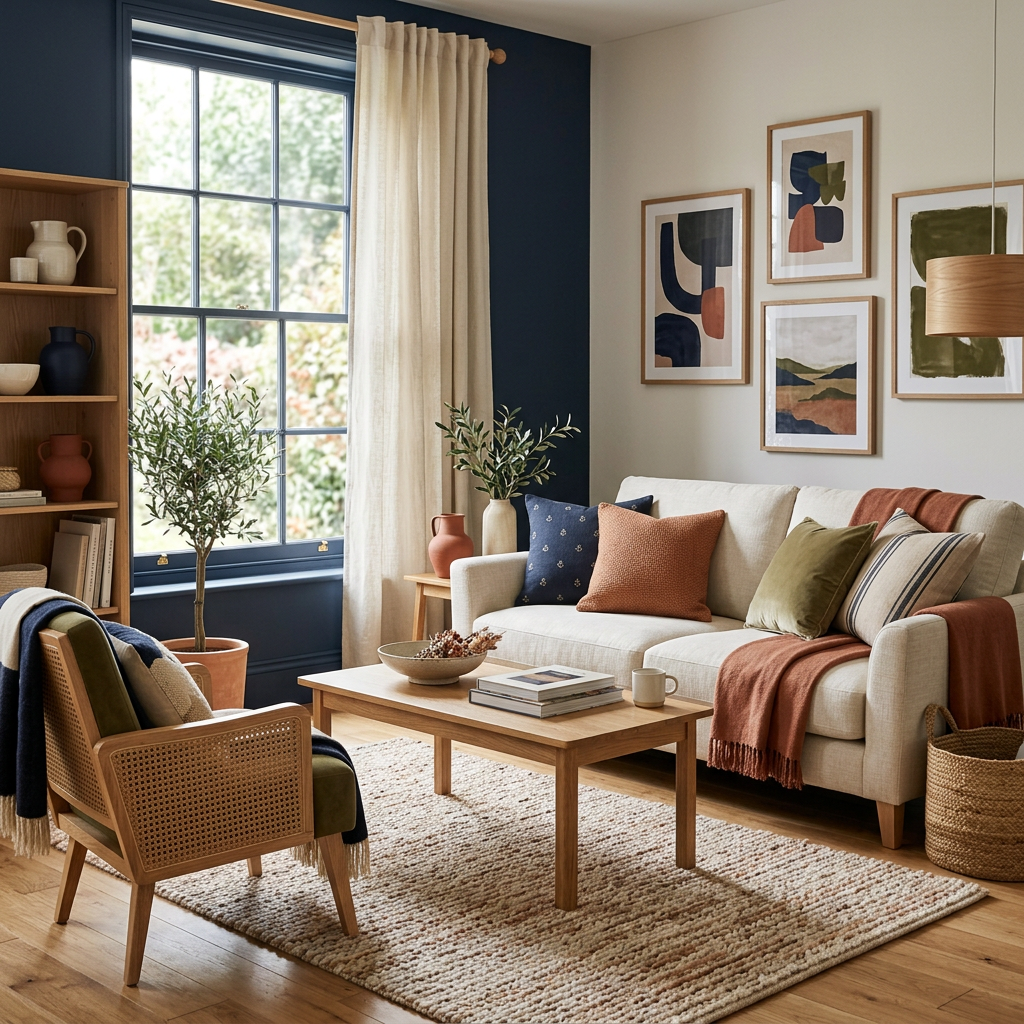
Imagine a soft cream living room with a beige sofa, warm wood flooring, and neutral curtains. It may already be beautiful, but adding a black coffee table, black picture frames, and a black floor lamp suddenly gives the room structure.
The black creates contrast.
It gives your eyes somewhere to land.
It separates the lighter elements and creates a sense of balance.
This is why black works particularly well in neutral interiors. Beige, cream, white, taupe, gray, and natural wood can sometimes begin to feel too similar when there isn’t enough contrast. Black provides the visual punctuation that brings the room back to life.
Think of black as the period at the end of a sentence.
Without it, something may feel unfinished.
How to Style Black in Your Home
The easiest way to decorate with black is to stop thinking of it as something that has to dominate the room.
Instead, think of black as an accent that can move throughout your space.
You might begin with something as simple as a black lamp or a set of black picture frames. From there, you can repeat the color in your curtain rods, furniture legs, hardware, artwork, or decorative accessories.
This repetition is important because it makes the black feel intentional.
One black object sitting by itself can sometimes look random. But when the same color appears in several places throughout a room, your eye naturally connects those elements.
Suddenly, the room feels designed.
And you don’t need much black to create that effect.
Black and White Will Always Work
There is a reason black and white is one of the most recognizable color combinations in design.
It is classic.
The contrast is strong, but the simplicity prevents it from becoming confusing. A black-and-white room can feel contemporary, traditional, minimalist, glamorous, or even farmhouse depending on the furniture, textures, and accessories you choose.
The trick is to avoid making everything perfectly divided between black and white.
Instead, introduce different textures.
A soft white sofa against a black coffee table feels very different from a glossy black cabinet paired with white marble. A black velvet pillow feels different from a black linen pillow.
The colors may be identical, but the textures create personality.
Black and Gold Bring the Drama
If you want your space to feel luxurious, black and gold are almost impossible to beat.
Black creates the foundation while gold introduces warmth and glamour.
The secret is restraint.
You don’t need gold everywhere. A black console table with gold hardware, a black mirror with a gold frame, or a few gold accessories against a black backdrop can be enough.
Think of black as the elegant dress and gold as the jewelry.
The combination works because each color gives the other something it needs.
Black gives gold sophistication.
Gold gives black warmth.
Together, they create drama.
Black and Natural Wood Create Balance
One of the most beautiful ways to soften black is to pair it with natural materials.
Warm wood immediately changes the personality of black.
A black dining table surrounded by natural wood chairs feels completely different from a room filled with black metal and glass. Black kitchen cabinets paired with warm oak flooring can feel modern without becoming cold.
This combination works because it balances two opposing qualities.
Black brings depth.
Wood brings warmth.
Together, they create a room that feels sophisticated but still comfortable.

Don’t Be Afraid of Black Walls
A black wall may sound intimidating, but it can be absolutely beautiful when used thoughtfully.
The key is understanding the room you’re working with.
A space with plenty of natural light can often handle a dramatic black accent wall beautifully. A bedroom with a black wall behind the bed can feel intimate and luxurious. A home office with dark walls can feel sophisticated and focused. Even a dining room can become incredibly dramatic with a rich dark backdrop.
And here’s the secret: you don’t necessarily have to fight the darkness.
Instead, embrace it.
Add warm lighting, soft textiles, natural wood, metallic accents, and artwork. Rather than trying to make the black disappear, allow it to become part of the mood.
Sometimes the most beautiful rooms aren’t bright and airy.
Sometimes they’re moody.
Sometimes they’re dramatic.
Sometimes they’re dark.
And that’s okay.
Black Doesn’t Mean Modern
One of the biggest misconceptions about black is that it automatically makes a room contemporary.
Black can work with almost any decorating style.
A farmhouse interior allows black to be paired with white, distressed wood, and woven textures. In a traditional home, black can complement molding, classic furniture, and antique-inspired accessories. In a glamorous room, black works beautifully with velvet, mirrors, and metallic finishes.
Even a cozy cottage-style home can benefit from a few black accents.
The style doesn’t come from the color alone.
It comes from how you use it.
Texture Makes Black More Interesting
If you’re going to bring a lot of black into a room, don’t forget about texture.
This may be one of the most important rules when decorating with a monochromatic color.
Black leather, black velvet, black wood, black marble, black metal, and black linen may all share the same basic color, but they don’t feel the same.
Texture creates depth.
Imagine a black velvet sofa paired with a black metal coffee table, a black woven throw, and a matte black lamp. Everything is black, yet nothing feels flat because every surface interacts with light differently.
That is how you make monochromatic decorating interesting.
Black in the Bedroom
There is something particularly beautiful about black in a bedroom.
It can create a sense of intimacy and sophistication without requiring an elaborate design.
A black bed frame can become the anchor of the room. Black nightstands can create symmetry. Black lamps can introduce contrast, while cream or ivory bedding keeps the space soft.
For a particularly rich look, consider combining black with chocolate brown, warm wood, cream, and brass.
The result can feel almost like a boutique hotel.
And who doesn’t want their bedroom to feel like a retreat?
Black in the Kitchen
This color has become increasingly popular in kitchens because it works beautifully with modern materials.
Black hardware can transform white cabinets. A black island can become the centerpiece of an otherwise neutral kitchen. Black lighting can add architectural interest, while black bar stools can visually connect the island to the rest of the room.
If you’re not ready for an entire black kitchen, start small.
Change the cabinet hardware.
Add black pendant lights.
Introduce black bar stools.
Try a black faucet.
You may be surprised by how much difference those seemingly small changes can make.
Black Is About Confidence
Perhaps the reason black has become such a force is because of what it represents.
Black doesn’t need to prove itself.
It doesn’t need to be loud.
It doesn’t need to be colorful.
It simply has presence.
In a world where design trends are constantly changing, black remains.
Trends come and go. Colors rise and fall in popularity. Styles change from year to year.
But black continues to find a place.
It reinvents itself without losing its identity.
That may be the greatest lesson black has to teach us.
You can evolve without becoming someone else.
Black has been associated with mourning, wealth, authority, rebellion, sophistication, elegance, and modernity. Its meaning has changed throughout history, but its ability to make an impact has remained.

Maybe It’s Time to Appreciate Black
We often talk about colors in terms of what they do for us.
Blue makes us feel calm.
Green connects us with nature.
Yellow feels cheerful.
Red creates energy.
But black deserves a different kind of appreciation.
Black gives other colors room to shine.
It creates contrast.
It adds depth.
It establishes balance.
It makes a room feel finished.
And sometimes, it simply makes a space feel more confident.
You don’t have to paint your entire home black to experience its impact.
Start with a picture frame.
Try a black lamp.
Add a black pillow to your sofa.
Choose black hardware for your kitchen.
Bring in a black coffee table.
Or, if you’re feeling brave, paint one wall.
You might discover that black isn’t the dark, intimidating color you once thought it was.
It may actually be the missing piece your room needed.
Because black doesn’t have to take over a space to make an impact.
Sometimes, all it has to do is show up.
And when it does, it reminds us why this remarkable color has remained a force in design for centuries.



Leave a Reply