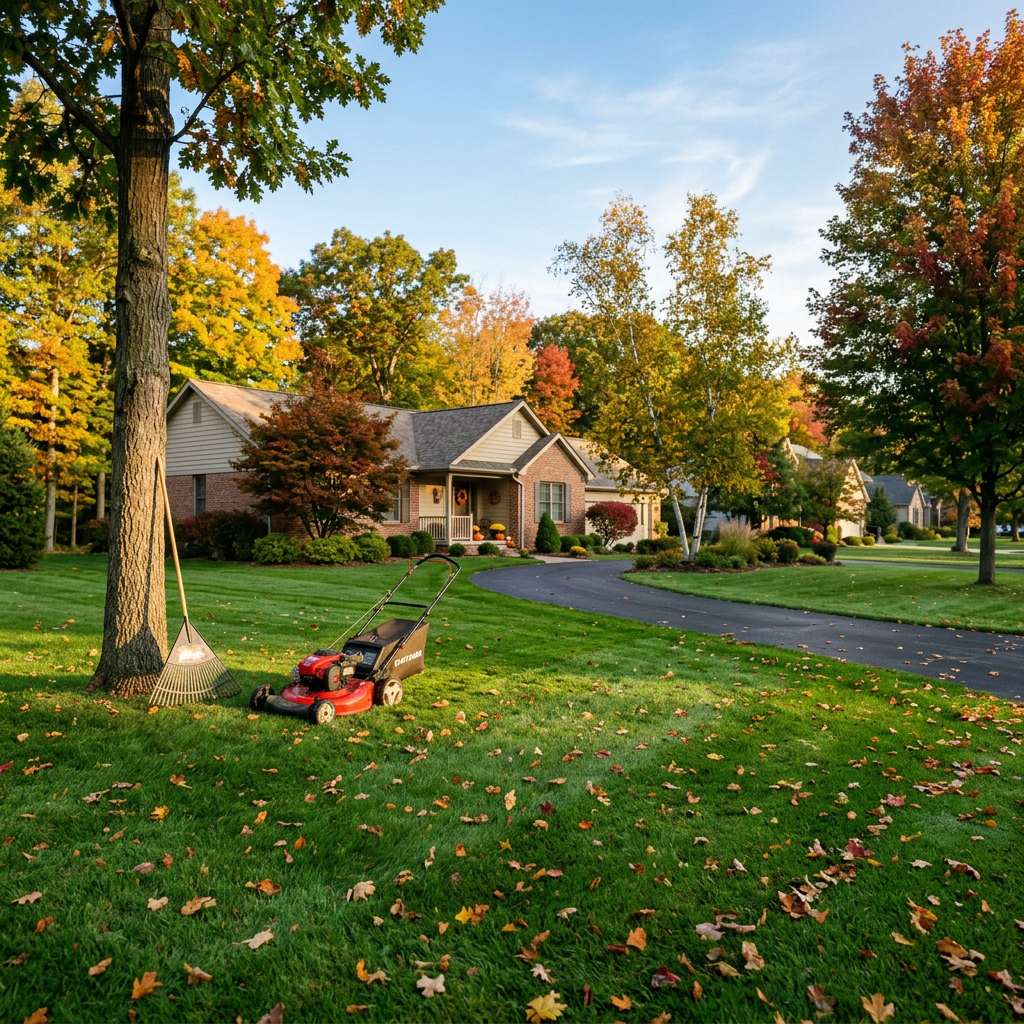
When we think about fall, our minds go to pumpkins on the porch, cozy blankets, and warm candles. Additionally, before you pull out the décor, an area deserves attention: your lawn and outdoor spaces for fall leave prep.

However, fall leaves are beautiful, but they can quickly turn into a major outdoor chore. A few colorful leaves scattered across the lawn can look charming. Additionally, a thick layer of wet leaves sitting on the grass for weeks is an entirely different story.

Preparing your yard before the leaves begin to fall can make the season easier. It also protects your lawn and helps outdoor spaces look their best going into winter.
The good news is that you don’t have to wait until your yard is covered in leaves to get started. With a little preparation now, you can create a simple fall lawn-care routine that keeps the work manageable, instead of allowing it to become one overwhelming weekend project.
Why Should You Prepare Your Lawn Before the Leaves Fall?
Fall lawn preparation is about more than keeping your yard looking neat.
Your lawn is preparing for winter.
Additionally, the way you care for it during the fall can influence how it looks when spring arrives.
A heavy layer of leaves can block sunlight and reduce airflow around the grass. When leaves become wet, they can create a dense layer over the lawn that holds moisture against the grass. This can contribute to lawn problems, particularly if the leaves remain in place for an extended period.
Preparing your lawn before the leaves arrive also makes cleanup easier.
Additionally, when your grass is mowed, your garden beds are cleaned, outdoor furniture is organized, and your tools are ready.
You avoid juggling ten outdoor projects while fighting a mountain of leaves.
Think of early fall preparation as setting your future self up for an easier season.
Start With a Good Lawn Cleanup
Before the leaves begin falling heavily, walk around your property and look at everything that accumulated during summer.
Branches, sticks, weeds, dead plants, toys, gardening supplies, and other debris should be removed from the lawn. Anything left on the grass can make mowing and leaf removal more difficult later.
This is also the perfect time to clean up garden beds. Remove dead annual plants, pull weeds, trim overgrown growth where appropriate, and clear away obvious debris.
You don’t necessarily have to make your yard perfectly bare. In fact, some natural plant material can provide food and shelter for wildlife. The goal is to remove unnecessary debris while allowing your landscape to transition naturally into fall.
Give Your Lawn One More Good Mow
One of the easiest things you can do before leaf season is keep your grass at an appropriate height.
As fall progresses, grass growth generally slows, but that doesn’t mean you should stop mowing immediately. Continue mowing as needed while paying attention to the recommended mowing height for your particular grass type.
Avoid letting the grass become excessively tall before winter. At the same time, avoid cutting it dramatically short simply because winter is approaching.
A moderate final mowing can make leaf cleanup easier because shorter grass allows leaves to be more visible and easier to remove or mulch.
Sharpen Your Mower Blade
While you’re thinking about mowing, don’t forget about the equipment doing the work.
A dull mower blade can tear grass rather than cutting it cleanly. Before the heavier fall cleanup begins, inspect your mower and make sure the blade is properly maintained.
This is also a good time to clean grass buildup from your mower deck, check the tires, inspect the bagging system if you use one, and make sure everything is ready for fall.
A little equipment maintenance now can save you frustration later.
Prepare Your Leaf-Cleanup Tools
There is nothing worse than seeing the first major wave of leaves covering your yard and realizing your rake is broken, your leaf bags are gone, or your blower won’t start.
Before the leaves begin falling heavily, gather everything you typically use for fall cleanup.
Depending on the size of your property, this might include a sturdy leaf rake, lawn bags or compost containers, a leaf blower, gloves, a tarp, pruning tools, and a mower with a bagging or mulching function.
You don’t need every tool available. The best setup is the one that works efficiently for your yard.
For a small lawn, a rake and a few bags may be all you need. For a larger property, a leaf blower, mower, and tarp can significantly reduce the amount of physical work.
Check Your Gutters Before the Leaves Start Falling
Your lawn isn’t the only place where falling leaves collect.
Trees near your home can send leaves directly onto the roof and into your gutters. Cleaning gutters before peak leaf season gives you a head start and reduces the amount of debris already sitting in the system.
Once the leaves begin falling, you’ll want to check your gutters regularly, especially if you have several mature trees surrounding your home.
Don’t wait until you notice water overflowing from the gutters. By then, they may already be clogged.
Protect Your Garden and Flower Beds
Fall is also an excellent time to evaluate your garden beds.
Remove plants that have finished producing, harvest remaining vegetables, and cut back plants according to their specific needs. Some perennials should be cut back in fall, while others benefit from remaining intact through the winter.
If you’re unsure about a particular plant, research its specific care requirements rather than automatically cutting everything down.
Adding an appropriate layer of mulch can also help protect plant roots from fluctuating temperatures. However, avoid piling mulch directly against tree trunks or plant stems.

Don’t Forget Your Trees
Fall is an ideal time to look at the trees around your property.
Inspect them for dead, damaged, or broken branches that could become problematic during winter storms. Small pruning jobs may be manageable for a homeowner, but large branches, branches near power lines, or trees requiring climbing should be handled by a qualified professional.
Trees also deserve attention because they are the source of the leaves you’re about to spend the next several weeks cleaning up!
Move and Store Summer Items
Fall lawn preparation isn’t just about the grass.
Take a walk around your outdoor spaces and decide what needs to remain outside and what needs to be stored.
Patio cushions, umbrellas, lightweight decorations, children’s outdoor toys, gardening tools, and other summer items may need to be cleaned and stored before colder weather arrives.
If you have outdoor furniture that can remain outside throughout the winter, clean it and check the manufacturer’s recommendations for seasonal storage or protection.
This is also a great opportunity to declutter your garage, shed, or outdoor storage area before winter arrives.
What Should You Do Once the Leaves Begin to Fall?
Now comes the part most homeowners associate with fall lawn care: leaf cleanup.
The biggest mistake is assuming you need to wait until every leaf has fallen before doing anything.
You don’t.
In fact, tackling leaves periodically is usually much easier than allowing them to accumulate into a thick, wet layer.
Don’t Let Leaves Pile Up Too Deep
You don’t necessarily need to remove every individual leaf the moment it lands.
A light scattering of leaves isn’t usually an emergency. The problem comes when leaves accumulate into a thick layer that remains on the grass.
Instead of waiting until your entire yard disappears beneath the leaves, establish a routine.
Depending on how many trees you have, you might rake or blow once a week, several times a week, or whenever the accumulation becomes substantial.
The key is consistency.
Consider Mulching Your Leaves
Before automatically bagging every leaf, consider whether your mower can mulch them.
When leaves are shredded into small enough pieces, they can break down and return organic material to the lawn. This can reduce the amount of material you need to bag and haul away.
However, there is a limit.
If the layer of leaves is too thick for your mower to process effectively, remove some of the leaves instead of simply continuing to mow over them.
Your goal is to create small pieces that can settle into the lawn rather than leaving large piles of leaves sitting on top of the grass.
Rake or Blow Leaves Into Manageable Areas
If you need to remove leaves, avoid randomly moving them around the yard.
Create a system.
Move leaves toward designated collection areas, then gather them with a tarp, rake, or blower. If you’re working with a large property, tackling one section at a time can make the project feel much less overwhelming.
You can also use leaves as part of your composting routine if your local rules and compost setup allow it.
Leaves can be an excellent source of carbon-rich material for compost.
Pay Special Attention to Wet Leaves
Wet leaves are considerably heavier than dry leaves.
They can also become compacted and much more difficult to remove.
If possible, take advantage of dry weather to complete your major leaf cleanup. A leaf blower works considerably better when leaves are dry, and raking is generally easier as well.
If leaves become soaked after rain, you may need to wait for them to dry before tackling a large cleanup.
Don’t Forget Your Driveway, Walkways, and Patio
Leaf cleanup shouldn’t stop at the edge of the lawn.
Leaves can accumulate on sidewalks, driveways, patios, porches, and steps. Wet leaves can become slippery, making these areas particularly important to keep clear.
Regularly sweep or blow these areas throughout the fall.
This is especially important around entrances to your home where leaves can be tracked indoors.
Create a Fall Leaf Routine
Instead of treating leaf cleanup as one enormous project, create a simple routine.
For example, you might check your yard every weekend. When the leaves are light, mulch them with the mower. If they’re beginning to accumulate, rake or blow them into piles. If the trees are dropping heavily, you may need to do a quick cleanup during the week as well.
The goal isn’t to spend your entire fall working in the yard.
The goal is to prevent small amounts of work from becoming a huge job.
What About the Final Leaf Cleanup?
Eventually, the majority of the leaves will fall.
This is when you’ll want to complete your final major cleanup.
Remove excessive leaves from the lawn, clean up garden beds as appropriate, clear leaves from walkways and outdoor living areas, and check your gutters again.
Don’t forget areas that are easy to overlook, such as underneath shrubs, behind outdoor furniture, along fences, around air-conditioning units, and in corners where wind naturally collects leaves.
Once you’re finished, take one final walk around the property.
Your goal is not necessarily a perfectly spotless landscape. Your goal is a healthy, tidy outdoor space that is prepared to handle the transition into winter.
Fall Lawn Prep Is Really About Preparing for Spring
One of the biggest reasons to care for your lawn in the fall is that you’re not only preparing for winter—you’re also preparing for spring.
A neglected fall lawn can mean more cleanup and potential problems when warmer weather returns. Taking care of leaves, maintaining the grass, cleaning garden beds, addressing outdoor maintenance, and organizing your equipment now gives your landscape a much better starting point when spring arrives.
Fall doesn’t have to mean the end of your outdoor routine. It simply means the routine changes.
Instead of planting and watering, you’re cleaning, protecting, organizing, and preparing.
Your Simple Fall Lawn Checklist
Before the leaves fall, clean up summer debris, mow your lawn as needed, inspect your mower, sharpen the blade, gather your leaf-cleanup tools, clean your gutters, inspect trees, prepare garden beds, and store summer outdoor items.
Once the leaves begin falling, don’t wait for them to completely cover your lawn. Remove heavy accumulations regularly, mulch leaves when appropriate, rake or blow excess leaves, keep walkways and patios clear, and pay special attention to wet or compacted leaves.
Finally, after most of the leaves have fallen, complete one last thorough cleanup and put your lawn and outdoor equipment into winter-ready condition.

A Beautiful Fall Yard Starts Before the Leaves Fall
There is something undeniably beautiful about watching the landscape change from bright summer green to the warm golds, oranges, reds, and browns of autumn. But enjoying fall is much easier when you’re not staring at an overwhelming yard full of leaves.
The secret is simple: prepare before the leaves fall, maintain while they fall, and finish strong once the trees are bare.
You don’t have to spend every weekend battling your lawn. A little preparation and a consistent routine can keep your outdoor spaces manageable throughout the season.
So before you pull out the pumpkins and welcome fall to your front porch, take a look at your lawn.
Your future springtime self will thank you.



Leave a Reply