
Color trends in home decor
Some color combos in home decor rise quickly and fade as trends shift. However, a black and white home style endures longer. A black and white home style has a permanent place in interior design. They appear in luxury homes, small apartments, modern kitchens, traditional bathrooms, cozy bedrooms, restaurants, hotels.

Everything else fills the spectrum. Sometimes the look is dramatic and sophisticated. Other times it is soft, casual, and inviting. It can be minimalist or layered, modern or traditional. But why have these two colors become such a dominant force in home decor?

Why are black and white so often paired together, and why does the combination continue to work when so many other color trends come and go? Perhaps the simplest answer is that black and white give us something that every good interior needs: contrast.
White brings light, openness, and simplicity. Black brings depth, definition, and drama. When they are placed together, they create a visual relationship that immediately gives a room structure.
Black makes white feel brighter. White keeps black from feeling too heavy. Neither color necessarily has to overpower the other. Instead, they can work together to create balance. And that balance is one of the reasons black and white have remained relevant for so long.
A Color Combination With History
Although black-and-white interiors can feel incredibly modern, the relationship between these two colors has existed for centuries.
Black and white have been used together throughout architecture, art, textiles, ceramics, furniture, and interior decoration. Some of the earliest recognizable examples can be found in classical Greek and Roman design, where contrasting materials and geometric mosaics were used to create elaborate floors and decorative surfaces.
The use of black and white continued through European design, particularly in patterned flooring, marble, tile, textiles, and formal interiors. Checkerboard floors became especially recognizable, appearing in grand homes as well as more modest spaces.
The combination had an advantage that designers quickly recognized: it could create drama without requiring a complicated palette.
A black-and-white floor could become a statement all by itself. A white wall with black artwork could create a focal point without needing colorful accessories. A black piece of furniture against a light background could suddenly become the most interesting thing in the room.
The contrast did the work.
Art Deco Made Black and White Glamorous
Black and white became especially influential during the Art Deco movement of the 1920s and 1930s.
Art Deco embraced geometry, symmetry, glamour, polished materials, and bold visual contrast. Black and white fit naturally into the aesthetic.
Black lacquer, white marble, geometric patterns, mirrors, and metallic finishes created interiors that felt sophisticated and luxurious. Gold and brass were often introduced as additional accents, making the contrast between black and white even more dramatic.
This period helped establish an association that still exists today: black and white can feel luxurious.
You don’t necessarily need an abundance of color or decoration to create an expensive-looking interior. Sometimes a carefully selected black-and-white palette, combined with quality materials and thoughtful details, can create more impact than a room filled with color.
Why Black and White Feel So Modern
One reason black and white remain so popular today is that they work exceptionally well with contemporary architecture.
Modern homes often feature clean lines, large windows, open floor plans, simple cabinetry, and minimal architectural detailing. Black and white complement those characteristics naturally.
Black window frames against white walls are a perfect example. The black frames emphasize the architecture while the white walls keep the space feeling open and bright.
Modern kitchens have also embraced the combination. White cabinets with black hardware, black islands with white countertops, white subway tile with dark grout, and black pendant lights against a light kitchen all demonstrate how easily the palette can adapt to contemporary spaces.
But the beauty of black and white is that you don’t have to own a modern home to use them.
They can work just as beautifully in a traditional house, a farmhouse, a transitional home, or a small apartment.
A Young Couple’s First Home
Imagine a young couple standing inside their first home for the very first time.
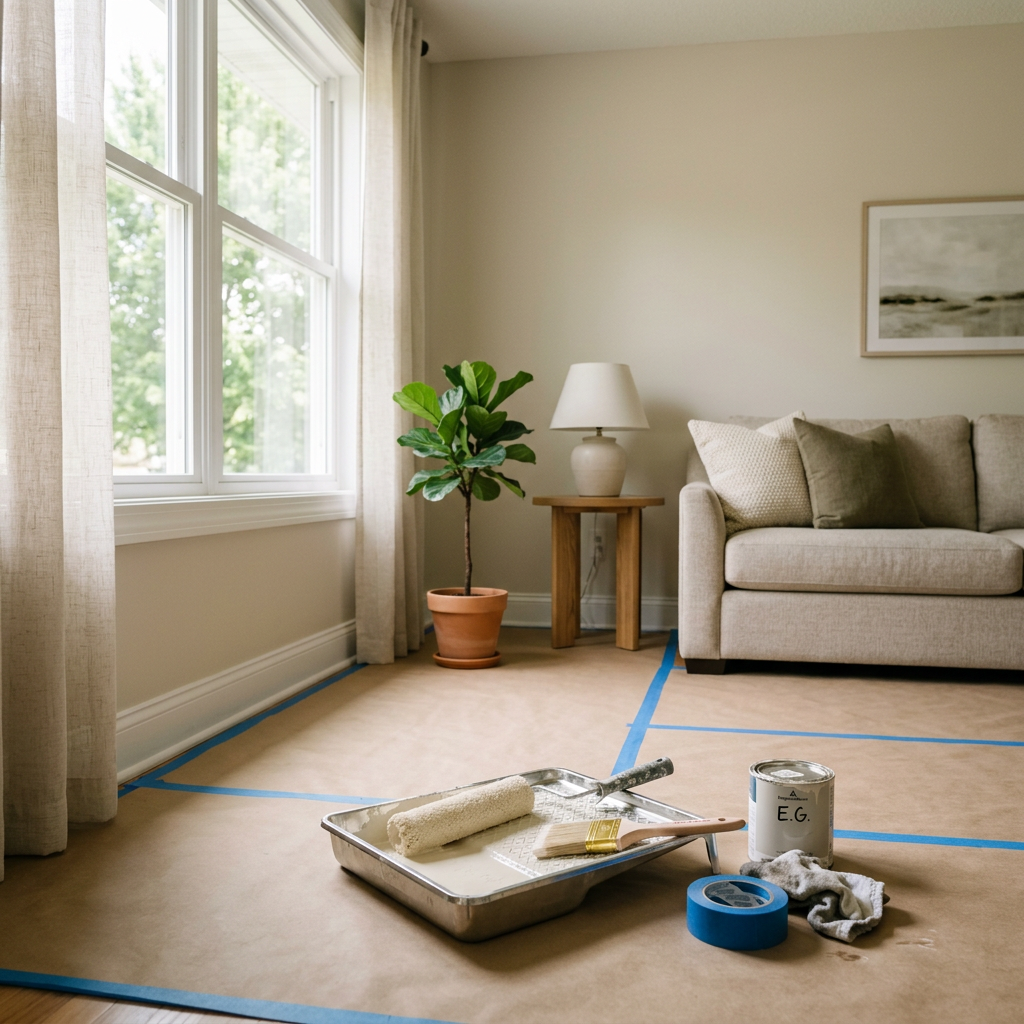
The rooms are empty. The walls are freshly painted, the floors are clean, and there are boxes stacked everywhere. Now that they have the keys, a long-held vision of their first home yields an unexpected realization.
They have no idea where to start.
The couple knows they want the house to feel grown-up and sophisticated, but they also want it to feel comfortable. Rather than chasing every trend, they plan durable furniture to reduce costs. The home should grow with them.
After looking at countless paint colors, furniture styles, and Pinterest inspiration, they decide to start with something simple: black and white.
White becomes the foundation.
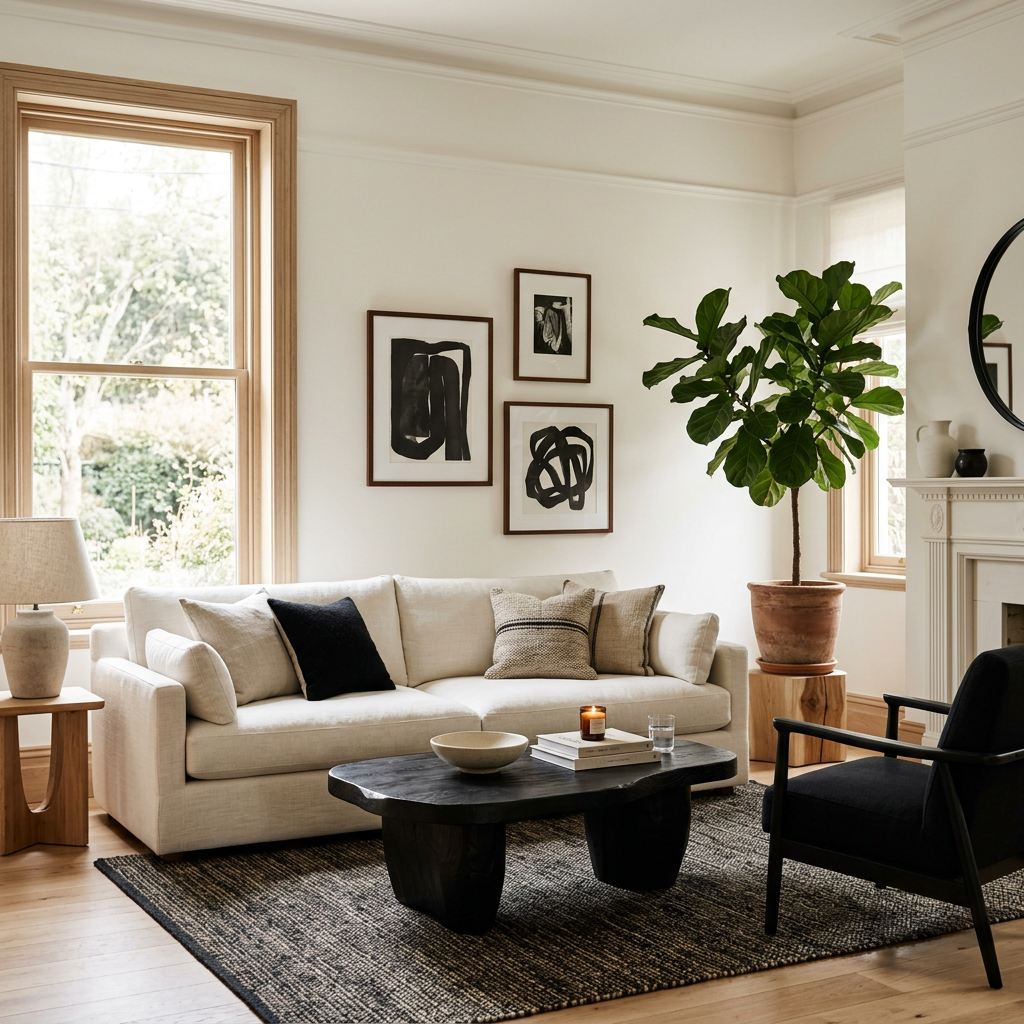
They paint the walls a soft warm white rather than a stark white. They choose a comfortable light-colored sofa for the living room and a simple neutral rug. Instead of trying to find furniture in one exact style, they begin introducing black through the pieces they love.
A black coffee table anchors the living room. Black picture frames surround photographs from their relationship. A black floor lamp stands beside the sofa. Their dining table has dark legs, while the chairs are upholstered in a soft neutral fabric.
At first, the room looks almost too simple.
Then they begin adding their personality.
A plant sits in the corner. A patterned throw is draped over the sofa. One of them finds a piece of artwork they both love. They add warm wood accessories and a few brass details. Suddenly, the room doesn’t look empty anymore.
It looks like them.
What started as a simple black-and-white color scheme has become a foundation for their first home.
And that is one of the best things about decorating with black and white.
You don’t have to figure out everything at once.
The colors give you a starting point.
As their lives change, they can change the accessories without completely redesigning the room. Should blue appeal to them, they can add blue pillows. Introducing wood can add warmth. A touch of glamour can be achieved by adding brass or gold.
The black and white foundation allows the house to evolve with them.

Black and White Don’t Have to Be Stark
When people hear “black and white decor,” they sometimes imagine an extremely modern room with bright white walls, glossy black furniture, and very little decoration.
That can certainly be beautiful, but it is only one interpretation of the palette.
Black and white can be warm and comfortable.
The secret is using different shades, textures, and materials.
White doesn’t have to mean bright white. Cream, ivory, linen, and warm whites can soften the space. Black doesn’t always have to be a deep, glossy black either. Charcoal, graphite, and softer black tones can create a more subtle look.
Texture also becomes extremely important.
A white linen curtain feels completely different from a glossy white cabinet. A black velvet chair feels different from a matte-black metal table. A woven basket, natural wood table, soft rug, or textured throw can make the entire room feel warmer.
When your color palette is simple, texture becomes one of the ways you create visual interest.
Using Black and White in the Living Room
The living room is one of the easiest places to introduce black and white because you can control how much of each color you use.
You might begin with light walls and a neutral sofa and then bring black into the room through an accent chair, coffee table, lighting, artwork, or accessories.
Black picture frames are an especially easy way to introduce contrast. They can make artwork stand out against a white wall while creating a visual connection between different parts of the room.
You can also use black through smaller details such as lamp bases, curtain rods, furniture legs, hardware, and decorative objects.
The goal doesn’t have to be an exact 50/50 split.
In fact, a room can often feel more sophisticated when one color dominates and the other is used intentionally for contrast.
Black and White in the Kitchen
Black and white kitchens continue to be popular because the combination works so well with the materials already found in kitchens.
White cabinetry creates a bright foundation, while black hardware adds definition. A black island can become the focal point of a mostly white kitchen, while black lighting can add architectural interest.
You can also create contrast through the backsplash or flooring.
A classic black-and-white tile floor can give a kitchen personality without introducing another color. White tile with dark grout can create a more graphic appearance.
Natural wood is another excellent addition.
Wooden stools, shelves, cutting boards, or flooring can soften the contrast and prevent a black-and-white kitchen from feeling too cold.
Black and White in the Bedroom
Bedrooms benefit from a softer interpretation of black and white.
Rather than creating an extremely high-contrast room, consider layering different neutrals. White or ivory bedding can be combined with charcoal pillows, a soft gray throw, black bedside tables, and warm wood.
The goal is to create contrast without sacrificing comfort.
Soft fabrics become especially important in a bedroom. Linen, cotton, velvet, boucle, and woven materials can make a simple color palette feel rich and inviting.
Black can also be used sparingly as an accent. A black chandelier, nightstand, picture frame, or lamp can give a light bedroom definition without making it feel dark.
The Bathroom Loves Black and White
Bathrooms have embraced black and white for generations.
There is something naturally timeless about white tile paired with black fixtures, black-framed mirrors, or a dark vanity.
Checkerboard floors can create a classic look, while black fixtures and white marble can make the same palette feel much more contemporary.
Because bathrooms are often smaller spaces, black and white can provide plenty of visual interest without requiring multiple colors.
The result can be dramatic without feeling cluttered.
Patterns Bring the Palette to Life
Black and white are also incredibly effective when used with pattern.
Checkerboard patterns are perhaps the most recognizable, but stripes, geometric designs, floral prints, herringbone, abstract artwork, and other patterns can all work beautifully.
Because the color palette is restrained, a bold pattern can become a focal point without competing with several different colors.
A dramatic black-and-white rug can anchor a living room. A patterned accent chair can become a statement piece. Black-and-white artwork can create a gallery wall that feels cohesive even when the individual pieces are different.
This is another reason the combination has remained so useful to designers.
Black and white allow you to be bold without necessarily being chaotic.

Adding Color to Black and White
Using black and white as your foundation doesn’t mean your home has to remain completely black and white.
In fact, the opposite is often true.
Because black and white are neutral, they create a backdrop that allows other colors to shine.
Blue can make the space feel relaxed and coastal. Green can bring nature into the room through plants and textiles. Pink can soften the contrast. Burgundy can create a richer, more dramatic atmosphere. Red can add energy.
Metallic finishes can also transform the mood.
Gold and brass create warmth and glamour, while silver creates a cooler contemporary appearance. Rose gold can add a softer and more delicate element to an otherwise dramatic palette.
This flexibility is one of the biggest advantages of using black and white as a decorating foundation.
You can change the personality of the room without starting over.
Black, White, and Natural Materials
If you’re concerned that black and white will make your home feel cold, bring in natural materials.
Wood is particularly effective.
A black-and-white room with natural wood can feel much warmer than one filled exclusively with black, white, glass, and metal. Woven baskets, rattan furniture, jute rugs, linen curtains, stone, and greenery can have the same effect.
These materials add warmth and texture without disrupting the overall color scheme.
The result is a room that still feels clean and sophisticated but also feels like somewhere you actually want to relax.
Is Black and White a Trend?
A black and white home definitely experiences trendy moments.
There are periods when black kitchens suddenly become popular. Other times, checkerboard floors take over social media. Black window frames, black bathroom fixtures, and high-contrast interiors all experience waves of popularity.
But the combination itself isn’t dependent on those trends.
That’s because black and white are based on something much more fundamental: contrast.
Designers can reinterpret the combination over and over again because the basic relationship never stops working.
The trend isn’t necessarily black and white.
The trend is how we choose to use black and white.
That distinction is important.
It means you can decorate your home with this combination without worrying that your space will suddenly look outdated when the next color trend arrives.
Making Black and White Feel Like Home
The most important thing to remember when decorating with black and white is that your home should still have personality.
Don’t let a beautiful color palette become a decorating rule that prevents you from including things you love.
Add family photographs. Display books. Bring in plants. Mix old pieces with new ones. Include artwork that has meaning. Keep the chair that isn’t technically “perfect” but happens to be incredibly comfortable.
Your home isn’t a photograph.
It’s where your life happens.
The couple decorating their first home with black and white didn’t need to know exactly what their home would look like ten years from now. They simply needed a starting point.
Black and white gave them one.
As their lives changed, their home could change with them.
That may be the greatest advantage of this classic combination. It gives you structure without putting you in a box.

Black and White May Never Really Go Out of Style
There is a reason black and white continue to appear in interior design.
A history exists. Versatility characterizes it. Nearly any decorating style is compatible with them, and they provide one of the strongest visual contrasts available to a designer. Black creates depth. White creates light. Black creates definition. White creates openness. And together, they create balance.
Whether you’re decorating your first apartment, buying your first home, renovating a kitchen, designing a bedroom, or simply looking for a way to refresh a room, black and white can give you a foundation that doesn’t require you to predict the next big decorating trend.
Keep it simple or make it truly dramatic. Opt for color or maintain a monochromatic look. It can be modern, traditional, glamorous, cozy, or entirely your own. Maybe that’s why black and white continue to dominate home decor.
They don’t demand that you choose a particular style. They simply give you a beautiful place to begin.
And sometimes, especially when you’re standing in your first home surrounded by boxes and wondering where to start, that’s exactly what you need.

Leave a Reply