
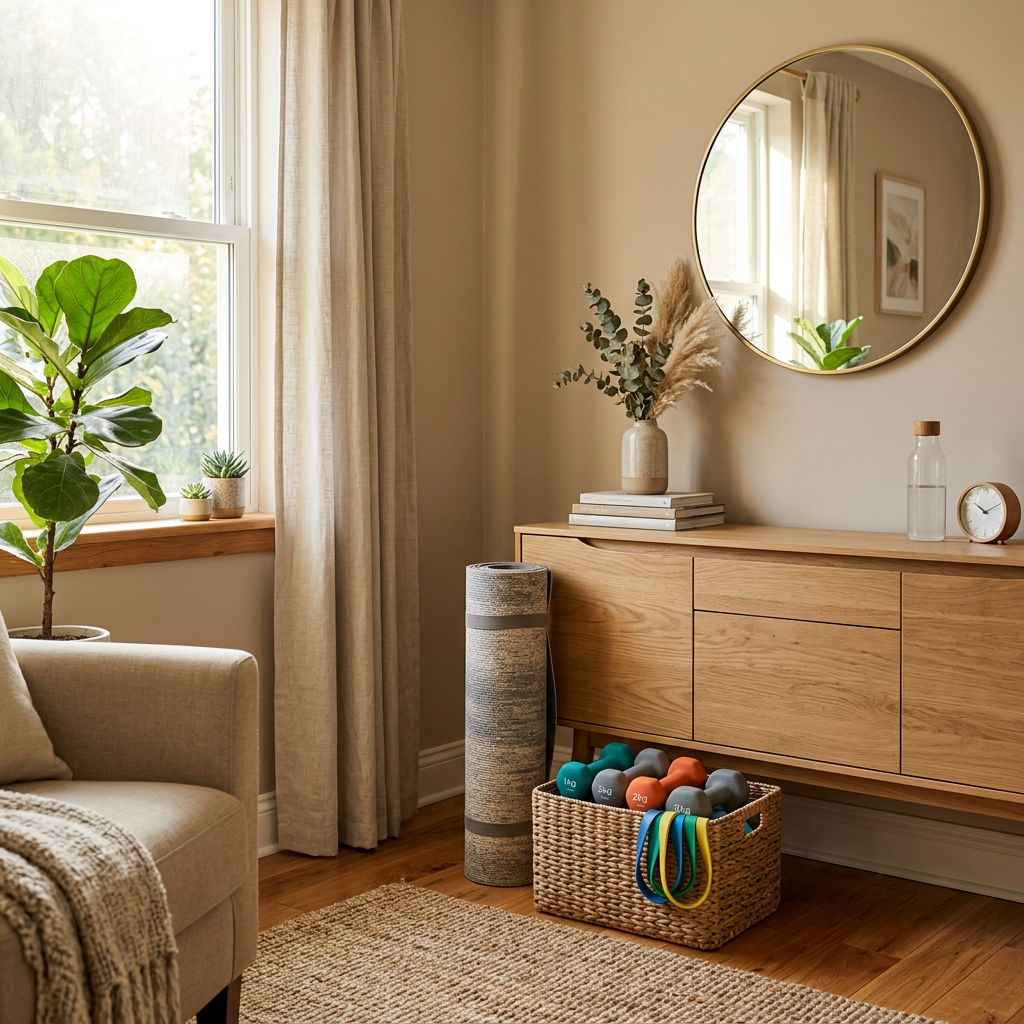
Have you ever decided that you really want to start working out at home? But when you look around your house, you wonder where to place it, making room for exercise equipment. You may not have a spare bedroom, basement, home gym, or giant bonus room. Nevertheless, it isn’t waiting to become your personal fitness space. Maybe every room already has a purpose, making room for exercise equipment.

The living room is for relaxing. The dining room is for eating. The bedroom is already full, and the garage is packed with everything you have been meaning to organize. However, this does not mean you cannot engage in making room for exercise equipment at home. The key is not making room for exercise equipment; instead, it is about finding usable space.

Start by Looking at the Space You Already Have
Before buying anything, walk through your home and look at the areas that aren’t being used efficiently. Do you have an empty corner in the bedroom? A little space beside the sofa? An unused wall? Room underneath a console table? Perhaps there is a section of your closet that could be reorganized.
You may be surprised by how much space you can create simply by moving things around. Instead of asking, “Where can I put a home gym?” ask yourself: “Where can I create a small workout zone?” That change in thinking can make the whole process feel much more manageable.
Think Small When Choosing Equipment
One of the easiest ways to make exercise equipment work in a small home is to choose equipment that doesn’t require a permanent footprint.
Instead of purchasing a large treadmill, weight machine, and exercise bench, consider starting with equipment such as resistance bands, dumbbells, kettle bells, a yoga mat, or a compact stepper. These items can be stored in baskets, cabinets, closets, or under furniture when you’re finished. You don’t necessarily need a room full of equipment to get a good workout. Sometimes a small collection of versatile pieces is all you need.
Turn a Corner Into a Workout Space
That empty corner you’ve been ignoring might be the perfect place for a mini home gym. A corner of your bedroom, living room, office, or even a large hallway can become a designated exercise area.
Place a yoga mat or small exercise mat on the floor and add a basket or storage cube nearby for resistance bands, weights, towels, and other accessories. When you’re done exercising, everything has a home. The goal is to make the area look intentional rather than like exercise equipment was simply dropped into the room.

Use Furniture That Serves More Than One Purpose
Small homes require furniture to work harder. Look for pieces that provide storage while also serving another purpose. An ottoman with hidden storage, for example, can hold resistance bands, workout gloves, sliders, or small weights while still functioning as seating. A storage bench can hold equipment while sitting at the end of your bed. A decorative basket can hide smaller fitness accessories while adding to your décor. This is especially helpful if you don’t want your home to constantly look like a gym.
Don’t Forget About Vertical Space
When floor space is limited, look up. Walls can provide valuable storage space without taking up much room. Depending on the equipment you own, you can use wall-mounted organizers, hooks, shelving, or pegboards to keep smaller items off the floor. Resistance bands, jump ropes, yoga straps, and other lightweight accessories can often be stored vertically. Just make sure anything mounted to the wall is properly installed and appropriate for the weight of the equipment.
Make Your Living Room Work Double Duty
Your living room may actually be one of the best places for a workout area because it already has open floor space. The trick is choosing equipment that can easily be moved. A foldable exercise mat can be rolled up and stored behind a sofa or in a closet. Adjustable dumbbells can replace several sets of traditional weights. A folding exercise bench can be moved against a wall when you’re watching television.
You don’t need your living room to permanently look like a gym. Instead, create a space that can transform when you need it. Workout time? Move the coffee table. Lay down your mat. Grab your equipment. Workout finished? Put everything away and return the room to its normal setup.
Consider Under-the-Bed Storage
Your bed may be hiding some of your most valuable storage space. Low-profile storage containers can be useful for items such as resistance bands, ankle weights, sliders, yoga accessories, and other smaller pieces of equipment. If you are buying new furniture, consider a bed frame with built-in drawers or storage underneath. In a small home, unused space is still space.
Create a Workout Closet
If you have a closet with extra room, consider dedicating one section to fitness equipment.
You could organize it with baskets or shelves and keep everything together.
For example:
- Resistance bands
- Yoga mat
- Dumbbells
- Jump rope
- Workout towels
- Exercise accessories
- Water bottle
- Fitness tracker
This approach can make it much easier to stay consistent because your equipment is easy to find.
And perhaps most importantly, you don’t have to look at it all day.
Use Your Home Office
If you work from home, your office may be another opportunity. A small set of dumbbells underneath your desk can make quick strength exercises possible during breaks. A compact walking pad can sometimes fit underneath a standing desk and be moved away when you’re finished. Even a few minutes of movement throughout the workday can help break up long periods of sitting. Your office doesn’t have to become a gym. It can simply become a space where movement is easier.
Don’t Buy Equipment Before You Find the Space
This is probably one of the biggest mistakes people make. They buy the equipment first and then try to figure out where it is going to go. Instead, reverse the process.
Find the space first. Then buy the equipment.
Measure the area you have available and think about how much room you’ll need to safely use the equipment—not just store it. A piece of equipment may technically fit in a corner but still be impractical if you can’t move comfortably around it.
Create a “Put It Away” Rule
One of the easiest ways for exercise equipment to take over your home is to leave everything out. You finish your workout and think, “I’ll put it away later.” Then later becomes tomorrow. And eventually your living room starts looking like a fitness studio. Create a simple rule: When the workout is over, the equipment goes back to its home. This small habit can make a huge difference.
Remember: Your Home Doesn’t Need to Look Like a Gym
You don’t need rubber flooring, mirrors covering the walls, a giant television, or an entire collection of fitness machines to create an effective workout space. Your home should still feel like your home. A small, thoughtfully organized workout area can be just as useful as a dedicated gym room. And sometimes, having less equipment can actually make exercising feel less overwhelming. You don’t need everything. You just need the equipment that supports your goals.

Make Your Space Work for Your Lifestyle
The best home workout area isn’t necessarily the biggest one. It’s the one you’ll actually use. Maybe that means keeping a yoga mat beside your bed because you prefer morning stretching. Maybe it means keeping dumbbells in your office because you like taking movement breaks during the workday. Or perhaps it means keeping a walking pad in the living room because you enjoy walking while watching your favorite shows. There isn’t one right way to create a home workout space.
Look at your home. Look at your routine. Then find a way to make the two work together. You don’t need a spare room. You just need a little creativity, some smart storage, and a willingness to make the space you already have work harder for you.
Your Home Can Do More
One of the best things about decorating and organizing a home is discovering that the rooms you already have can serve more than one purpose. A bedroom can be a bedroom and a workout space. A living room can be a living room and a fitness area. An office can be a workspace and a place to move. You don’t have to wait until you have a bigger house to create the lifestyle you want. Sometimes, you simply have to rethink the space you already have.
Transform your space. Make room for the life you want. Discovering Life.



Leave a Reply