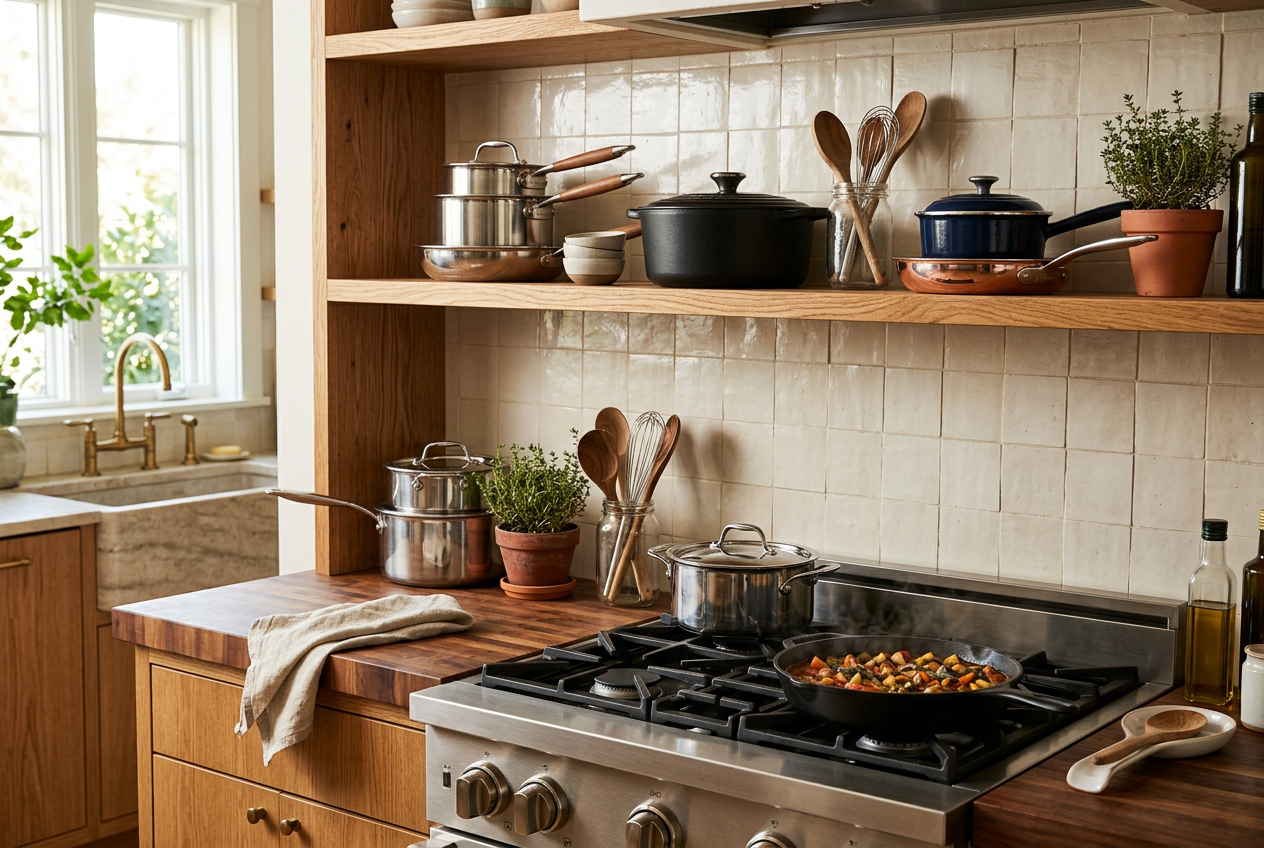
When designing or decorating a kitchen, most people spend considerable time choosing cabinets, countertops, back splashes, appliances, and lighting. They even select the smallest decorative accessories. Yet shoppers often overlook cookware until they go shopping. Finding the Right Cookware to Match Your Kitchen Style deserves attention, too.

Pots, pans, skillets, baking dishes, and other cooking essentials are more than just tools for preparing meals. Depending on how you store and display them, they can become part of your kitchen’s overall design. A beautiful cookware set can sit on an open shelf, hang from a pot rack, or rest on a countertop. In these spots, it can contribute to your space’s personality as much as a decorative vase or countertop accessory.

But does your cookware really need to match your kitchen style? Should a modern kitchen have modern cookware? Does a farmhouse kitchen require traditional-looking pots and pans? And what happens when you love a particular cookware set that doesn’t necessarily fit the style of your kitchen?
The truth is that matching cookware to your kitchen can create a beautiful, coordinated appearance. However, matching isn’t a decorating requirement. The right cookware should balance appearance, functionality, personal preference, and your everyday cooking needs.
Let’s look at how to find cookware that complements your kitchen without making the shopping process more complicated than it needs to be.
Why Your Cookware Can Influence Your Kitchen’s Appearance
Think about how much attention you give to the details when decorating a room. You carefully select colors, finishes, textures, and accessories to create a particular atmosphere. Your kitchen deserves the same consideration.
Cookware can contribute to that atmosphere, especially when it is visible. Many homeowners use open shelving, hanging pot racks, glass-front cabinets, or countertop storage. These arrangements make cookware part of the kitchen’s visual presentation.
For example, a collection of stainless steel pots and pans can look right at home in a contemporary kitchen. This works well with stainless steel appliances and clean lines. A set of cream-colored enamel cookware might complement a traditional or farmhouse-inspired kitchen. Matte black cookware can introduce a sophisticated touch to a modern or industrial-style space.
The cookware itself doesn’t have to be expensive or decorative to look good. Sometimes choosing the right color or finish is enough to make everything feel more intentional.
However, there is a difference between creating a coordinated appearance and trying to make every item identical. A kitchen can look beautiful without every accessory following the same color scheme.
Does Your Cookware Really Need to Match Your Kitchen?
The short answer is no.
There is no decorating rule that says your cookware must match your cabinets, countertops, appliances, or overall kitchen theme. Your kitchen is a functional space. Your cookware should primarily serve the purpose for which you purchased it.
You might have a beautiful farmhouse kitchen with white cabinets, butcher block countertops, and warm wood accents. However, you may prefer stainless steel cookware because it performs well for your cooking needs. There is absolutely nothing wrong with that.
Likewise, someone with a modern kitchen might prefer colorful ceramic cookware because they enjoy bringing personality into their cooking space.
The key is understanding that matching is a design choice, not a requirement.
There are several reasons why you might want your cookware to coordinate with your kitchen. A coordinated collection can make the room feel more polished and create visual consistency. It can also help maintain a particular decorating style. This can be especially helpful when cookware is displayed rather than hidden away.
On the other hand, choosing cookware based entirely on appearance can limit your options. You could overlook a perfectly suitable set simply because the color doesn’t fit your kitchen. You might also spend more money on decorative cookware. A practical, less expensive option could meet your needs.
A well-designed kitchen should reflect how you live, not just how it looks in a photograph.

Choosing Cookware for Different Kitchen Styles
If you enjoy having a coordinated kitchen, there are several ways to select cookware that complements your existing design. You don’t have to purchase an entirely new kitchen collection to achieve the look you want. Sometimes a few thoughtful choices can make a noticeable difference.
Modern and Contemporary Kitchens
People often recognize modern kitchens by their clean lines, streamlined cabinetry, minimal decoration, and simple color palettes. White, gray, black, and natural wood are common design choices.
For these kitchens, stainless steel cookware is a natural option. Its polished finish works beautifully with modern appliances. Also, its practical appearance complements the clean, uncluttered atmosphere.
Matte black cookware is another attractive choice. It offers a more understated appearance and works particularly well in kitchens with dark cabinetry, black hardware, or contrasting countertops.
If you prefer a softer appearance, consider neutral-colored cookware in cream, gray, or muted beige.
The goal is to maintain the simplicity of the space without making the kitchen feel overly decorated.
Farmhouse and Rustic Kitchens
Farmhouse kitchens tend to feature warmth, natural materials, traditional details, and comfortable surroundings. Think white or cream cabinetry, wood accents, apron-front sinks, open shelving, and vintage-inspired accessories.
Cookware in cream, white, muted green, or soft gray can complement this style beautifully.
Enamel-coated cast iron cookware is especially appealing. It combines traditional styling with practical cooking functionality. Copper cookware can also introduce warmth and character, particularly when displayed on a pot rack.
Don’t be afraid to mix older-looking pieces with newer cookware. A farmhouse kitchen doesn’t have to look like everything was purchased from the same collection. In fact, combining different textures and finishes can make the space feel more authentic.
Minimalist Kitchens
Minimalist kitchens focus on simplicity, organization, and reducing unnecessary visual clutter. Every item has a purpose, and storage is often carefully considered.
For this style, stainless steel, black, and neutral cookware are excellent options.
Rather than displaying numerous pots and pans, consider keeping most cookware inside cabinets and displaying only a few frequently used pieces.
A coordinated collection can help maintain the clean appearance associated with minimalist design. However, functionality should remain the priority. You don’t need matching cookware if it creates unnecessary expense or limits your cooking options.
Traditional Kitchens
Traditional kitchens often feature classic cabinetry, decorative hardware, natural stone countertops, warm finishes, and timeless design elements. Stainless steel, copper, and traditional enamel cookware can all work beautifully in these spaces.
If your kitchen has warm wood cabinets, consider cookware with warm metallic accents or neutral finishes. For kitchens with white cabinetry, stainless steel or colorful enamel pieces can provide an attractive contrast.
Traditional kitchens offer plenty of flexibility because their design often incorporates a combination of materials and finishes.
Industrial Kitchens
Industrial-style kitchens typically incorporate darker colors, metal finishes, exposed materials, and functional design elements.
Stainless steel cookware is an obvious choice, but matte black cookware can create an equally attractive appearance.
Cast iron is another option worth considering. Its substantial appearance and traditional construction complement the practical, hardworking atmosphere of industrial-inspired spaces. Copper accents can also add warmth to an otherwise cool color palette.

Understanding Cookware Materials Before You Buy
While appearance matters, cookware material is arguably more important than color. Different materials offer different cooking experiences, maintenance requirements, and price points.
Before purchasing a complete cookware set, take some time to understand what you’re buying.
Stainless Steel
Stainless steel is popular because it is durable, versatile, and relatively easy to maintain. It works well for browning, sautéing, boiling, and many everyday cooking tasks.
It also has a timeless appearance that complements almost any kitchen style.
One thing to remember is that stainless steel cookware can require a little practice. This helps prevent food from sticking. Look for quality construction, preferably with an aluminum or copper core or base for improved heat distribution.
Nonstick Cookware
Nonstick cookware is convenient for preparing foods such as eggs, pancakes, and delicate fish. It generally requires less oil and makes cleanup easier.
It is available in numerous colors and finishes, making it an appealing option for homeowners who want cookware that complements their kitchen.
However, nonstick coatings require proper care. Follow the manufacturer’s temperature recommendations. Avoid metal utensils unless the cookware is specifically rated for them. Replace pans when their coating becomes significantly damaged.
Cast Iron
Cast iron is known for its durability and ability to retain heat. It is particularly useful for searing, frying, baking, and slow cooking.
Traditional cast iron requires seasoning and proper maintenance to prevent rust. Enameled cast iron offers a different experience. Its protective coating generally makes cleaning and maintenance easier.
Both options can add character to a kitchen, especially when displayed.
Copper Cookware
Copper cookware is often associated with professional kitchens and upscale cooking spaces. It has excellent heat responsiveness and a distinctive appearance.
However, copper cookware can be expensive and may require more maintenance than other materials. Some copper cookware also has a stainless steel or other lining. Therefore, understand the construction before purchasing.
Ceramic-Coated Cookware
Ceramic-coated cookware is another option for homeowners who want a particular color or aesthetic. It is available in beautiful neutral shades, pastels, and bold colors.
Many collections are designed with appearance in mind, making them attractive additions to modern kitchens.
Keep in mind that ceramic-coated cookware differs from solid ceramic cookware. Coatings can wear over time, so proper care and realistic expectations are important.
Should You Purchase a Matching Cookware Set or Individual Pieces?
This is another decision worth considering before shopping.
Matching cookware sets can be appealing because they offer a coordinated appearance. They also provide several pieces at once, which can be convenient when setting up a new kitchen.
However, purchasing a complete set doesn’t always mean you’re getting the best value.
Some sets include pieces you may rarely use. You might end up with multiple small saucepans. However, you may still need to purchase a larger skillet or stockpot separately.
Buying individual pieces gives you more control over what enters your kitchen. You can select sizes, materials, and styles that suit your cooking habits.
You can also mix materials without sacrificing the appearance of your kitchen.
For example, you might purchase a stainless steel saucepan, a cast iron skillet, and a neutral-colored nonstick frying pan. Although the pieces don’t match exactly, they can still create an attractive, functional collection.
My recommendation is to start with the cookware you actually need. If you find a matching set that provides those essentials at a reasonable price, consider purchasing it. Otherwise, build your collection gradually.

How to Mix and Match Cookware Without Making Your Kitchen Look Disorganized
If you enjoy different cookware styles, you don’t have to choose just one. Mixing and matching can create an interesting, collected appearance when done thoughtfully.
The trick is to establish a common element.
This could be color, material, finish, or overall design.
For example, a kitchen with white cabinetry might feature stainless steel pots, a black cast iron skillet, and cream-colored baking dishes. Although the pieces are different, the neutral color palette helps everything feel connected.
Another option is to mix materials while maintaining similar finishes. Stainless steel cookware paired with copper accents can look intentional. This works particularly well in kitchens with warm metallic hardware.
If you enjoy colorful cookware, consider selecting two or three complementary colors rather than purchasing every color available.
You should also think about where your cookware will be stored. When items are hidden inside cabinets, their appearance matters less. However, when they are displayed on open shelving, a pot rack, or countertops, careful attention to color and arrangement can make a difference.
Remember, a kitchen should feel lived in. It doesn’t need to look like a showroom to be beautiful.
Practical Considerations That Matter More Than Appearance
Before getting caught up in cookware colors and finishes, there are several practical considerations worth keeping in mind.
First, consider your cooking habits. Someone who prepares elaborate meals every evening may need a different collection than someone who cooks occasionally or prefers simple meals.
Think about the types of meals you prepare, the sizes of cookware you use most often, and whether you need specialized pieces such as a Dutch oven, roasting pan, or large stockpot.
Next, consider your stovetop. Not every cookware material works with every cooking surface. If you have an induction cooktop, for example, you need cookware with a magnetic base. Always check compatibility before purchasing.
Storage is another important consideration. Large cookware sets can take up considerable cabinet space. If you have a smaller kitchen, buying fewer versatile pieces might be a better investment.
Finally, consider cleaning and maintenance. Some cookware requires special care, while other options are designed for easier everyday use. Choose something that fits your lifestyle rather than purchasing something that will become a burden to maintain.
How to Create a Beautiful Cookware Display
If you have invested in cookware that you love, why hide all of it away?
There are several ways to incorporate cookware into your kitchen design without making the space feel cluttered.
Open shelving is one option. Arrange a few attractive pieces alongside dishes, glassware, or decorative accessories. Try to maintain a consistent color palette so the display feels intentional.
A hanging pot rack can also be an attractive solution, particularly in farmhouse, rustic, and industrial kitchens. It provides convenient access while turning everyday cookware into part of the decor.
For homeowners who prefer a cleaner appearance, glass-front cabinets can provide an opportunity to display selected pieces while keeping everything protected.
You can also use a countertop cookware stand for frequently used pans. Just be mindful of how much counter space you have available.
The important thing is to avoid displaying everything simply because you have it. A few carefully arranged pieces will often have a greater visual impact than an overcrowded collection.
Finding the Balance Between Style and Functionality
At the end of the day, your kitchen should work for you.
It is easy to become caught up in the idea that every room needs to follow a particular design theme. We see beautifully decorated kitchens online. Then, we begin to believe that everything, including the smallest cooking accessories, must coordinate.
But decorating should make your home more enjoyable, not create additional pressure.
If you love stainless steel cookware but have a farmhouse kitchen, use it. Those who prefer colorful pots and pans in a minimalist kitchen can incorporate them. If you enjoy collecting different cookware pieces over time, you do not need to replace everything. A matching set is not necessary.
The best kitchens are often those that combine thoughtful design with personal touches.
You can have beautiful cabinets, carefully selected countertops, attractive lighting, and cookware that doesn’t match perfectly. None of those things diminishes the overall appearance of your home.
Instead of asking whether your cookware matches your kitchen, ask whether it complements the space, meets your cooking needs, and makes you happy when you use it.

Final Thoughts: Your Kitchen, Your Style
Finding the right cookware is about more than choosing attractive pots and pans. It also means understanding your cooking habits, selecting materials that fit your lifestyle, and deciding how much attention you want to give your kitchen’s appearance.
Matching cookware can create a coordinated, polished look, particularly when pieces are displayed. However, it is certainly not a decorating requirement.
Sometimes the most beautiful kitchens are those that combine different materials, finishes, and personal preferences.
So, before you spend money replacing perfectly good cookware because it doesn’t match your kitchen, take a step back. Consider what you really need, what you enjoy using, and how you want your kitchen to feel.
After all, the kitchen is one of the most frequently used spaces in your home. It should be beautiful, functional, comfortable, and a reflection of the people who live there.
Your cookware doesn’t have to match your kitchen. It just needs to work beautifully within it.





Leave a Reply