
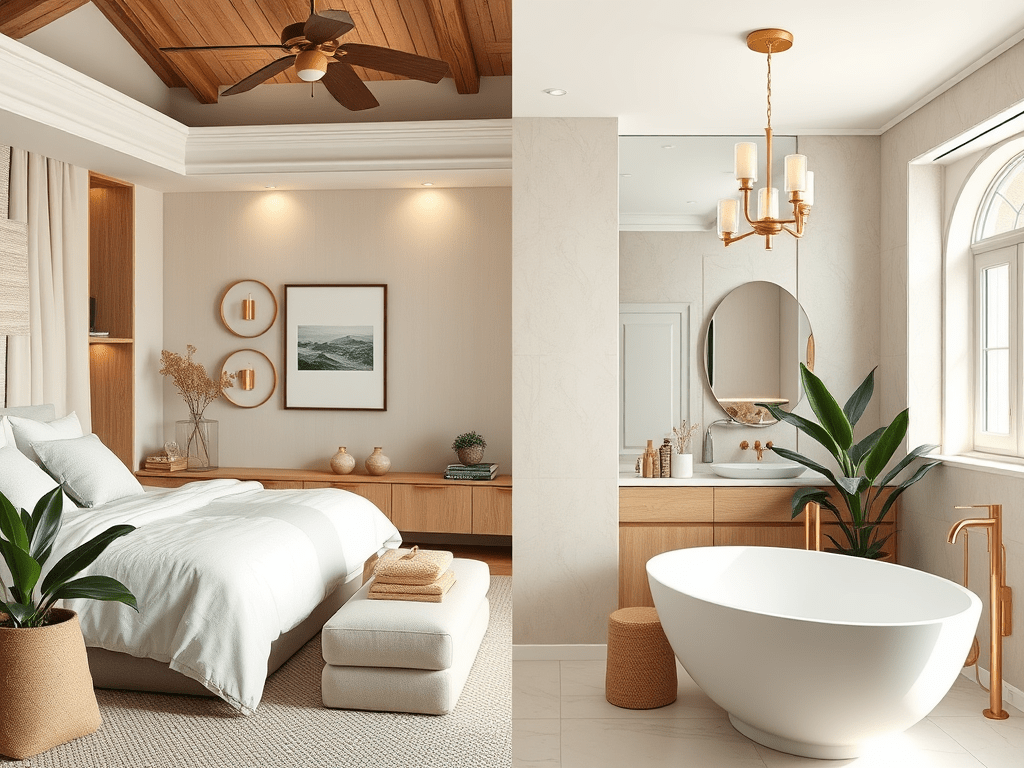
When designing or refreshing your master suite, one question often comes up — should your bedroom and bathroom match? After all, these two spaces are connected, often flowing into one another both visually and functionally. Whether you prefer a seamless, coordinated look or distinct designs that showcase personality, there’s no one-size-fits-all answer — just great ways to make either choice work beautifully.

Do the Master Bedroom and Bathroom Have to Match?
No — your master bedroom and bathroom don’t have to match. What matters most is how you want the space to feel as a whole. Some homeowners prefer cohesion — a look that feels like one continuous sanctuary — while others like a touch of contrast to define each room’s purpose and mood.
If your bedroom feels warm, cozy, and personal, while your bathroom feels clean, bright, and spa-like, that’s perfectly okay. The key is finding balance — enough shared elements to make the transition feel natural without making everything identical.
If You Choose to Match Them, Here’s How to Do It
If you love the idea of harmony between your bedroom and bathroom, here are a few design strategies to achieve a cohesive look:
- Stick to a Consistent Color Palette
Choose two or three main colors and use them in both spaces. For example, a soft beige and white palette in the bedroom can extend into the bathroom through towels, tile, and décor accents. If your bedroom is painted in a soothing gray, bring that into the bathroom with cabinetry, rugs, or shower curtains. - Repeat Materials and Textures
If your bedroom features natural wood tones, try incorporating similar finishes in your bathroom cabinetry or shelving. A rattan chair in the bedroom? Add a woven basket in the bathroom for a subtle tie-in. - Coordinate Lighting Fixtures and Hardware
Matching finishes — like brushed gold, matte black, or polished nickel — create instant flow between the two spaces. Think of your light fixtures, drawer pulls, and towel racks as jewelry that ties everything together. - Use Similar Design Themes
If your bedroom has a modern farmhouse feel, carry that same style into the bathroom with shiplap accents or black-and-white fixtures. Love boho style? Use earthy tones, plants, and natural textures in both areas. - Match the Mood, Not Just the Look
Sometimes matching isn’t about identical décor but about feeling. If your bedroom is calming and restful, your bathroom should feel like a spa-like retreat, echoing the same relaxing energy.
“Matchy-Matchy” Style Trends for Bedrooms and Bathrooms
If you want your bedroom and bathroom to feel like a curated suite, here are some current matching style trends worth exploring:
- Modern Coastal – Light blues, sandy neutrals, and crisp whites make both spaces feel fresh and connected. Add driftwood tones or woven textures for a serene, beachy flow.
- Minimalist Luxe – Clean lines, soft neutrals, and sleek finishes like marble and gold accents create a sophisticated and seamless transition between the bedroom and bath.
- Rustic Retreat – Think reclaimed wood, matte black hardware, and earthy tones for a cozy cabin feel that unites both spaces.
- Organic Modern – Soft whites, warm wood, greenery, and natural textures create a spa-inspired suite that feels both modern and relaxing.
- Scandinavian Calm – A palette of whites, grays, and pale wood tones connects both spaces effortlessly, emphasizing simplicity and comfort.
If You Don’t Match Them: How to Individualize Each Space
Maybe you prefer the idea of each room having its own personality — that’s perfectly stylish, too! Here’s how to make your bedroom and bathroom feel distinct but still complementary:
- Use Different Color Palettes with Shared Undertones
For instance, a deep navy bedroom paired with a crisp white bathroom can feel cohesive if both include touches of warm wood or gold. - Play with Contrast
If your bedroom is dark and moody, let your bathroom be bright and airy. This can actually enhance the experience of moving from one room to the other — like stepping from comfort into refreshment. - Make the Bathroom a “Mini Escape”
Treat your bathroom as a retreat that contrasts your bedroom’s energy. If your bedroom is cozy and romantic, make the bathroom a clean, spa-like getaway. - Add Personal Touches
Display art, accessories, or plants in each space that reflect your unique taste rather than repeating the same pieces. A vintage mirror in the bathroom and framed photos in the bedroom can help each room tell its own story. - Use Lighting to Define Mood
Soft, warm lighting in the bedroom and bright, clear lighting in the bathroom can separate the spaces naturally while maintaining harmony.
A Real-Life Example: The Elegant, Non-Matching Master Suite
When interior designer Lena Hughes renovated her 1920s home, she decided early on that her master bedroom and bathroom wouldn’t match — but they would belong together.
Her bedroom is warm and moody — deep emerald green walls, velvet curtains, a tufted cream headboard, and brass accents. The atmosphere feels indulgent, a perfect place to unwind at the end of the day.
Step through the arched doorway into her master bathroom, however, and the mood shifts completely. The bathroom is bright and serene — white marble floors, soft gray cabinetry, and brushed gold fixtures that subtly echo the brass in the bedroom. The air feels light and fresh, a morning retreat designed for rejuvenation.
Even though the spaces don’t “match” in color or style, they complement one another beautifully. The gold accents provide a thread of continuity, while the contrast between the rich, dark bedroom and the airy, elegant bathroom feels intentional — like two sides of the same coin.
This kind of thoughtful contrast can create a master suite that feels layered, sophisticated, and distinctly yours.
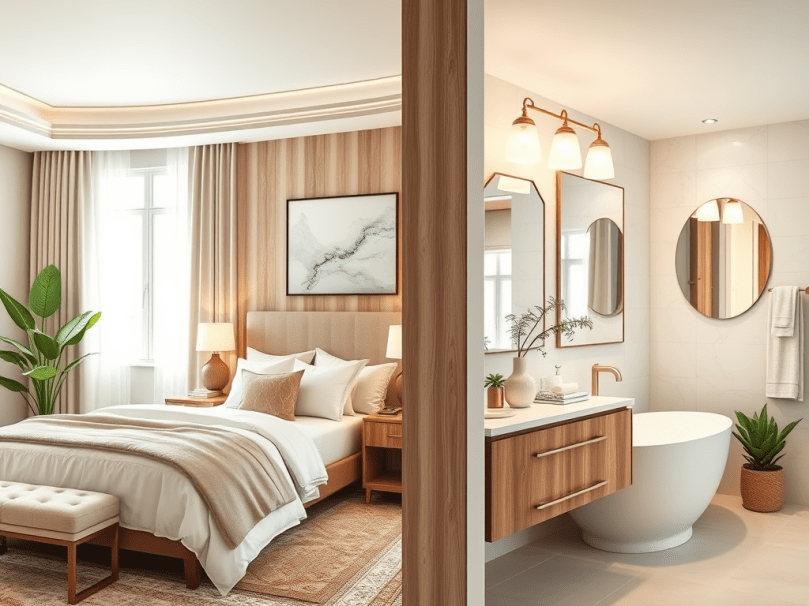
Final Thoughts
Whether your master bedroom and bathroom match perfectly or simply complement each other, the goal is to create a space that feels balanced, intentional, and you. Matching can make your suite feel unified and polished, while individualizing each space allows for creativity and personality.
At the end of the day, your home should feel cohesive — not cookie-cutter. Choose what feels most natural for your lifestyle and aesthetic, and your master suite will always feel like a true retreat.

 Discoveringlifellc
Leave a comment