

No matter the size of your closet, an organized space can transform your daily routine and make getting dressed a joy. From tiny reach-ins to sprawling walk-ins, the key to maximizing your closet’s potential lies in strategic planning, clever storage solutions, and regular upkeep. Here are tips, tricks, and examples to help you create an organized, functional, and aesthetically pleasing closet.
Step 1: Declutter Your Closet
Start by taking everything out of your closet. This might seem daunting, but it allows you to assess what you own and eliminate items you no longer need or wear.
- Create Three Piles: Keep, Donate, and Toss. Be honest with yourself about what you wear and what simply takes up space.
- Apply the “One-Year Rule”: If you haven’t worn it in a year, consider letting it go.
- Seasonal Sorting: Store out-of-season clothing in labeled bins or vacuum-sealed bags to free up space.
Step 2: Assess Your Space
Once your closet is empty, take a good look at the available space. Measure your closet and identify areas that can be optimized for storage.
- Small Closets: Focus on vertical space. Use over-the-door organizers, hanging shelves, and hooks to make the most of limited room.
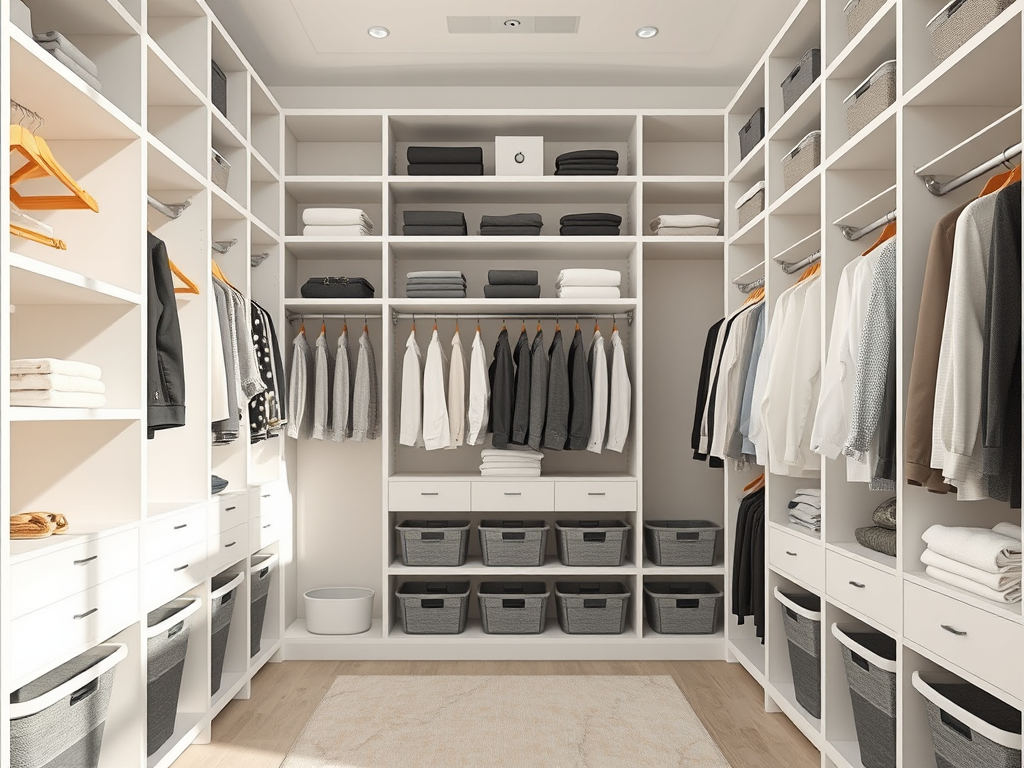
- Walk-In Closets: Consider installing a modular closet system with adjustable shelves, rods, and drawers to create a tailored solution.
- Reach-In Closets: Use double-hang rods to maximize hanging space and clear bins for visibility.
Step 3: Invest in the Right Storage Solutions
Selecting the right storage tools can make all the difference in maintaining a tidy closet.
- Hangers: Use slim, non-slip hangers to save space and keep clothes in place. Opt for uniform hangers for a clean look.
- Bins and Baskets: Use labeled bins for accessories like scarves, belts, and hats.
- Drawer Dividers: Perfect for organizing socks, underwear, and smaller items.
- Shelf Risers: Double the storage capacity of shelves by adding risers.
- Clear Containers: Store shoes, purses, and other accessories in clear containers for easy visibility.
Step 4: Categorize and Arrange
Organizing by category and color can make your closet more functional and visually appealing.
- Group by Type: Hang similar items together, such as shirts, pants, dresses, and jackets.
- Color Code: Within each category, arrange items by color to make finding what you need easier.
- Keep Everyday Items Accessible: Place frequently used items at eye level and less-used items on higher or lower shelves.
Step 5: Utilize Every Inch of Space
Closets of all sizes can benefit from creative use of space.
- Behind the Door: Install hooks or a hanging organizer for bags, belts, or jewelry.
- Under the Hanging Clothes: Use the lower space for a small dresser, shoe rack, or bins.
- Corners: Add corner shelves to prevent wasted space.
- High Ceilings: Store seldom-used items in decorative boxes on high shelves.
Step 6: Maintain Your Organized Closet
An organized closet requires consistent effort to stay that way.
- One In, One Out: For every new item you bring in, remove one.
- Seasonal Check-Ins: Review your closet every few months to keep it clutter-free.
- Daily Habits: Spend a few minutes each day returning items to their designated spots.
Examples of Closet Transformations
- Small Closet: One homeowner used hanging shoe organizers not just for shoes but also for rolled-up t-shirts and accessories. Adding an over-the-door hook system provided extra space for bags and scarves.
- Medium Closet: A renter added a second hanging rod and used clear bins for sweaters and jeans. Installing LED strip lights made everything easier to see.
- Walk-In Closet: A couple installed a modular system with pull-out trays for jewelry, cubbies for shoes, and designated sections for each type of clothing.

Final Thoughts
Organizing your closet is an investment in your daily happiness and productivity. With these tips and a little effort, you can turn even the most chaotic space into a neat and functional area. Remember, it’s not about the size of your closet—it’s about how you use it!




 Discoveringlifellc