
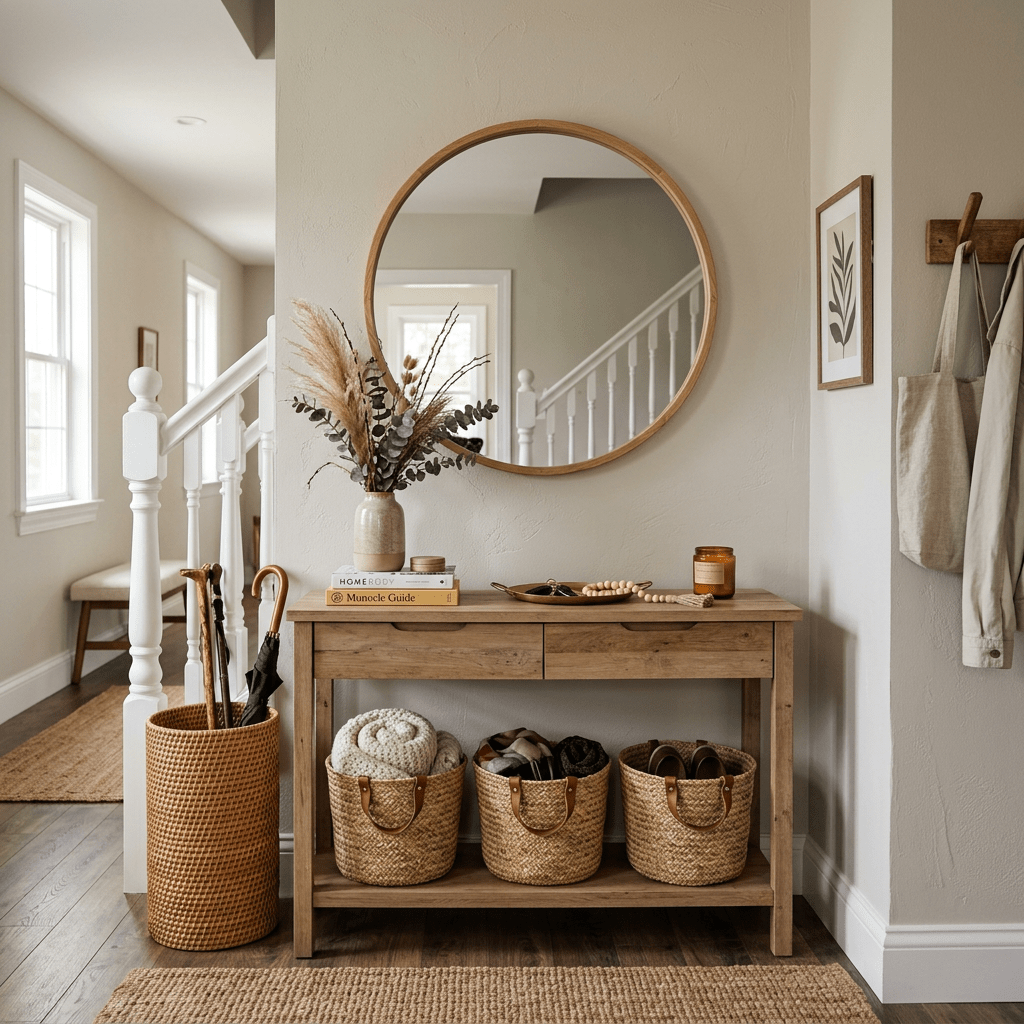
Have you ever walked into your home and paused at that one random space near your entryway? You know the one—it’s not quite big enough for furniture, not small enough to ignore, and somehow it ends up collecting shoes, bags, or… nothing at all. It just sits there, waiting.
What if that overlooked nook could become one of the most intentional and eye-catching parts of your home?
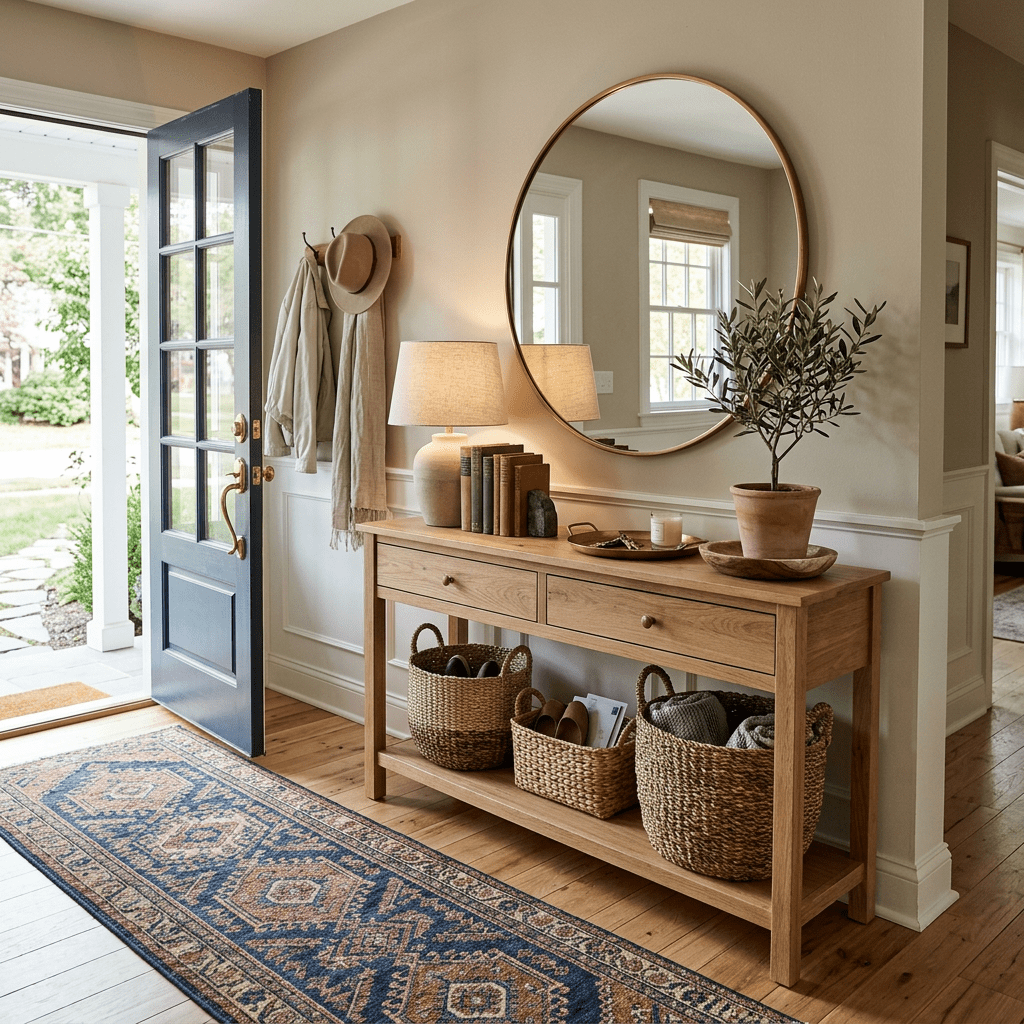
Let’s talk about how to transform those awkward entryway spaces into something both beautiful and functional—because every inch of your home deserves purpose.
Why Entryway Nooks Matter More Than You Think
Your entryway sets the tone for your entire home. It’s the first impression—for guests and for you after a long day. When a random space goes unused, it can make the whole area feel unfinished or disconnected.
But when styled intentionally? That same space becomes:
- A moment of calm
- A practical drop zone
- A reflection of your personal style
It’s not about how big the space is—it’s about how thoughtfully you use it.
Step 1: Define the Purpose First
Before you buy a single decor item, ask yourself:
What do I need this space to do?
Here are a few purposeful directions:
- Drop Zone: Keys, bags, mail
- Storage Hub: Shoes, baskets, seasonal items
- Decor Moment: Purely aesthetic (art, mirror, styling)
- Hybrid Space: A mix of function + beauty
When you define the purpose first, everything else falls into place effortlessly.
Step 2: Anchor the Space with the Right Piece
Every nook needs a foundation—something that says, “this space is intentional.”
Depending on your layout, try:
- A slim console table for narrow walls
- A bench with storage for practical seating
- A floating shelf for tight or small areas
- A cabinet or vertical storage unit for hidden organization
Pro tip: Go for pieces that are slightly scaled down. Oversized furniture will overwhelm the space instead of enhancing it.
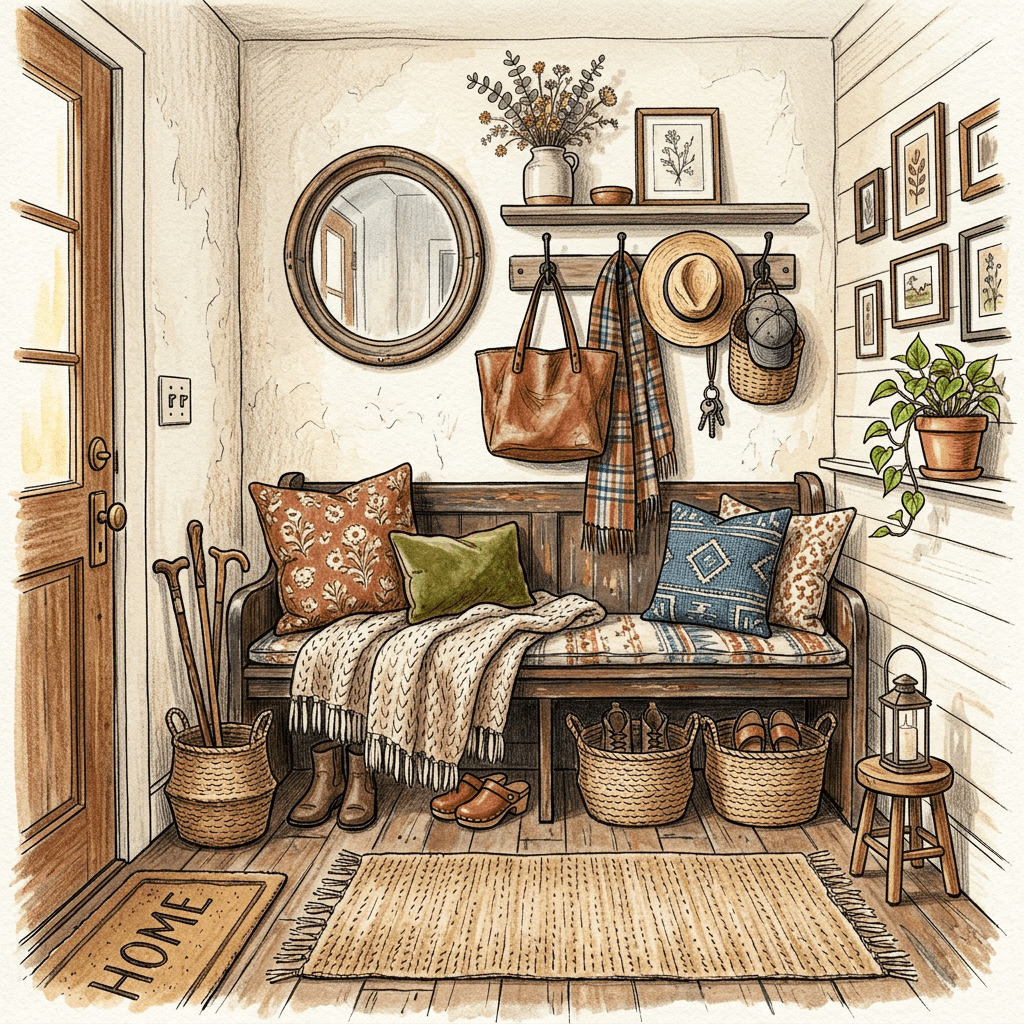
Step 3: Build Upward (Don’t Forget the Wall!)
Most people stop at the surface—but the real magic happens on the wall.
Consider:
- A statement mirror to reflect light and open the space
- Wall art that ties into your home’s aesthetic
- Hooks or pegs for coats, hats, or bags
- A gallery wall for personality and storytelling
Your vertical space is where function meets style.
Step 4: Add Storage That Feels Styled (Not Cluttered)
Let’s be honest—entryways can get messy fast. The goal isn’t to avoid storage, it’s to make it look intentional.
Try:
- Woven baskets (perfect for shoes or umbrellas)
- Decorative trays for keys and small items
- Closed bins for a cleaner look
- Labeled containers for everyday grab-and-go items
When everything has a home, the space naturally feels calmer.
Step 5: Layer in Personality
This is where your space transforms from “useful” to memorable.
Add:
- A small vase with fresh or faux greenery
- A candle or diffuser for a welcoming scent
- A stack of books or a meaningful object
- A soft rug to define the area
These details create warmth—the kind that makes coming home feel different.
A Real-Life Styling Story: The “Nothing Corner” Transformation
Imagine this:
You walk into your home, and to the right of the door is a blank, awkward corner. For months, it’s been… nothing. Occasionally a bag lands there. Sometimes shoes pile up. It feels unfinished. One weekend, you decide to change it.
You place a slim console table against the wall—nothing bulky, just enough to ground the space. Above it, you hang a round mirror that instantly reflects light from the front door.
Underneath, you slide in two woven baskets—one for shoes, one for everyday clutter. On top of the table, you add a small ceramic vase with soft greenery, a tray for keys, and a candle. Next to the table? A minimal hook rail for bags and jackets.
Now when you walk in, that “nothing corner” greets you with intention. It’s functional. It’s styled. It feels like part of your home—not an afterthought.
Design Tips to Elevate Any Entryway Nook
- Stick to a cohesive color palette (neutral tones always feel elevated)
- Use height variation (tall mirror + low baskets = balance)
- Don’t overcrowd—leave a little breathing room
- Mix textures (wood, metal, woven elements) for depth
- Think daily habits—design around how you actually live
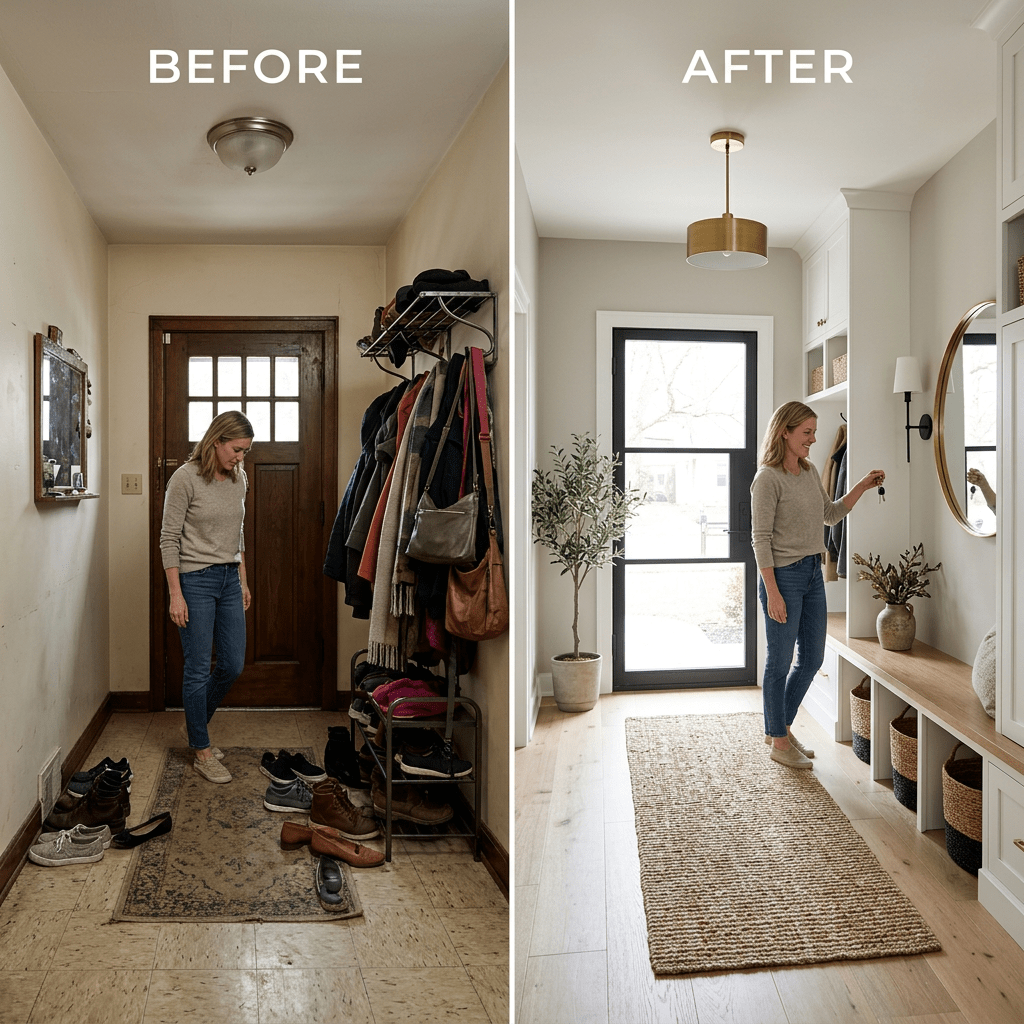
Final Thoughts: Every Space Has Potential
That random entryway nook? It’s not a problem—it’s an opportunity.
An opportunity to simplify your routine.
An opportunity to express your style.
An opportunity to make your home feel more complete.
You don’t need a grand foyer to create a beautiful entrance—you just need intention.
So next time you walk past that awkward space, don’t ignore it.
Design it. Define it. Discover it.
 Discoveringlifellc
Leave a comment