
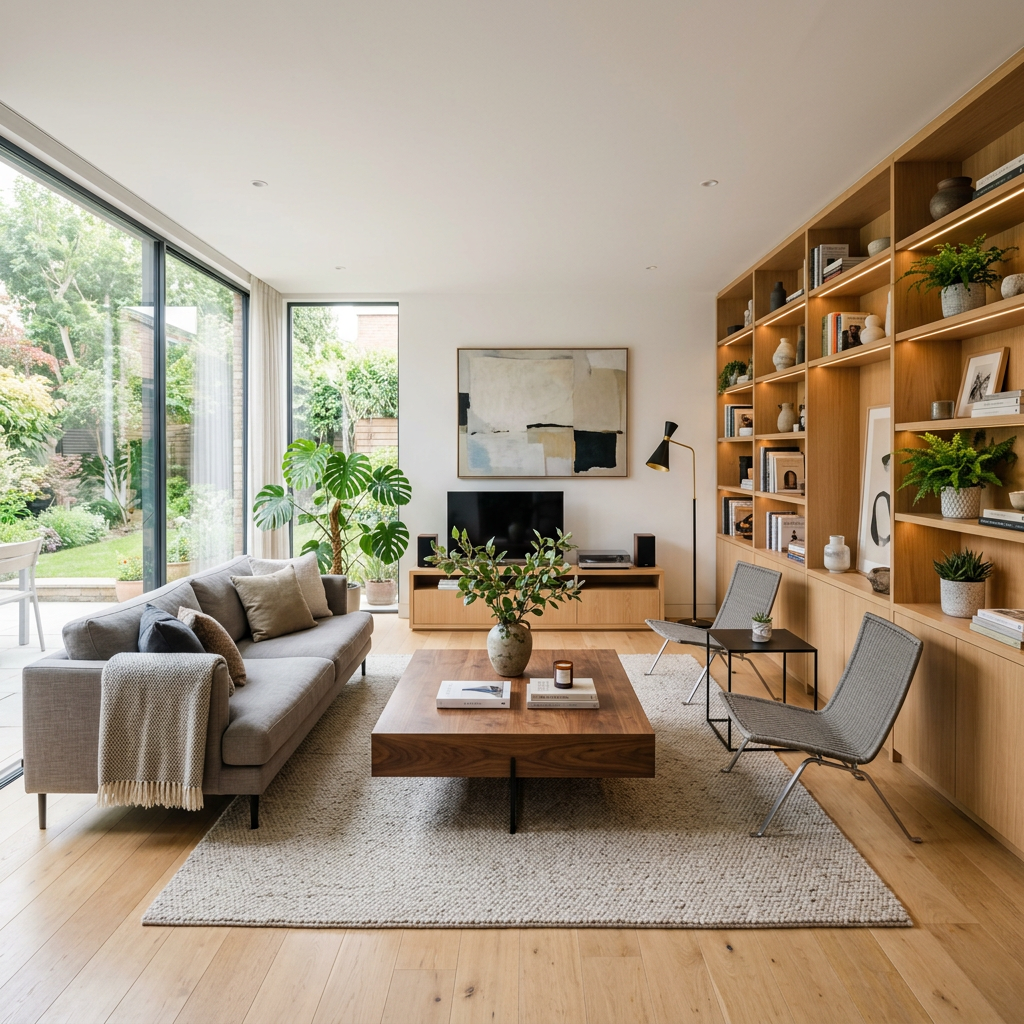
There is something about wood that instantly changes the feeling of a home. Walk into a room with oak floors, a walnut coffee table, natural wood cabinetry, or exposed beams. The space often feels warmer and more inviting. Wood has a way of making a room feel grounded, comfortable, and lived in, defining your style.

For a while, however, wood seemed to take a back seat in interior design. White kitchens became the standard. Cool gray walls dominated color palettes. Sleek surfaces and minimalist spaces became increasingly popular. The goal was often clean, streamlined, and uncluttered. Now, something is changing.
Wood grain is making a strong comeback, but it isn’t necessarily the dark, heavy wood paneling many people remember from decades past. Today’s wood trend is warmer, more intentional, and much more refined. Designers and homeowners are allowing the natural beauty of wood to become part of the architecture and personality of a home. But the interesting thing about wood grain is that it isn’t actually a new trend. Wood has been part of our homes for centuries. What has changed is the way we use it.
The History of Wood in the Home
Long before wood became a decorating trend, it was one of the most important materials used to build homes and furniture. Wood was practical, accessible, durable, and versatile. It could be used for everything from structural beams and flooring to doors, cabinets, furniture, and decorative details.
In historic homes, wood was often a sign of craftsmanship. Beautiful hardwood floors, detailed trim, carved doors, paneled libraries, staircases, and built-in cabinetry weren’t simply functional features. They were part of the home’s character. The natural grain was something to be admired.
As interior design evolved, wood began taking on different personalities. During the mid-century modern era, natural wood became especially important to designers who were embracing clean lines, functionality, and a closer connection to nature. Woods such as walnut and teak became popular in furniture and interiors. Instead of covering the material with excessive decoration, designers allowed the wood itself to become part of the design. That idea is still influencing homes today.
From Classic Wood to the Wood-Paneling Era
Of course, when many people hear the words “wood paneling,” they don’t necessarily picture sophisticated modern interiors.They picture the basement from their childhood.
During the 1950s, 1960s, and 1970s, wood paneling became extremely popular in American homes. It was an affordable and relatively easy way to transform a room, particularly family rooms, dens, and basements. Suddenly, wood was everywhere. Dark brown paneling became a defining characteristic of many homes from that era. Combined with dark carpeting, heavy furniture, and limited natural light, however, it could make rooms feel closed in and visually heavy.
Eventually, homeowners began painting over the paneling or removing it completely. Wood itself became associated with being outdated. But perhaps the problem was never really the wood. It was the way we were using it.
Why Is Wood Grain Popular Again?
Today’s wood revival is less about bringing back the past and more about taking what worked and reinterpreting it.
Modern interiors are moving toward warmth, natural materials, texture, and personality. After years of extremely minimalist spaces, many people are looking for homes that feel less sterile and more inviting. Wood fits perfectly into that movement.
Rather than covering every wall with dark paneling, designers may use a single wood accent wall. Instead of automatically painting every kitchen cabinet white, homeowners are allowing natural oak or walnut grain to become a design feature. Wood is being used as an accent, a focal point, and an architectural element. The result is a home that feels modern without feeling cold.

Why Do We Love Wood So Much?
Part of wood’s appeal is emotional.
Wood connects us to nature. Its grain, texture, knots, and natural variations remind us that the material came from something living. In a world filled with manufactured surfaces, screens, technology, and perfectly uniform finishes, natural materials can provide a sense of balance. There is also something comforting about wood.
A wooden dining table can make a kitchen feel more welcoming. A wood accent wall can make a bedroom feel cozy. A walnut console can bring warmth to an otherwise minimalist entryway. Wood doesn’t have to demand attention to make an impact. Sometimes its presence is enough.
Another reason people are drawn to wood is that every piece has its own personality. Even two pieces of the same type of wood won’t necessarily look exactly alike. The grain may move differently. One piece may have a knot or variation that another doesn’t. Those imperfections create character. And character is something many modern homes have been missing.
Wood Adds Texture Without Making a Room Feel Cluttered
One of the best things about wood grain is that it can add visual interest without requiring a lot of decoration. Imagine a simple living room with an ivory sofa, neutral rug, soft curtains, and a few carefully selected accessories. Add a beautiful walnut coffee table, and suddenly the room has another layer.
The same thing happens with a wood accent wall. You don’t necessarily need artwork, bold wallpaper, or dozens of accessories when the natural grain itself creates visual movement. This makes wood particularly useful in minimalist, Scandinavian, Japandi, contemporary, modern farmhouse, and organic-modern interiors.
How to Style Wood Grain in a Modern Home
The secret to using wood successfully is balance. If you’re nervous about bringing wood into your home because you don’t want the space to look dated, start small. You don’t need to remodel an entire room. A wood coffee table, console, bench, mirror frame, floating shelf, or dining table can introduce the look without overwhelming the space.
If you’re ready to make a bigger statement, consider a wood accent wall. A wall behind the television, fireplace, bed, or dining table can become a natural focal point. Wood ceilings can create a beautiful sense of warmth as well, particularly in bedrooms, living rooms, porches, and rooms with vaulted ceilings.
Natural wood cabinetry is another way the trend is appearing in today’s homes. Instead of hiding the grain beneath layers of paint, homeowners are choosing finishes that allow the natural characteristics of the wood to show through. The key is intentionality. You want the wood to feel like part of the design rather than something that was added as an afterthought.
Don’t Be Afraid to Mix Wood Tones
For years, homeowners were told that every piece of wood in a room needed to match. Thankfully, that rule has relaxed. Mixing wood tones can actually make a room feel more collected and interesting. A light oak floor can work beautifully with a medium-toned wood dining table and darker walnut accents. The trick is repetition. If you have several different wood tones, repeat each one somewhere else in the room so the combination feels intentional. Contrast can be beautiful when there is a visual connection between the pieces.

Pair Wood With Other Natural Materials
Wood becomes even more beautiful when it is paired with other natural materials. Stone and wood are especially effective together. Think warm oak cabinets with a stone counter top, a walnut console against a plaster wall, or a wood dining table surrounded by textured linen chairs.
Soft fabrics can also help balance the harder visual quality of wood. Linen, cotton, wool, bouclé, and woven textiles can make wood-heavy spaces feel softer and more comfortable. Plants are another natural companion. A simple combination of wood, greenery, stone, and neutral fabrics can create the relaxed, organic feeling that so many homeowners are looking for today.
Wood Works With Almost Every Decorating Style
Perhaps one of the biggest reasons wood has remained popular throughout history is its versatility. In a modern home, clean-lined wood furniture can create warmth without compromising simplicity. In a farmhouse interior, natural oak can be paired with creamy whites, black accents, and vintage-inspired pieces.
In a Scandinavian space, lighter woods work beautifully with soft neutrals and minimal furnishings. In a Japandi-inspired home, natural wood can be combined with simple silhouettes, ceramics, earthy colors, and other organic textures. And in an organic-modern home, wood becomes one of the stars of the room, working alongside stone, linen, plants, curves, and earthy tones. Wood doesn’t belong to one particular design style. It adapts.
The New Definition of Luxury
One of the most interesting changes happening in interior design is the way we think about luxury. Luxury used to be heavily associated with polished surfaces, elaborate details, expensive finishes, and perfectly coordinated rooms. Today, luxury can feel much quieter.
A beautifully finished piece of walnut furniture can feel luxurious because of its craftsmanship. A solid wood dining table can become an heirloom. A natural wood wall can add architectural character without requiring elaborate decoration. There is something special about seeing the natural grain instead of covering it up. The knots, variations, imperfections, and differences are part of what make it beautiful. In many ways, the new luxury is authenticity.
Why Wood Grain Feels Timeless
Trends come and go. Colors change. Furniture styles evolve. Hardware finishes become popular and then disappear. Decorating philosophies shift. Wood, however, continues to return. That’s because wood itself isn’t really a trend. The way we use wood is the trend.
We’ve seen wood used in traditional homes, mid-century interiors, rustic spaces, farmhouse design, and contemporary architecture. We’ve seen it stained dark, bleached light, painted, reclaimed, polished, distressed, carved, and left completely natural. The material remains. The interpretation changes. And that’s why wood grain has such staying power.
The Future of Wood in Home Design
The renewed interest in wood is part of a much larger shift in the way people are thinking about their homes. After years of extremely minimal interiors, many homeowners are craving warmth, texture, personality, and connection to nature. They want their homes to feel comfortable rather than perfect. They want spaces that tell a story. They want materials that feel authentic. Wood checks all of those boxes.
We will likely continue seeing natural wood cabinetry, warm-toned flooring, walnut furniture, wood ceilings, slatted walls, sculptural wood pieces, mixed wood tones, and combinations of wood with stone and other natural materials. But the most beautiful interiors won’t necessarily be the ones with the most wood. They will be the ones that use it thoughtfully.

Bringing Wood Grain Into Your Home
You don’t have to completely redesign your home to embrace the wood grain trend. Start with one piece that you genuinely love. Maybe it’s a beautiful wooden coffee table. Maybe it’s a vintage cabinet, a natural wood mirror, an oak console, or a simple set of floating shelves. Let that piece become the starting point for the room.
Pay attention to the grain. Notice the color. Look at how it changes in different lighting. Then build around it with materials and colors that allow it to shine. Because ultimately, the beauty of wood isn’t that it is perfectly uniform. It’s that it isn’t. Every grain tells a slightly different story.
Every knot creates character. Every variation reminds us that we’re bringing something natural into a space created by people. And perhaps that’s the real reason we’re falling in love with wood again. We’re not just decorating with it. We’re bringing warmth, history, nature, and character back into our homes. And in a world that can sometimes feel overly polished and manufactured, that may be exactly what our homes—and our lives—need.

Leave a Reply