

There is something undeniably interesting about geometric design. Clean lines, repeating patterns, circles, squares, triangles, hexagons, arches, and unexpected angles can instantly make a room feel more intentional. But if you love geometric style, you may wonder how to bring it into your home. You want to avoid a space that feels too busy, too modern, or overwhelming.

Begin with a restrained palette and an occasional accent shape to keep rooms calm. Then mix materials like wood, metal, and glass to echo lines without clutter, letting negative space guide the eye. Subtle repetition in shapes and textures creates harmony and reinforces a cohesive look.

The good news is that you don’t have to completely redesign your home to embrace geometric style. In fact, some of the most beautiful uses of geometric design are subtle. A patterned pillow, an interesting mirror, a geometric rug, or even the shape of a coffee table can introduce the look without turning your home into a collection of shapes.
Geometric style is less about filling a room with patterns and more about using shape, line, and repetition to create visual interest.
What Exactly Is Geometric Style?
Geometric style is built around recognizable shapes and structured patterns. Think circles, rectangles, squares, triangles, diamonds, hexagons, arches, and straight or intersecting lines.
The style can take many different forms. A bold black-and-white geometric wallpaper may create a dramatic contemporary look, while a simple round mirror paired with a rectangular console can bring geometric elements into a traditional home. That’s what makes this style so versatile.
You don’t have to live in a modern home to enjoy geometric décor. Geometric elements can work with farmhouse, contemporary, traditional, transitional, bohemian, minimalist, and even eclectic interiors. The key is choosing the right shapes and the right amount of pattern for your space.
Start Small If You’re Unsure
If you’re attracted to geometric design but aren’t sure you’re ready to commit, start with something small. Decorative pillows are one of the easiest ways to experiment. Look for pillows featuring subtle lines, diamonds, circles, or repeating patterns. Because pillows are relatively easy to change, you can try the style without making a permanent commitment.
Throws, blankets, lampshades, artwork, vases, and decorative objects are also great places to begin. You may discover that a small geometric detail is all your room needs.
Let Your Rug Make the Statement
If you want to make a stronger statement, consider bringing geometric design into the room through a rug. A geometric area rug can become the visual foundation of a living room, bedroom, dining room, or office. Depending on the pattern and colors, it can either become the star of the room or quietly support the rest of your décor.
If your furniture is relatively simple, you have more freedom to choose a stronger pattern. If you already have patterned furniture, curtains, artwork, or pillows, consider choosing a rug with a quieter geometric design. One of the easiest ways to make geometric décor feel sophisticated is to balance pattern with simplicity.

Don’t Forget About Shape
Geometric style isn’t just about patterns. One of the easiest ways to incorporate the trend is by paying attention to the actual shapes of your furniture and accessories.
Consider a round coffee table surrounded by chairs with straight lines. Place a rectangular mirror above a curved console. Pair a square ottoman with a circular side table.
These combinations create contrast without requiring bold prints. Sometimes the geometry of a room is barely noticeable until you start looking for it.
Mirrors Are an Easy Geometric Addition
Mirrors are another fantastic way to introduce geometric style. Instead of choosing the traditional rectangular mirror, look for something with an unusual shape. Round, oval, arched, hexagonal, octagonal, and asymmetrical mirrors can all bring architectural interest to a wall.
A large geometric mirror can also serve as artwork. This is particularly useful if you want to experiment with geometric style without adding another color or pattern to your room.
Try Geometric Artwork
Artwork is perhaps one of the easiest ways to introduce geometric design because it can completely change the personality of a wall without changing the rest of the room.
Look for artwork featuring abstract shapes, intersecting lines, grids, arches, circles, or repeating patterns. You don’t necessarily have to choose a colorful piece.
A black-and-white geometric print can create a sophisticated look, while neutral tones can provide a softer interpretation of the style. For a more dramatic room, consider making one large geometric artwork piece the focal point.
Use Geometry in Your Lighting
Lighting is often overlooked when decorating, but it can be a great opportunity to introduce geometric design. Look for pendant lights, chandeliers, table lamps, or floor lamps with interesting shapes. A geometric light fixture can become a statement piece even when the rest of the room is relatively traditional.
Imagine a simple dining room with a rectangular table, upholstered chairs, and neutral walls. Add a sculptural geometric pendant above the table, and suddenly the room has another layer of visual interest. The fixture doesn’t have to match everything else. Sometimes contrast is exactly what makes a room interesting.
Incorporate Geometric Patterns Through Textiles
If you’re looking for a temporary or affordable way to experiment with geometric style, textiles are your friend.
Try incorporating the pattern through:
- Throw pillows
- Blankets
- Curtains
- Bedding
- Area rugs
- Shower curtains
- Kitchen towels
- Table runners
- Accent chairs
Textiles allow you to change the look of your room without replacing major furniture. They’re also a great way to test whether you really love a particular geometric pattern before making a bigger investment.
Choose One Geometric Pattern as Your Starting Point
One mistake people often make with geometric décor is trying to use too many patterns at once. You may love diamonds, stripes, circles, triangles, and hexagons individually, but putting all of them into one room can quickly create visual chaos. Instead, choose one primary geometric pattern.
For example, perhaps your living room features a diamond-patterned rug. You can then use simpler geometric shapes elsewhere rather than introducing another competing pattern. The goal isn’t necessarily to make every piece coordinate. The goal is to make the room feel connected without feeling repetitive.
Mix Curves With Straight Lines
One of my favorite ways to use geometric design is by combining hard lines with curves. A room filled entirely with straight lines can sometimes feel rigid. On the other hand, a room filled with curves can feel softer and more relaxed. Combining the two creates balance.
Try pairing:
A round coffee table + rectangular sofa
An arched mirror + linear console
Curved chairs + square dining table
Round pendant light + rectangular dining room
Circular artwork + straight shelving
These combinations create contrast while still giving the room structure.
Don’t Be Afraid of Neutral Geometric Design
When people hear “geometric décor,” they may immediately imagine bright colors and bold patterns. But geometric design doesn’t have to be colorful. Neutral geometric patterns can be incredibly sophisticated. Think cream and beige, black and white, gray and ivory, or soft brown and tan.
If you’re someone who prefers a calm, neutral home, you can still enjoy geometric design. Simply allow the shape to provide the interest instead of relying on color. A cream rug with a subtle geometric pattern may have a completely different effect than a brightly colored geometric rug, even though both use the same design concept.
Use Geometry to Create a Focal Point
Every room benefits from having something that catches your eye. Geometric design can help create that focal point. Maybe it’s an oversized geometric rug. Maybe it’s a dramatic wall treatment. Perhaps it’s a sculptural coffee table or an unusual chandelier.
Choose one feature and let it have its moment. If everything in the room is competing for attention, nothing becomes the focal point. This is especially important when working with strong geometric patterns.
Geometric Doesn’t Have to Mean Modern
This is an important misconception. Geometric design is often associated with contemporary and modern interiors, but geometric shapes have been part of decorative design for centuries. You can find geometric patterns in traditional textiles, tile work, architecture, rugs, wallpaper, and furniture.
The trick is choosing a version of geometric design that complements your existing style. A traditional home might use a classic trellis pattern. A farmhouse home might incorporate simple grids or diamond patterns.
A bohemian space might use intricate geometric textiles. A modern home might embrace bold black-and-white shapes. The shape may be geometric, but the overall feeling can be completely different.
Look at Your Floors and Walls
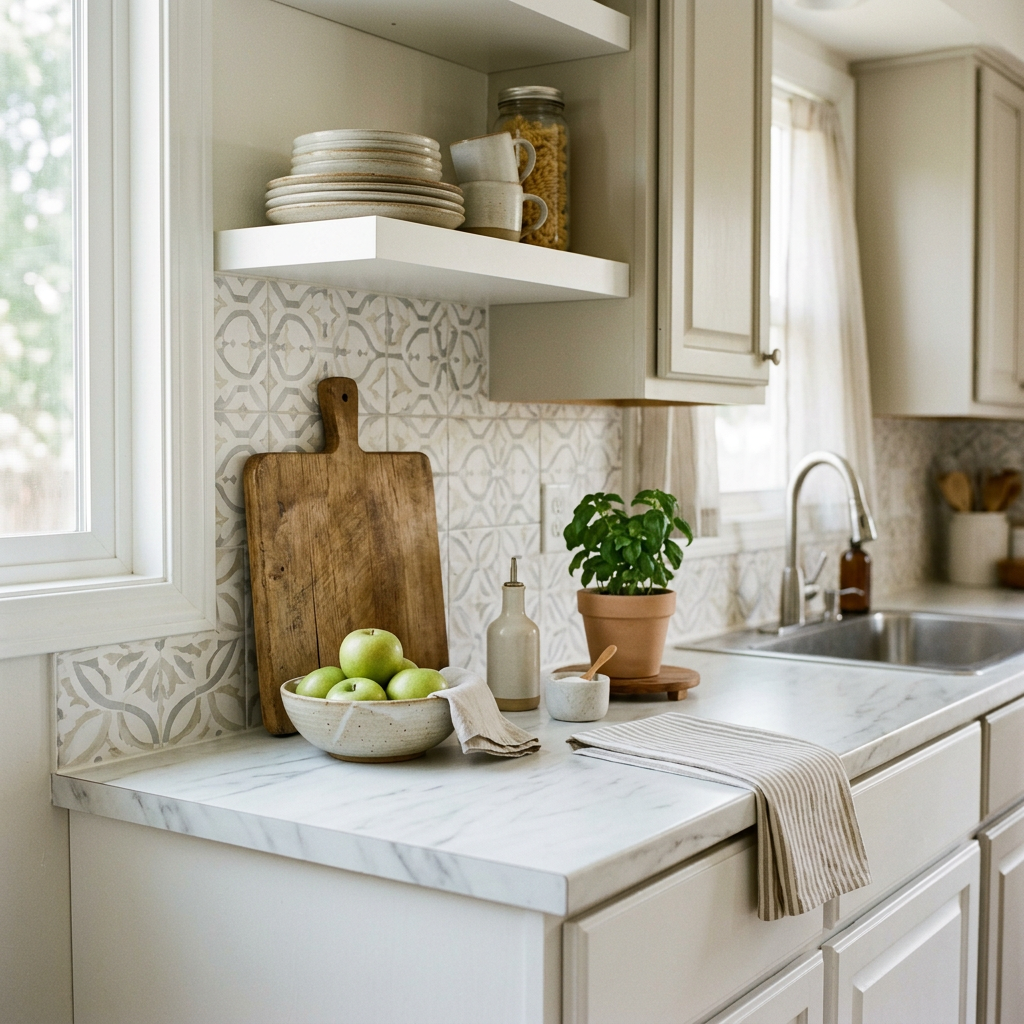
Don’t limit yourself to furniture and accessories. Floors and walls can provide some of the most interesting opportunities for geometric design. Consider geometric tile in a bathroom, a patterned backsplash in the kitchen, wallpaper on an accent wall, or a geometric painted wall treatment.
If you aren’t ready for a permanent change, removable wallpaper or temporary wall decals can give you the opportunity to experiment. Just remember that larger geometric patterns can make a strong visual statement, so consider the size of the room before committing to one.
Let Your Home Have Some Breathing Room
Perhaps the most important rule when decorating with geometric design is knowing when to stop. You don’t have to put a geometric pattern on every surface. In fact, the spaces between your patterns are just as important as the patterns themselves.
Allow solid colors and simple textures to balance your geometric pieces. Give the eye somewhere to rest. Think of your décor as a conversation. If everyone is talking at the same time, it’s difficult to hear anyone. But when you allow certain pieces to speak while others quietly support them, the entire room feels more intentional.

So, Should You Try Geometric Style?
Absolutely—if you love it. But you don’t have to completely change your decorating style to incorporate it. Start with one piece. Try a geometric pillow. Add a round mirror. Replace a plain rug with a subtle patterned one. Choose an interesting light fixture. Bring in artwork with clean lines. Then step back and look at your room.
Could it be more interesting?
Does the pattern complement your existing décor?
Does it make you smile when you walk into the room?
If the answer is yes, you’ve found your starting point. Geometric design doesn’t have to dominate your home. It can simply become another layer of your decorating story. The beauty of decorating is that you get to decide how loudly your style speaks.
Sometimes it’s a bold statement. Sometimes it’s a subtle detail hiding in plain sight. And sometimes, the perfect geometric touch is simply the shape of a beautiful piece of furniture sitting in the right place.
Your home doesn’t need more décor. It needs décor that feels like you.



Leave a Reply