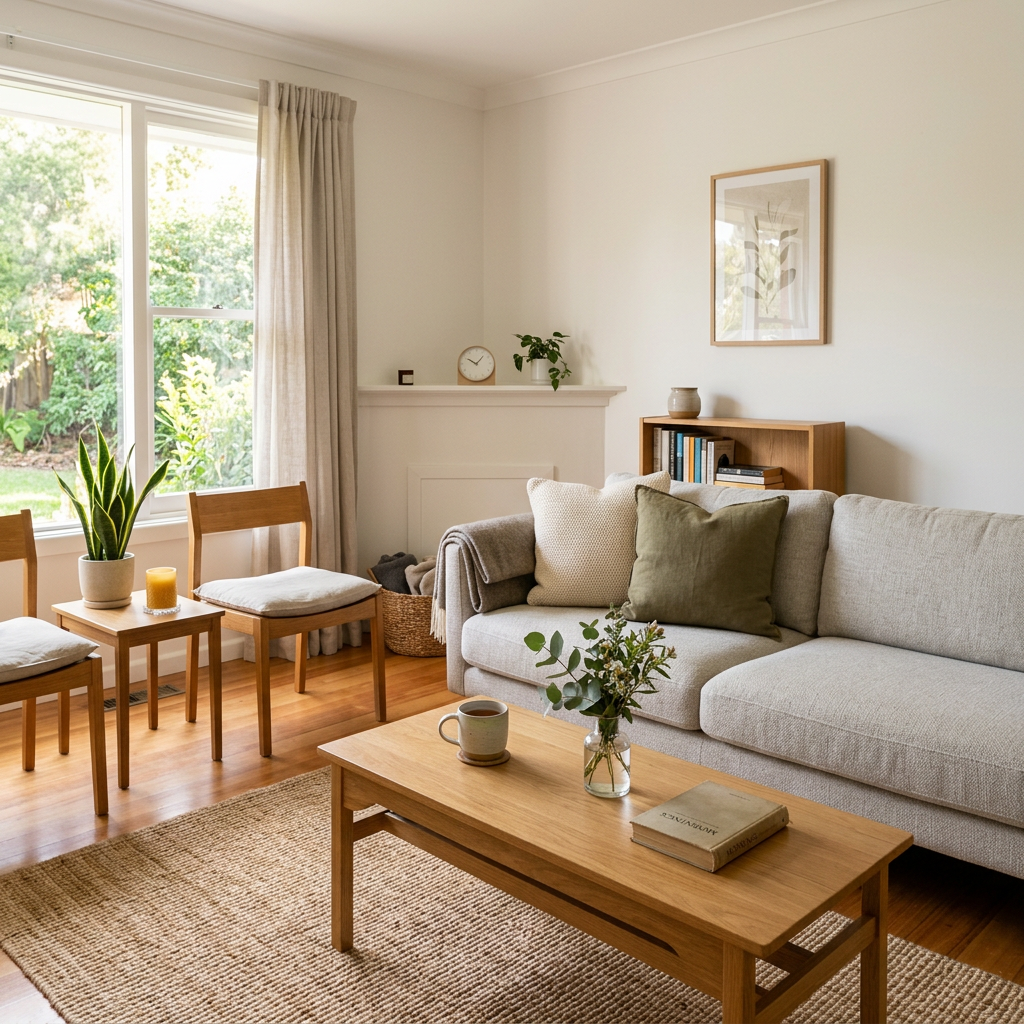
Have you ever looked around your home and thought, I have way too much stuff? However, you may not know where to start with decluttering your home. You are not alone. Decluttering your home can sound simple. It means getting rid of things you don’t need and organizing what is left.

However, in reality, it can be surprisingly emotional and overwhelming as you confront memories, attachments, and choices about what to keep. Decluttering your home often reveals items we thought we would use, gifts from people we love, and old clothes we haven’t worn in years. Then there is the biggest problem of all: Where do you actually begin?

The good news is that you don’t have to declutter your entire home in one weekend. In fact, trying to do everything at once may be the quickest way to become overwhelmed and give up. Instead, let’s talk about how to declutter your home in a way that is realistic, manageable, and actually makes your home feel better.
What Does Decluttering Really Mean?
Decluttering isn’t necessarily about having a perfectly minimal home. It doesn’t mean you have to throw away everything you haven’t used in the last 30 days or make your home look like a showroom. Decluttering means intentionally deciding what deserves space in your home.
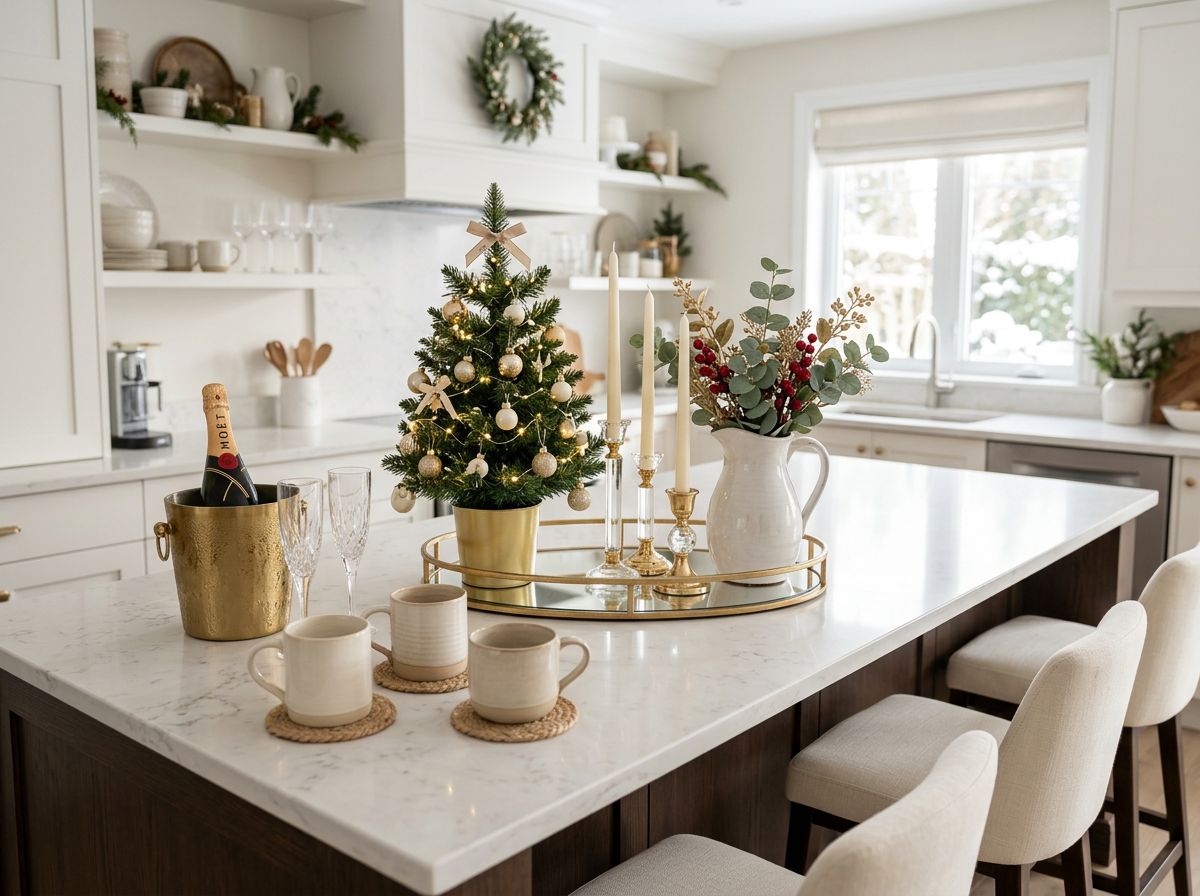
Your home has limited space. Every item you keep takes up physical space, but it can also take up mental space. Think about a kitchen counter covered with appliances, mail, containers, and miscellaneous items. None of those individual things may seem like a big deal. But together, they can make the entire room feel chaotic. Decluttering gives your home room to breathe.
And sometimes the best result isn’t having an empty house. It’s being able to find what you need, clean more easily, and actually enjoy the space you live in.
So, Where Should You Start?
The biggest mistake people make is starting with the hardest room. Don’t begin with the attic full of family memories. Don’t begin with the basement filled with boxes from three different homes. And definitely don’t begin with the closet containing clothes from 10 years ago. Start somewhere that can give you a quick win. Try one of these:
- Bathroom vanity
- Junk drawer
- Kitchen counter
- Nightstand
- Entryway
- Linen closet
- Small section of your closet
Choose an area that you can realistically finish in 30–60 minutes. Once you see the difference, you’ll have the motivation to keep going.
Use the Four-Pile Method
One of the easiest ways to declutter is to create four categories.
1. KEEP
These are things you use, need, love, or genuinely want in your home.
Keep them.
You don’t need to feel guilty about owning things that make your home comfortable or beautiful.
2. DONATE
These are items that are still useful but no longer serve you.
You may own five sweaters, but you wear only two. Maybe you have dishes you never use. Maybe your children have outgrown toys that are still in excellent condition. Someone else may be able to use them.
3. SELL
Some things may be worth selling rather than donating. Furniture, electronics, designer pieces, collectibles, appliances, and gently used home décor may have resale value.
However, be realistic. If you have had something sitting in a box for three years because you intended to sell it, ask yourself whether you’re actually going to list it. Sometimes donating an item is worth more to you than allowing it to take up space for another year.
4. TRASH OR RECYCLE
Broken, damaged, expired, stained, or unusable items don’t need to remain in your home simply because you feel bad throwing them away.
If something is broken and you have no realistic plan to repair it, it’s probably time to let it go.
Just remember to recycle electronics, batteries, chemicals, and other special items according to your local disposal rules.

Don’t Declutter Room by Room—Try Category by Category
If you’re feeling overwhelmed by the idea of an entire house, consider decluttering by category instead. For example, instead of saying:
“Today I’m going to declutter my bedroom.”
Say:
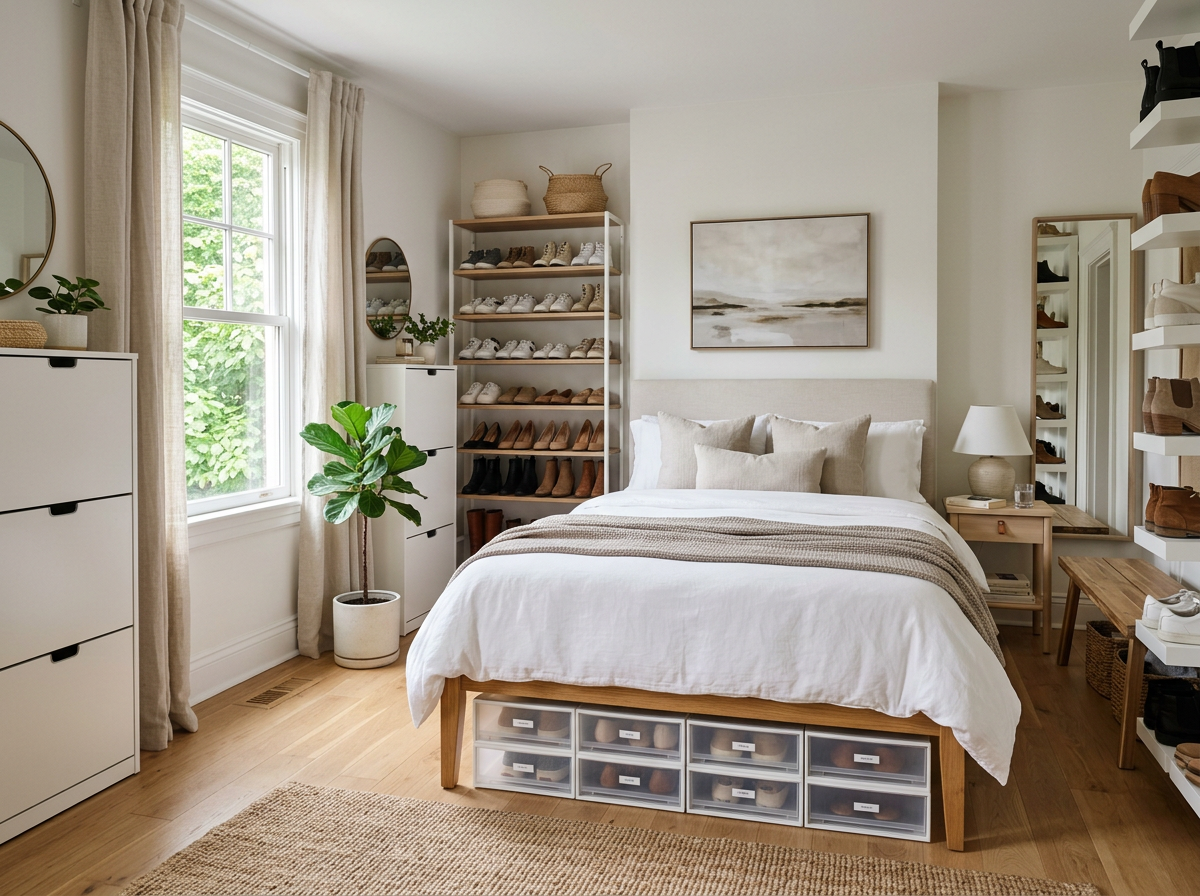
“Today I’m going to declutter my shoes.”
Then tackle:
- Shoes
- Clothing
- Accessories
- Bedding
- Books
- Kitchen gadgets
- Beauty products
- Children’s toys
- Paperwork
- Décor
This method can help you see just how much of one particular category you actually own. And sometimes that’s when you realize: “Wait…why do I own 14 coffee mugs?” You probably don’t need all 14.
Ask Yourself These Five Questions
When you’re struggling to decide whether something should stay, ask yourself:
Do I use this?
If you haven’t used it in years, that’s worth considering.
Do I love this?
Some things don’t need to be practical. If something genuinely brings you joy, there is nothing wrong with keeping it.
Would I buy this again today?
This is one of my favorite questions. If you walked into a store today and saw the item, would you spend your money on it again? If the answer is no, you may have your answer.
Does this fit my current life?
We often keep things for a version of ourselves that no longer exists. In the past, you entertained constantly. Maybe you had a different career. Maybe your children were younger. There was a time you loved that decorating style. Your home should reflect the life you’re living now, not only the life you used to live.
Am I keeping this because I love it—or because I feel guilty?
This one can be difficult. Gifts can be especially challenging. Remember that appreciating the person who gave you something does not mean you have to keep the object forever. The memory can remain even when the item doesn’t.
What About Sentimental Items?
This is where decluttering gets emotional. You may have your grandmother’s dishes, your child’s first pair of shoes, old photographs, wedding decorations, cards, trophies, or clothing that reminds you of a special moment.
You don’t have to throw away sentimental belongings simply because you’re decluttering. Instead, give them boundaries.
Choose one memory box. Choose one shelf. Create a small display. Take photographs of items that are meaningful but no longer practical. You can even create a digital memory folder for artwork, school projects, cards, and photographs. The goal isn’t to eliminate your memories. The goal is to stop your memories from taking over your home.

Don’t Buy Storage Before You Declutter
This is an important one. Many people see clutter and immediately think: “I need more storage.” So they buy baskets, bins, shelving, cabinets, containers, and organizers. Then they put the clutter inside those containers.
And now they have organized clutter. Before buying additional storage, declutter first. Once you’ve removed the things you don’t need, look at what’s left. Then determine what kind of storage would actually help. Sometimes the best organizational system is simply having fewer things.
What Are Your Best Options for Things You Don’t Want?
Once you’ve decided what needs to leave your home, you have several options.
Donate
Consider local charities, shelters, community organizations, thrift stores, and other organizations that accept gently used items.
Sell
For valuable items, consider local marketplaces, consignment shops, specialty resale websites, or garage sales.
Give It Away
Sometimes the easiest solution is giving something to someone who needs it. A friend might need the exact table you’ve been trying to get rid of. A neighbor might need extra kitchen supplies. A family member might appreciate furniture you no longer use.
Recycle
Paper, cardboard, certain plastics, electronics, textiles, and other materials may be recyclable depending on your local program.
Dispose of It Properly
Some things should not simply go into the regular trash. 56Paint, chemicals, batteries, medications, electronics, and other household materials may require special disposal. Check your local waste-management guidelines before throwing them away.
The One-Year Rule Isn’t Always the Best Rule
You’ve probably heard: “If you haven’t used it in a year, get rid of it.” That’s a useful guideline—but it isn’t a law. Seasonal decorations may only be used once a year. Snow equipment may sit unused for months.
Camping equipment may only come out during summer. Formal clothing may not be worn frequently. The better question is: “Does this item have a purpose in my life?” Something you use once a year may still be worth keeping. Something you haven’t touched in five years probably deserves another look.

Create a Decluttering Schedule
You don’t need an entire weekend. Try a 15-minute decluttering routine. Set a timer. Choose one small area. Remove anything that doesn’t belong. Put things back where they belong. Create a donate, sell, and trash piles. Then stop when the timer ends.
You can do this while waiting for dinner to cook, before bed, or while listening to your favorite podcast. Small efforts add up. Imagine decluttering for 15 minutes every day for an entire month. That’s more than seven hours of focused decluttering without having to sacrifice



Leave a Reply