
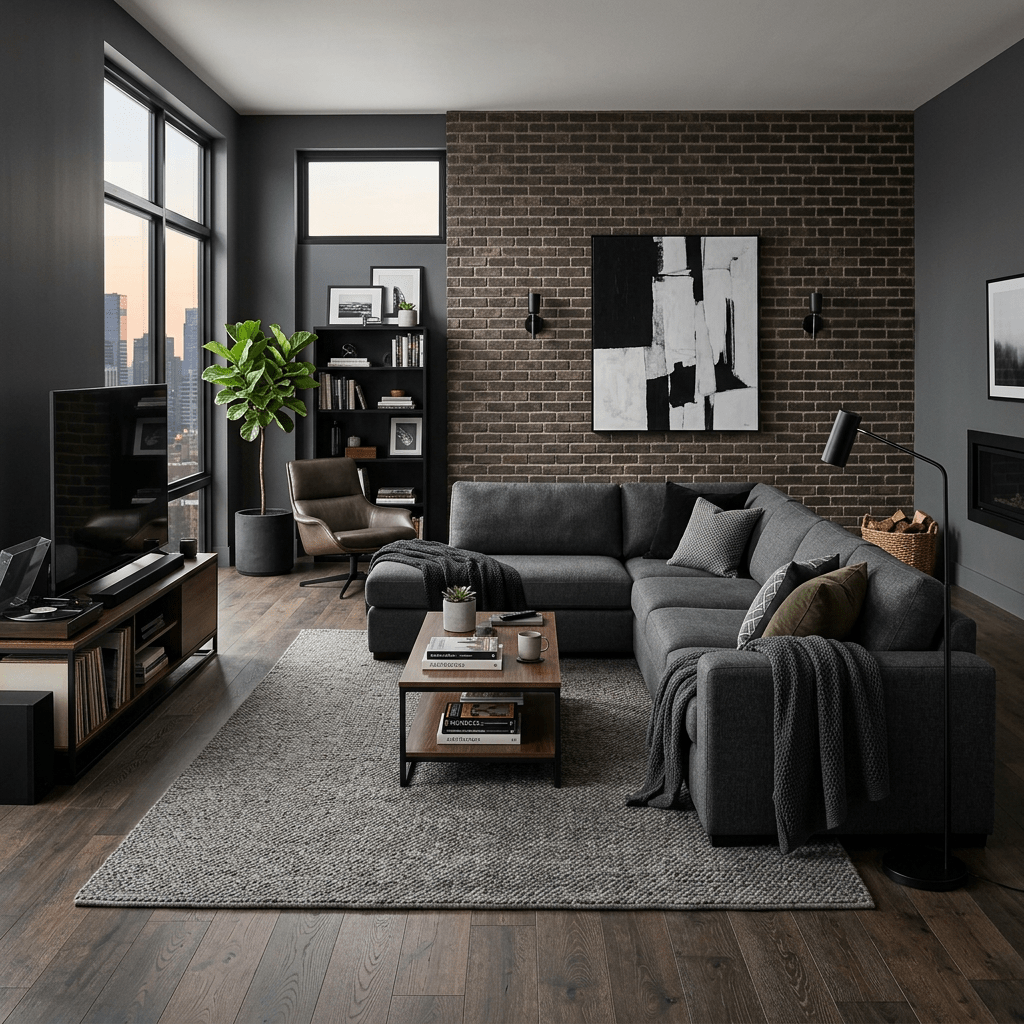
There’s something undeniably grounding about a masculine home style. It feels structured, calm, and intentional—like every piece has a purpose and every detail has weight. But here’s the truth: embracing a masculine aesthetic doesn’t mean turning your home into a dark, heavy, overly serious space. It’s about balance. It’s about strength and comfort. It’s about creating a space that feels refined without feeling rigid.
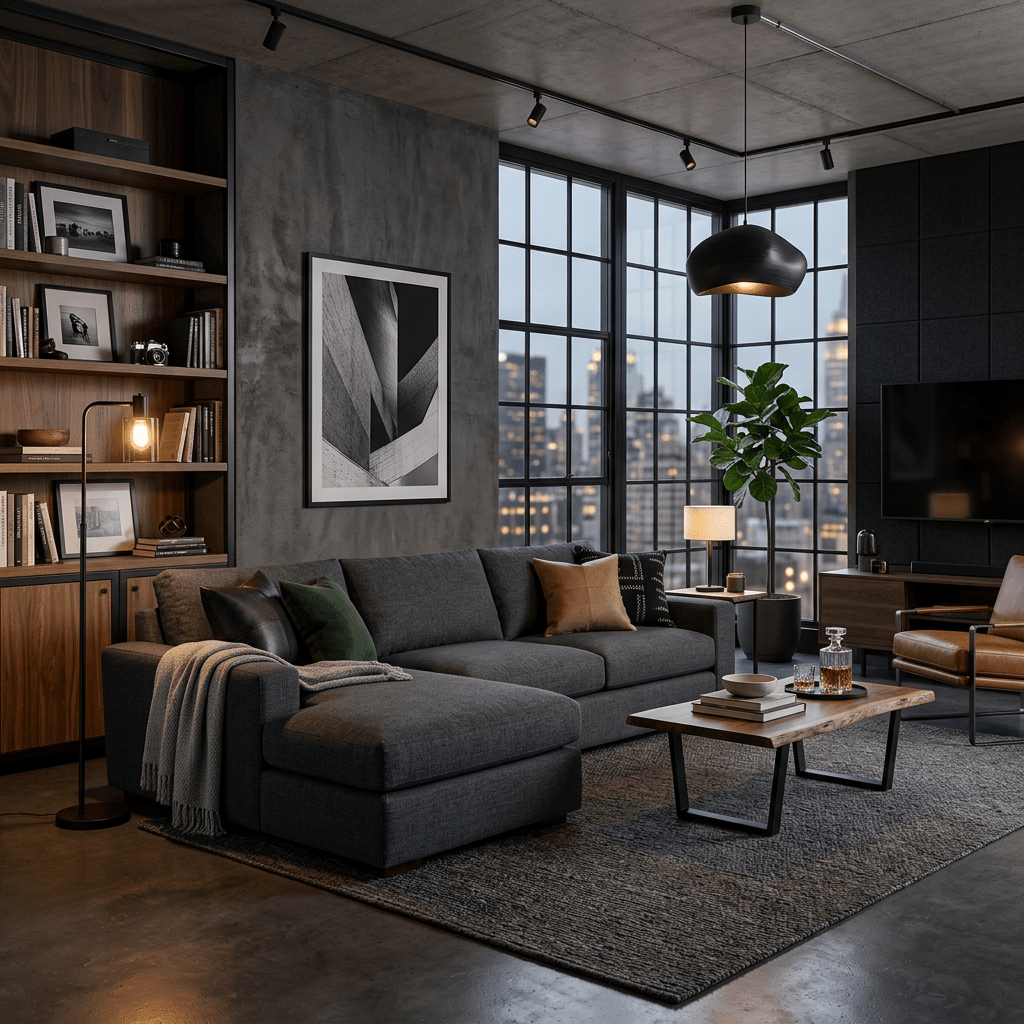
If you’re drawn to what’s often considered a more masculine style—clean lines, deeper tones, rich textures—you’re not alone. The key is learning how to incorporate it in a way that still feels inviting, personal, and livable.
Let’s walk through how to do exactly that.
What Is Masculine Home Style, Really?
Masculine design is less about gender and more about energy. It leans into:
- Structure over softness
- Neutral and darker color palettes
- Functional, purposeful furniture
- Natural, raw materials like wood, leather, and metal
Think of it as a design approach that values simplicity, depth, and quiet confidence.
But here’s where many people go wrong—they assume masculine means dark everything, minimal everything, and no personality. That’s where spaces start to feel cold instead of curated.
Start with a Strong Foundation (But Don’t Go Too Dark)
A masculine palette typically includes:
- Charcoal gray
- Deep browns
- Black accents
- Navy tones
- Warm neutrals like taupe and beige
But balance is everything.
Instead of painting an entire room black or dark gray, try this:
- Use lighter walls (like warm beige or soft gray)
- Add depth through furniture and accents
Design Tip:
A light taupe wall with a deep brown leather couch and black metal accents gives you that masculine feel without making the room feel heavy.
Focus on Texture Over Color
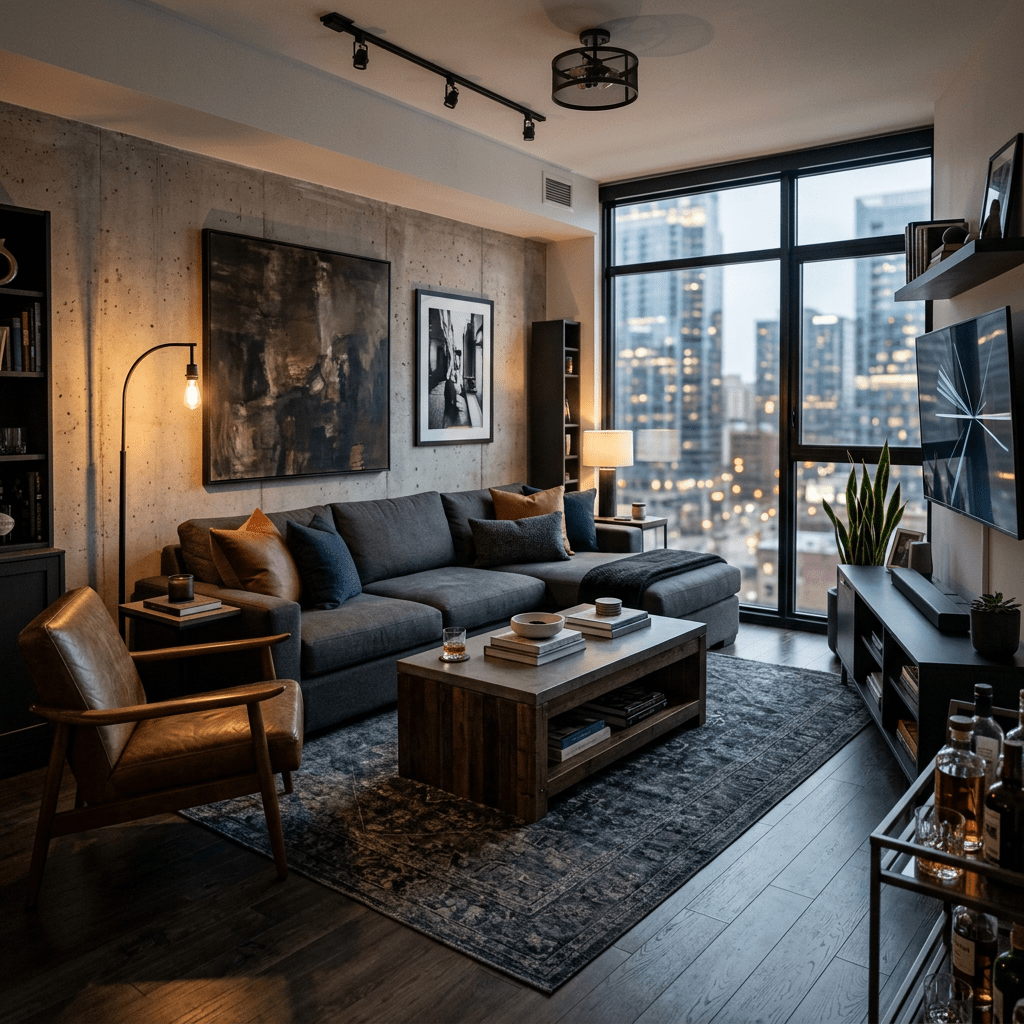
One of the most powerful ways to create a masculine space is through texture—not just color.
Layer materials like:
- Leather (sofas, chairs, ottomans)
- Wood (coffee tables, shelving, flooring)
- Metal (lighting fixtures, frames)
- Linen or cotton (for softness and balance)
Why this works:
Texture adds richness and depth, making the space feel elevated instead of flat or overly dark.
Example:
Imagine a living room with a sleek black coffee table, a brown leather couch, a soft woven throw, and a natural wood shelf. It’s masculine—but still warm and inviting.
Keep Furniture Clean, Not Cold
Masculine furniture often features:
- Straight lines
- Structured silhouettes
- Low-profile designs
But don’t confuse clean with uncomfortable.
Look for pieces that are:
- Supportive but cozy
- Minimal but not bare
- Functional but still stylish
Design Tip:
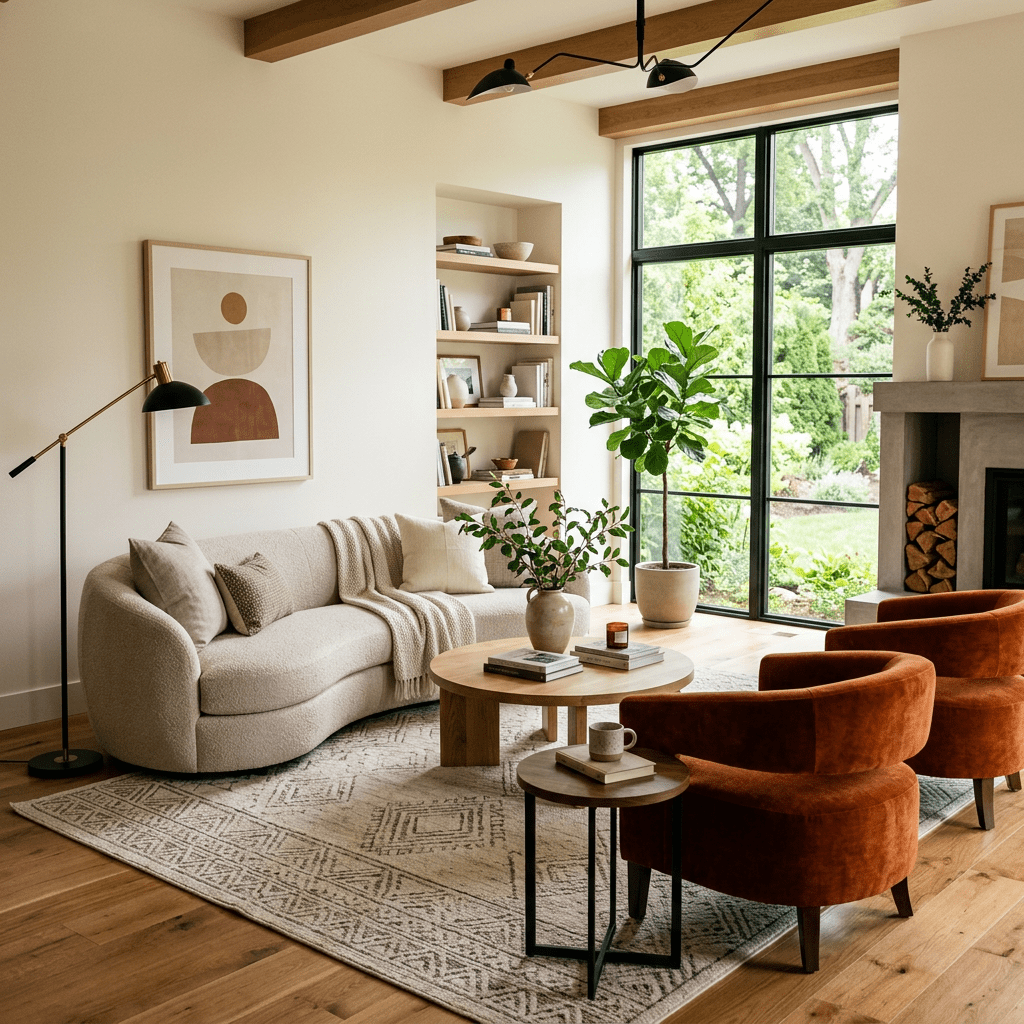
A structured sofa paired with a plush area rug instantly softens the space while keeping that masculine edge.
Add Personality Through Statement Pieces
A common mistake is stripping a masculine space of personality in the name of minimalism. Don’t do that.
Instead, choose a few intentional statement pieces, such as:
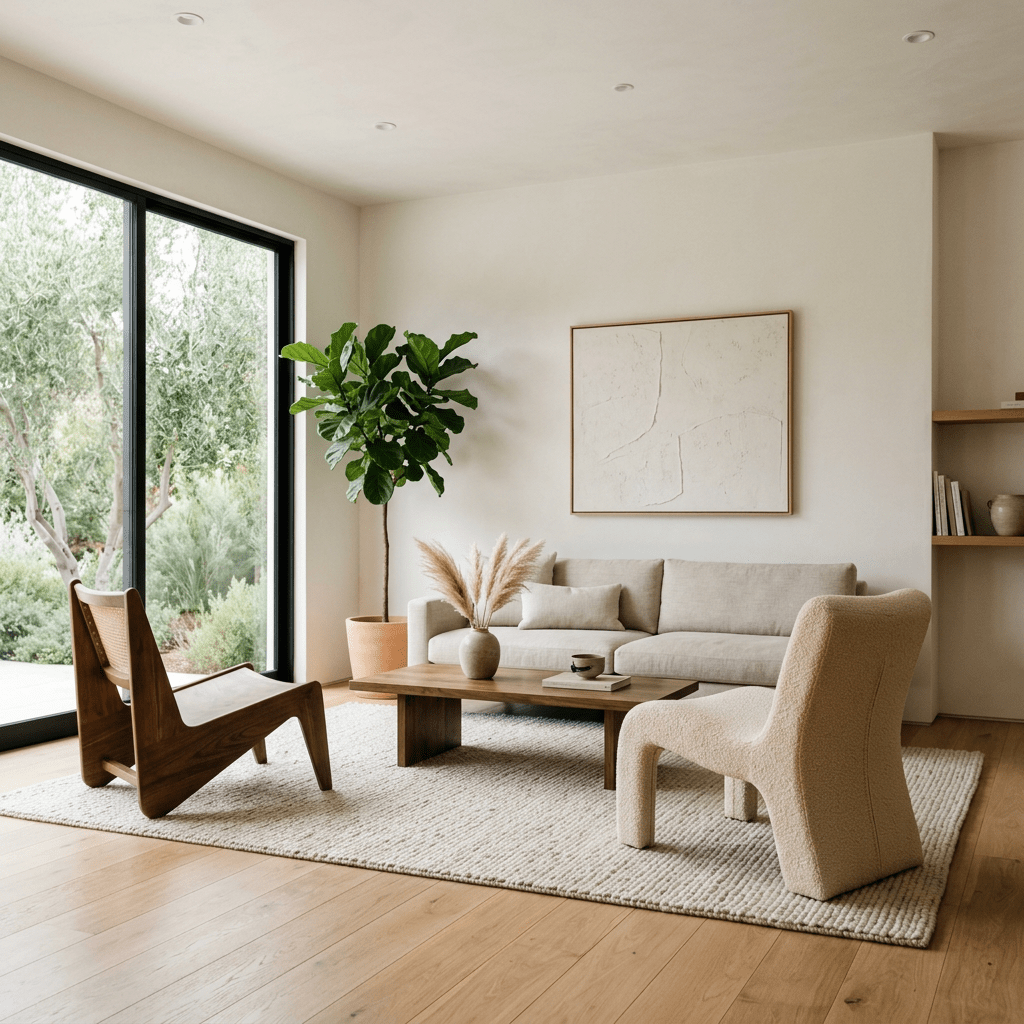
- Large-scale wall art (abstract, black and white photography, or textured art)
- A bold floor lamp or industrial light fixture
- A standout coffee table or accent chair
Less clutter, more impact.
Layer in Softness (Yes, It Matters)
Even the most masculine spaces need contrast.
Bring in:
- Throw pillows
- Soft blankets
- Area rugs
- Curtains
These elements prevent the space from feeling too rigid or uninviting.
Think of it like this:
Masculine style sets the structure—soft elements make it livable.
A Real-Life Style Story
Imagine walking into a space that feels calm, grounded, and put together. The walls are a soft warm gray. A deep brown leather sofa anchors the room. A black metal floor lamp stands tall in the corner. A wooden coffee table sits at the center—simple, but solid.
But what makes the room feel right? A textured cream rug softens the floor. A neutral throw is casually draped over the couch. A large abstract canvas hangs on the wall—not loud, but striking.
It’s masculine—but it doesn’t feel heavy.
It feels intentional.
How to Avoid Overdoing Masculine Style
If you want to get this look right, keep these in mind:
- Don’t go too dark everywhere → Balance dark tones with lighter elements
- Don’t skip softness → Texture and fabrics matter
- Don’t over-minimize → A lived-in space still needs personality
- Don’t match everything perfectly → Mix materials for depth
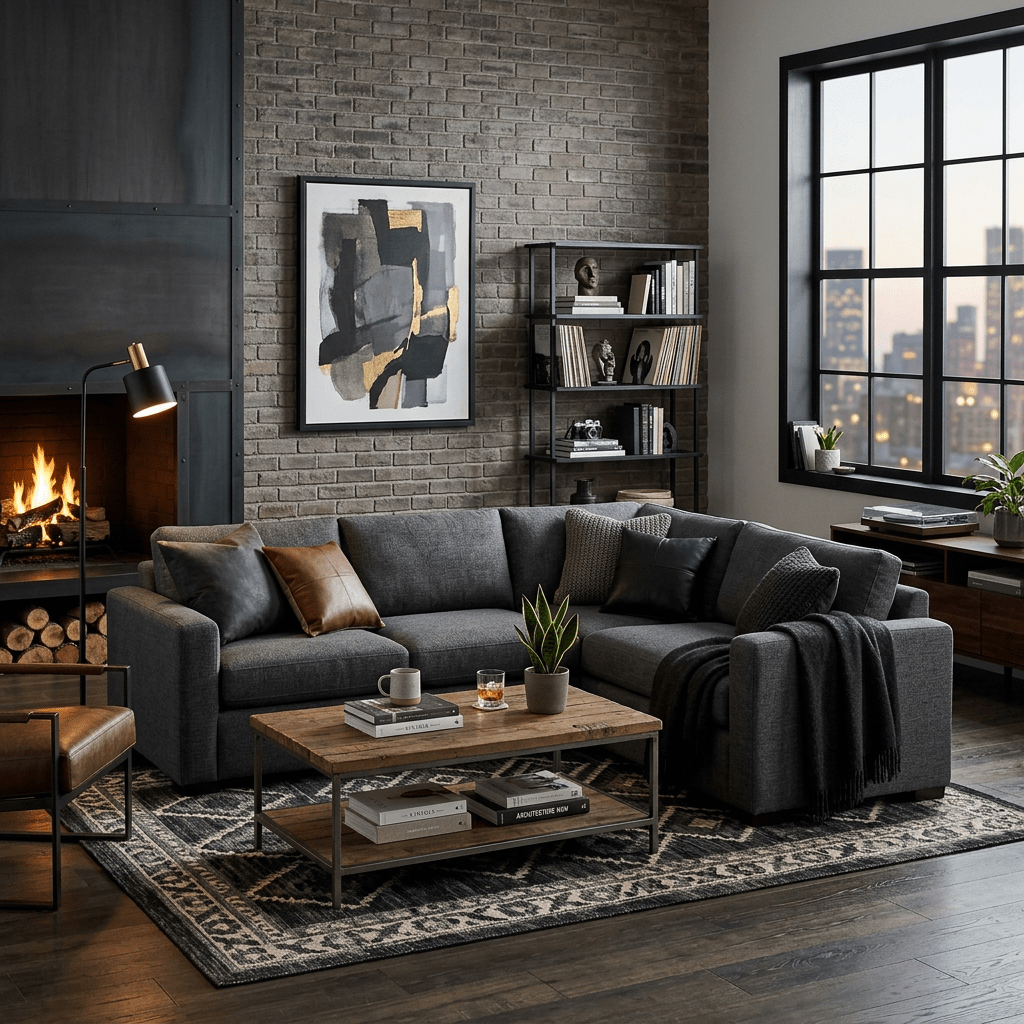
Final Thoughts: Masculine Style Is About Balance, Not Limits
Masculine home style isn’t about rules—it’s about feeling.
It’s for the person who loves structure, depth, and simplicity…
but still wants a home that feels comfortable, welcoming, and uniquely theirs.
You don’t have to choose between bold and cozy. You don’t have to sacrifice warmth for style. You just have to find your balance.
Discovering Life Tip
When designing your space, don’t ask, “Is this masculine enough?”
Ask, “Does this feel like a space I can truly live in?”
Because at the end of the day, the best design isn’t about fitting a label—
it’s about creating a home that reflects you.

 Discoveringlifellc
Leave a comment