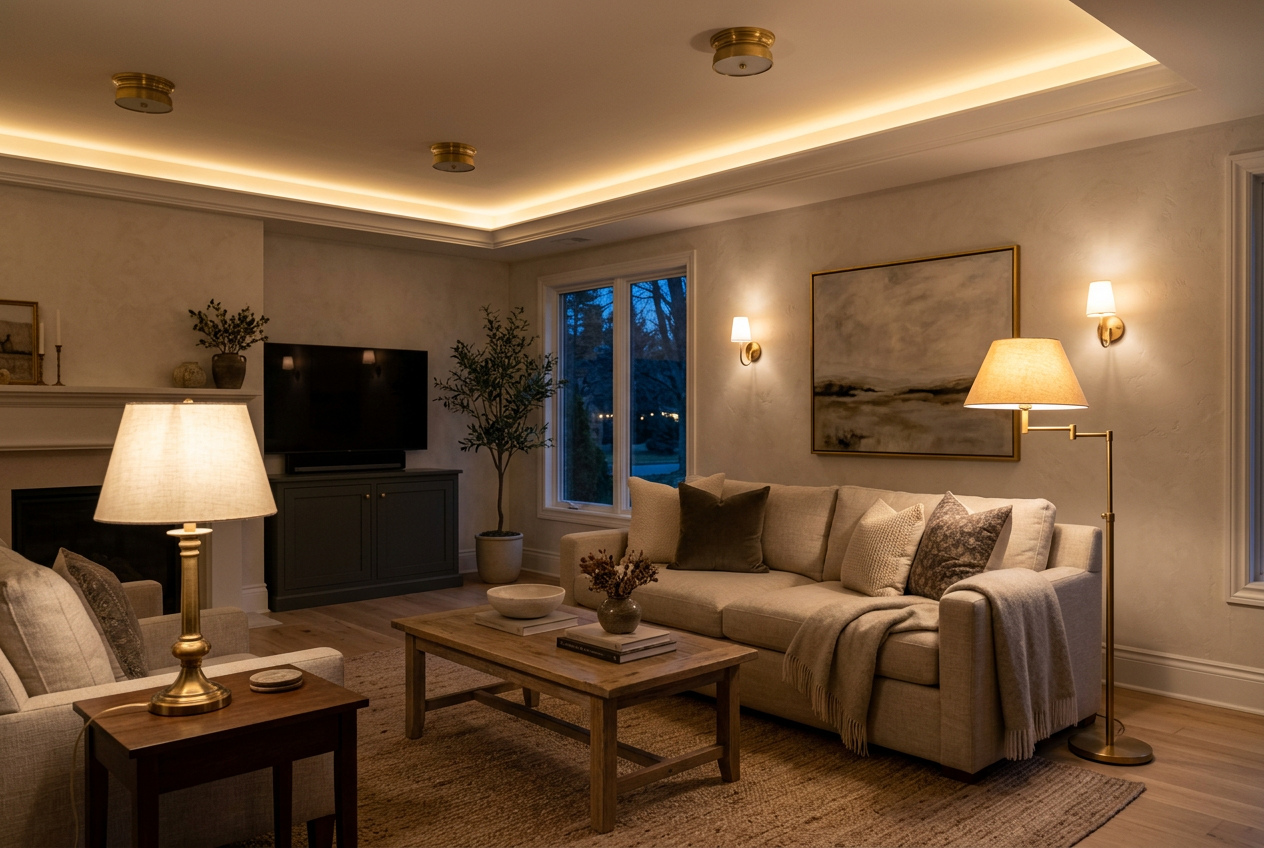
Lighting your home is one of the most overlooked elements of home decorating. It has the power to completely transform a room. You can have beautiful furniture, carefully selected colors, stylish rugs, and thoughtfully arranged décor. However, without the right lighting, a room may still feel cold, dark, flat, or unfinished.

Lighting does more than help us see. It creates atmosphere, highlights the details we love, makes a space feel larger or smaller, and helps establish the overall style of our home. The right lamp can make a cozy reading corner feel inviting, while a beautiful chandelier can become the focal point of an entire room. Even something as simple as changing a light bulb can dramatically change how a space feels.

When choosing lighting for your home, it is important to think beyond functionality. Additionally, lighting your home should support everyday needs while complementing your decorating style.
Why Lighting Matters More Than You Think
Have you ever walked into a room and immediately felt comfortable without knowing exactly why? Maybe the furniture was arranged beautifully, the colors were soothing, or the room simply felt warm and inviting. Lighting often plays a major role in creating that feeling.
Lighting influences how colors appear, how textures look, and how welcoming a space feels. Bright lighting can make a room feel energetic and clean, while softer lighting can create a relaxing atmosphere. A room with several different light sources often feels more layered and intentional than one relying entirely on a single overhead fixture.
Lighting can also help define how you use a room. A kitchen needs lighting that makes cooking and preparing meals easier. A bedroom needs lighting that allows you to relax at the end of the day. A living room may need enough light for entertaining, reading, watching television, and enjoying a quiet evening at home.
The key is understanding that not every room needs the same type of lighting, and not every light needs to serve the same purpose.
Understanding the Three Types of Lighting
Before shopping for lamps or fixtures, it helps to understand the three basic layers of lighting. These layers work together to create a room that is functional, comfortable, and visually appealing.
Ambient lighting is the primary lighting in a room. It provides general illumination and helps you comfortably move around the space. This is often provided by ceiling fixtures, recessed lights, flush mounts, chandeliers, or other overhead lighting. Ambient lighting should illuminate the room without making it feel harsh.
Task lighting is designed to help you perform specific activities. This type of lighting is especially important in areas where you read, cook, work, apply makeup, sew, or complete other activities that require focused visibility. Desk lamps, reading lamps, vanity lights, pendant lights above kitchen islands, and under-cabinet lighting are all examples of task lighting.
Accent lighting adds depth and highlights the details you want to draw attention to. It can be used to illuminate artwork, bookshelves, decorative objects, plants, textured walls, or other features you want to showcase. Wall sconces, picture lights, small spotlights, and decorative lamps can all serve as accent lighting.
You do not need an excessive number of fixtures to create layered lighting. A few strategically placed lights can make your home feel more thoughtfully designed.
Choosing Lighting That Matches Your Decorating Style
One of the easiest ways to make lighting feel intentional is to select fixtures that complement your decorating style. Lighting fixtures are decorative objects themselves, so they should work with the furniture, finishes, colors, and personality of your home.
However, matching your style does not mean everything needs to look identical. You can mix finishes, shapes, and materials as long as they feel connected.
Modern and Contemporary
Modern and contemporary interiors often benefit from lighting with clean lines, simple shapes, and minimal ornamentation. Think sleek pendant lights, geometric chandeliers, sculptural floor lamps, and fixtures made with metal, glass, or matte finishes.
Black, brass, chrome, brushed nickel, and white are common finishes that work well in these spaces. A fixture can become a statement piece, especially when the rest of the room is kept simple.
If your home has neutral colors, streamlined furniture, and uncluttered surfaces, look for lighting that feels purposeful rather than overly decorative.
Farmhouse and Rustic
Farmhouse and rustic interiors often feel warm, comfortable, and relaxed. Lighting that incorporates wood, aged metals, iron, textured glass, or lantern-inspired designs works beautifully with these styles.
You may find yourself drawn to oversized pendant lights, farmhouse chandeliers, rustic sconces, or lamps with ceramic and wood bases. Fixtures with a little character can help a space feel lived-in rather than overly polished.
If your home features wood furniture, natural textures, neutral colors, and cozy fabrics, lighting with warmth and texture can help bring everything together.
Traditional and Classic
Traditional interiors often feature elegant details, symmetrical arrangements, rich finishes, and timeless furniture. Lighting can help reinforce that look.
Crystal chandeliers, brass fixtures, decorative sconces, lamps with fabric shades, and classic table lamps are all options worth considering.
A traditional home does not need to feel outdated. Choosing fixtures with classic proportions and updated finishes can create a timeless look that feels elegant without being overly formal.
Boho and Eclectic
Bohemian and eclectic homes are perfect for experimenting with lighting. These styles often embrace creativity, natural materials, unusual shapes, layered textures, and unique decorative pieces.
Rattan pendants, woven lampshades, colorful ceramic lamps, beaded fixtures, and artistic floor lamps can all work beautifully.
Rather than trying to make every fixture match, focus on choosing pieces that share a common feeling. Maybe they all have natural textures, warm colors, or interesting shapes. The goal is to create a home that feels collected, personal, and expressive.
Glamorous and Luxury-Inspired
If you love a home that feels polished, elegant, and luxurious, lighting can help you achieve that look without necessarily spending a fortune.
Consider crystal-inspired fixtures, glass chandeliers, gold or champagne finishes, polished metals, marble lamp bases, and lamps with elegant shades.
A dramatic chandelier in a dining room or entryway can create a memorable first impression. In bedrooms and living rooms, table lamps with beautiful bases and soft shades can add a luxurious feeling without overwhelming the space.
The trick is balancing glamour with restraint. A few well-chosen pieces often look more sophisticated than filling every room with decorative lighting.
Table Lamps: Small Details That Make a Big Difference
Table lamps are among the most versatile lighting options in a home. They can be placed on nightstands, end tables, console tables, desks, shelves, and other surfaces.
One of the biggest advantages of table lamps is that they introduce light at a lower level. This helps create a more comfortable atmosphere, especially in the evening when you may not want the entire room brightly illuminated.
When choosing a table lamp, consider the size of the table and the surrounding furniture. A lamp that is too small can look lost, while one that is too large can overwhelm the arrangement.
Pay attention to the lampshade, too. A light-colored shade usually allows more light to pass through, while darker or thicker shades may create a more focused glow. The shade shape can also influence the style, from traditional tapered shades to modern geometric designs.
Table lamps are also an excellent way to introduce a new color, material, or finish into your room. If you are hesitant about adding a bold color to your furniture or walls, a lamp may be the perfect place to experiment.
Floor Lamps: Lighting Without Taking Up Table Space
Floor lamps are especially helpful when you need additional lighting but do not have room for another table. They can fit beside sofas, reading chairs, beds, or in empty corners that need a little attention.
A traditional floor lamp with a shade provides soft illumination. An adjustable reading lamp is useful for activities such as reading or crafting. Arc floor lamps extend over furniture and can provide light above a seating area without requiring a ceiling fixture directly overhead. Tripod floor lamps can introduce a modern or decorative element.
Floor lamps also help balance a room. If one side of your living room feels visually heavy because of a large piece of furniture, a floor lamp on the opposite side may help create a more balanced arrangement.
Instead of treating floor lamps as an afterthought, think of them as part of your furniture and décor plan.
Ceiling Fixtures: The Statement Pieces of Your Home
Ceiling fixtures are often the first lighting choice homeowners make, but they should not be selected based on appearance alone. The size, height, layout, and purpose of your room all matter.
Chandeliers are popular in dining rooms, entryways, bedrooms, and living spaces. Pendant lights work well over kitchen islands, dining tables, and certain seating areas. Flush-mount and semi-flush fixtures are useful in rooms with lower ceilings, hallways, closets, and smaller spaces.
When choosing a ceiling fixture, consider the visual weight of the design. A large, dramatic chandelier may look beautiful in a spacious room but could feel overwhelming in a smaller area. A tiny fixture in a large room may appear insignificant.
Think about the room’s proportions, furniture, ceiling height, and how the fixture will look from different angles. A ceiling light should complement the room rather than compete with everything else in it.

Wall Sconces: A Beautiful Way to Add Layers
Wall sconces are one of those lighting elements that can make a home feel professionally decorated. They provide light without requiring floor or table space, making them especially useful in hallways, bedrooms, bathrooms, and living rooms.
Sconces can be decorative, functional, or both. They can frame a mirror, illuminate a hallway, flank a fireplace, provide bedside lighting, or highlight artwork.
If you want a room to feel more layered, wall sconces are a great option. They bring light into areas that overhead fixtures and table lamps may not reach.
They also create an opportunity to introduce a different finish or shape. A pair of brass sconces can add warmth to a neutral room, while black fixtures may provide contrast in a lighter space.
Don’t Forget the Light Bulbs
You can choose the most beautiful fixture in the store, but the wrong light bulb can ruin the effect. One of the most important things to consider is color temperature, measured in Kelvin (K).
Warm white bulbs, around 2700K, create a cozy, soft, and relaxing glow. They are great for bedrooms, living rooms, and spaces where you want a comfortable atmosphere.
Around 3000K provides a slightly clearer light while still feeling warm. This can work well in kitchens, bathrooms, and other living spaces.
Cooler white light, around 4000K or higher, looks crisper and may be useful for certain work areas or tasks, depending on your preference.
For most homes, warmer lighting is a comfortable choice for everyday living. Using very cool bulbs throughout the home can sometimes make rooms feel less inviting.
Also consider brightness, measured in lumens. A bulb with a higher lumen output produces more light. Instead of automatically buying the brightest bulb, consider what the room is used for and how many light sources are already available.
Dimmable bulbs and dimmer switches can be especially useful because they allow you to change the atmosphere without changing the fixture.

How to Mix Lighting Finishes Without Making the Room Look Disorganized
Many homeowners worry that all their lighting fixtures need to match. While matching fixtures can create a cohesive look, your home does not need to look like every lighting piece came from the same collection.
You can mix brass, black, chrome, brushed nickel, glass, wood, and other materials. The key is to make the choices feel intentional.
For example, you might have a black ceiling fixture, brass table lamps, and natural wood accents throughout the room. Those finishes can work together if they are repeated in other elements, such as furniture legs, cabinet hardware, picture frames, or decorative accessories.
Try not to introduce too many competing finishes in one small space. Choose one dominant finish and one or two supporting finishes. Repeating those materials in different areas helps create a connection throughout the room.
Common Lighting Mistakes to Avoid
Choosing lighting can be exciting, but a few common mistakes can make a room feel less comfortable or less cohesive.
One of the biggest mistakes is relying entirely on overhead lighting. While ceiling fixtures are important, they can create harsh shadows or leave a room feeling flat. Add table lamps, floor lamps, or sconces to create more depth.
Another mistake is choosing fixtures that are the wrong scale. A tiny pendant over a large dining table or an oversized lamp on a narrow end table can throw off the balance of a room.
Do not ignore the function of the light. Decorative fixtures should still provide the illumination you need, or you should supplement them with other lighting sources.
Avoid using different color temperatures that clash within the same room. A warm lamp next to a very cool overhead light may create an uneven atmosphere that feels uncomfortable.
Finally, do not rush to buy lighting simply because it is on sale. Consider how the fixture will fit your home, your furniture, your decorating style, and your everyday routines.
Creating a Lighting Plan for Your Home
You do not need to replace every light in your home to make a difference. Start with one room at a time. First, identify what the room is used for. Think about the activities that happen there throughout the day. Next, determine what lighting is already available and what areas feel too dark, too bright, or uncomfortable.
Then consider where you could introduce another light source. Maybe your living room needs a floor lamp beside the sofa. Maybe your bedroom needs bedside lamps instead of relying on a single ceiling fixture. Maybe your dining room needs a statement chandelier that complements your table.
Choose fixtures that work with your style, but make sure you also consider bulb brightness, color temperature, placement, and scale.
Finally, step back and look at the room as a whole. Lighting should create a comfortable flow throughout your home. It should not feel as though every room was decorated separately with no connection between them.

Lighting Is the Finishing Touch Your Home Needs
Lighting has the power to transform a space without changing the furniture, painting the walls, or purchasing an entirely new décor collection. It can make a room feel cozy, elegant, modern, dramatic, cheerful, or peaceful.
The beauty of choosing lighting is that you have so many options. From table lamps and floor lamps to chandeliers, pendant lights, and wall sconces, there is a fixture for nearly every decorating style, budget, and room in your home.
You do not have to follow every lighting trend. Instead, focus on what makes you feel comfortable and what reflects your personality. Choose fixtures you love, light bulbs that create the atmosphere you want, and lighting layers that support how you live.
Sometimes the most beautiful change in a room is not a new sofa or a new paint color. Sometimes it is simply turning on the right light.
Discovering Life — Transforming Spaces, Inspiring Lives.



Leave a Reply