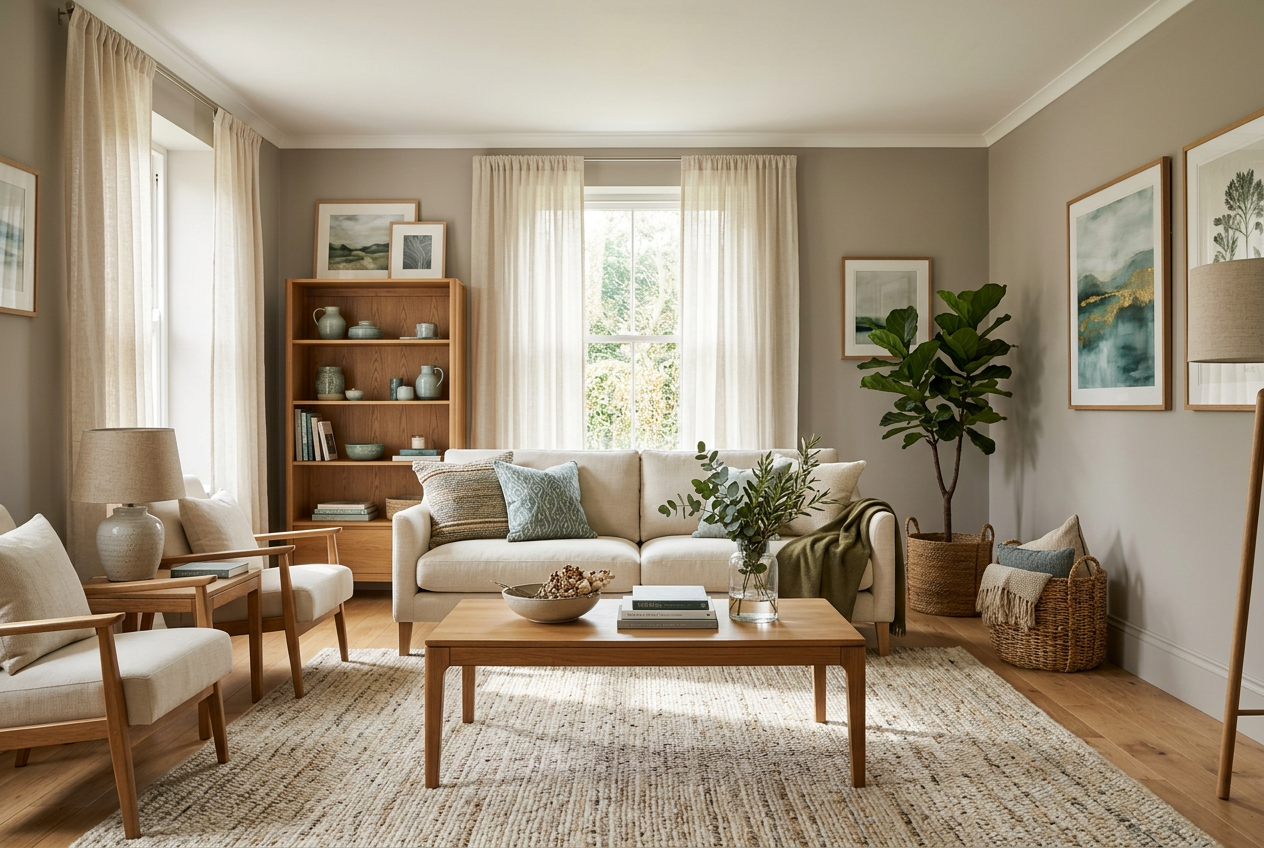
For years, white, beige, cream, and ivory were popular neutrals for homeowners. Additionally, Gray: The New Neutral Base has become a common choice in modern design. If you wanted a brighter room, white was often the first choice. If you wanted warmth, beige was usually the answer.

But somewhere along the way, gray quietly stepped into the spotlight and began changing the way we think about neutral interiors. Today, gray is more than a color used for accent walls, furniture, or flooring.
As a result, Gray: The New Neutral Base has become a foundation color in modern home design. From soft gray walls and gray-toned flooring to kitchen cabinets, upholstery, and bedding, it is common. Decorative accessories also show gray in many spaces.

Gray: The New Neutral Base is a popular shade among many homeowners. Moreover, why have homeowners gravitated toward gray instead of traditional white, beige, or cream? Ultimately, is gray a timeless neutral, or is it simply another trend that will fade?
The answer may have more to do with how we want our homes to feel than with the color itself.
The Changing Meaning of Neutral
Neutral colors have always played an important role in interior design. They create a starting point for decorating, allowing furniture, artwork, textures, and accessories to work together without competing for attention. A neutral room can be dressed up, toned down, refreshed seasonally, or completely transformed without changing everything in the space.
Traditionally, neutral meant white, beige, tan, cream, or brown. These colors were considered dependable choices because they were easy to live with and unlikely to overwhelm a room.
However, our idea of neutral has expanded. Homeowners are no longer limited to warm, creamy shades or bright whites when creating a versatile interior. We have begun embracing colors that offer a little more depth, personality, and character while still functioning as a neutral backdrop. Gray fits perfectly into that shift.
Gray can be light and airy, dark and dramatic, warm and inviting, or cool and contemporary. It has the ability to create a quiet backdrop without feeling completely plain. Unlike some traditional neutrals, gray can bring a subtle sense of sophistication to a space without requiring bold colors or elaborate decorating.
It gives a room something to work with while still allowing the rest of the design to take center stage.
Why Gray Became the New Neutral
One of the biggest reasons gray became so popular is its versatility. It can work with almost any design direction depending on the shade, undertone, and colors surrounding it.
When homeowners began moving away from overly traditional interiors and embracing modern, contemporary, transitional, and minimalist styles, gray offered a color that could bridge the gap between old and new.
Gray didn’t require homeowners to completely abandon warmth, but it offered an alternative to the familiar beige palette. It felt fresh without being overly bold. It felt modern without being difficult to decorate around.
Gray also became popular because it worked beautifully with some of the materials that began appearing more frequently in home design, including brushed metals, chrome, black finishes, marble, natural stone, glass, white cabinetry, and light or dark wood. It was a color that could pull all of those elements together.
For someone updating a home, gray offered a way to create a cohesive look without needing every room to look exactly the same. A soft gray in the living room, a deeper gray in the bedroom, or a gray accent in the kitchen could create a connection throughout the home without making every space feel identical. Gray offered homeowners flexibility, and flexibility is one of the most valuable things a neutral can provide.

Gray Offers Something White Cannot Always Give
White is beautiful. It can make a room feel open, clean, bright, and fresh. But depending on the shade, lighting, and surrounding finishes, white can sometimes feel stark, sterile, or overly bright.
In rooms with limited natural light, certain whites can appear flat or even slightly gray themselves. In rooms with an abundance of sunlight, they may feel washed out. White also shows dirt, scuffs, and everyday wear more easily than many other colors, particularly in busy households. Gray offers a little more visual weight.
A soft gray can create the same clean feeling as white while adding subtle definition to the walls. It allows white trim, doors, ceilings, furniture, and accessories to stand out instead of blending into one continuous surface.
Think about a living room with soft gray walls, crisp white trim, a cream sofa, a natural wood coffee table, and black metal accents. Nothing in the room has to be overly dramatic, yet each element has a place. The gray creates separation, the white adds contrast, the cream introduces warmth, and the wood brings texture.
The room feels layered rather than simply painted. That is one of gray’s greatest strengths. It can make a space feel finished without making it feel busy.
Gray Has More Personality Than Beige
Beige has long been the color associated with warmth, comfort, and traditional neutral decorating. It remains a beautiful choice, especially for people who love earthy tones and softer interiors.
But beige can sometimes feel limiting when homeowners want to create a more modern or slightly dramatic look. Gray provides an alternative.
Depending on its undertone, gray can feel warm, cool, earthy, elegant, moody, or even luxurious. A warm gray with brown or taupe undertones can create a cozy atmosphere similar to beige, while a cooler gray can feel crisp and modern.
Gray also works beautifully with colors that homeowners may not immediately think to pair with beige. Soft blush, dusty blue, sage green, burgundy, mustard, black, and even muted lavender can complement gray in surprising ways.
This makes gray particularly appealing to people who want to experiment with color without committing to a colorful wall.
Instead of painting the walls blue or green, they can use gray as the foundation and introduce those colors through pillows, artwork, rugs, curtains, or furniture. Gray allows you to change your mind.
And if you enjoy refreshing your home from season to season, that flexibility matters. You can introduce warm colors in the fall, lighter colors in the spring, or richer tones during the winter without having to rethink your entire room.

The Importance of Choosing the Right Gray
Not all gray is created equal. In fact, choosing the wrong gray can be one of the reasons homeowners feel disappointed after painting a room.
Some grays have blue undertones. Others lean toward green, purple, brown, or beige. A gray that looks beautiful in a paint store may appear completely different once it is on your walls. Lighting plays a major role in how gray is perceived.
A room with northern exposure may make certain grays appear cooler. A room with warm lighting may bring out beige or brown undertones. Natural sunlight can change the appearance of a wall throughout the day, which means the gray you see in the morning may not look exactly the same in the evening.
This is why selecting gray should never be based solely on a small paint chip. If you are considering gray for your home, take the time to test a few shades. Look at them against your flooring, furniture, countertops, cabinetry, and trim. Observe how they look at different times of the day.
The goal is not to find the most popular gray. The goal is to find the gray that works with your home. Light gray is ideal for homeowners who want a soft alternative to white. It can make a room feel open and relaxed while still providing more depth than a bright white wall.
Warm gray often contains brown, beige, or taupe undertones. These shades work well with wood, cream, tan, natural fibers, and warmer furniture finishes.
Cool gray may contain blue, green, or violet undertones. It can create a clean, contemporary appearance and pair beautifully with white, black, silver, and cooler color palettes.
Charcoal gray is a deeper shade that can add drama and sophistication. It works especially well on accent walls, cabinetry, doors, furniture, and spaces where you want a more defined look.
Greige sits between gray and beige. It is an excellent choice for homeowners who love the versatility of gray but don’t want their home to feel cold.
The beauty of gray is that there is no single shade you have to choose. You can select the version that supports the atmosphere you want to create.
Gray Works With Almost Every Decorating Style
One of the reasons gray has become such a popular base color is because it isn’t tied to one particular decorating style. In a modern home, gray can create clean lines and a streamlined appearance. Paired with black accents, glass, metal, and simple furniture, it creates a polished interior.
In a transitional home, gray can soften the combination of traditional and contemporary furniture. It allows classic shapes, elegant lighting, and modern finishes to coexist without feeling disconnected. In a farmhouse-inspired home, warmer grays can be paired with distressed wood, woven baskets, linen, creamy whites, and rustic accessories.
In a minimalist home, gray can provide just enough contrast to keep the room from feeling too stark while maintaining a simple and uncluttered appearance. Even in glamorous interiors, gray can work beautifully with velvet, crystal, metallic accents, marble, and champagne tones.
This is what makes gray such a useful design color. You don’t have to change the gray every time you change your style. You can change the room around it.

Gray and Wood: A Combination That Makes a Home Feel Balanced
One of my favorite ways to use gray is with natural wood. Gray can sometimes develop a reputation for feeling cold, particularly when it is paired with too many cool finishes, hard surfaces, or stark white elements. But wood can completely change that feeling.
A gray wall paired with oak furniture, walnut accents, warm wood flooring, or a natural wood coffee table can create a beautiful balance between modern and organic. The gray provides structure. The wood provides warmth.
This combination works in living rooms, bedrooms, kitchens, dining rooms, and even bathrooms. You can use light wood to create a softer, Scandinavian-inspired look or dark wood for a richer, more traditional atmosphere. You don’t have to choose between modern and cozy. Gray and wood allow you to have both.
Is Gray Still Timeless, or Is It Just a Trend?
This is a question worth asking, especially if you are considering painting an entire home or purchasing expensive furniture in gray.
Gray has certainly experienced periods of popularity, and some variations of gray became so heavily used that homeowners began associating them with a specific era of decorating. The cool gray walls, gray flooring, gray cabinets, gray sofas, and gray everything approach eventually became a little too much for some people. But that doesn’t mean gray itself has lost its value.
The problem was never gray. The problem was using too much of one tone without introducing contrast, texture, warmth, or personality.
A room filled with the same cool gray from floor to ceiling can feel flat. A room with carefully selected grays mixed with warm whites, wood, textiles, and complementary colors can feel timeless. The key is balance.
Rather than using gray on every surface, think of it as a foundation. Allow other colors and materials to bring the room to life. Gray doesn’t have to dominate a room to be useful.
How to Use Gray Without Making Your Home Feel Cold
If you love gray but worry about your home feeling cold, there are several ways to create a warmer and more inviting atmosphere. Start with texture. A gray room with smooth walls, hard flooring, and minimal fabric can feel very different from a gray room with plush rugs, soft pillows, curtains, knitted throws, upholstered furniture, and layered bedding.
Texture adds visual warmth even when the colors remain neutral. Incorporate natural materials. Wood, wicker, rattan, stone, linen, and woven fabrics can soften the appearance of gray. You don’t have to add a lot of color to make the room feel comfortable.
Consider your lighting. Warm bulbs can help balance cooler gray tones, especially in the evening. Lamps, sconces, floor lighting, and table lamps create a more inviting atmosphere than relying entirely on overhead lighting.
Add a few accent colors. Gray works well with blush, cream, navy, sage, olive, rust, gold, black, and many other colors. Even a small amount of color can keep the room from feeling monotonous.
And don’t forget to mix your neutrals. Gray does not have to be the only neutral in your home. Cream, ivory, beige, taupe, and white can all work alongside gray when their undertones are thoughtfully considered. A neutral home doesn’t have to be one color.
Gray Is Not Going Anywhere—But How We Use It Is Changing
I think gray will continue to have a place in home design, even as decorating trends change. We may see fewer homes where every wall, floor, cabinet, and piece of furniture is the exact same shade of gray. But gray itself is too versatile to disappear.
Instead, I believe we will continue to see gray used more intentionally. Warmer grays, gray-browns, greige, soft stone shades, and deeper charcoal tones will continue to work alongside warmer neutrals and natural materials.
The focus is shifting away from choosing one color and using it everywhere. Homeowners are becoming more interested in creating spaces that feel personal, layered, and comfortable. Gray can still be part of that story.
A colorful home can be complemented by it as a backdrop. This can help create a sophisticated space. It can bring balance to a room filled with warm wood and earthy tones. It can provide contrast in an otherwise light interior. And it can give you the freedom to decorate without feeling like you have to start over every time your tastes change.

Finding Your Neutral Foundation
The truth is, there is no universal neutral that works for every home.
Some people love white because it feels clean and bright. Others prefer beige because it feels warm and familiar. Some homeowners gravitate toward gray because it offers a balance between the two.
Your neutral foundation should reflect how you want your home to feel, how you live in your space, and what colors you enjoy surrounding yourself with.
Gray became the new neutral because it offered homeowners something different. It brought modernity, flexibility, subtle sophistication, and a new way to create a foundation for decorating. But you don’t have to follow a trend to make it work.
Whether you choose gray, beige, white, cream, or a combination of several neutrals, the most beautiful homes are not necessarily the ones that follow every design trend. They are the homes where the colors, textures, furniture, and accessories come together to tell a story. And that story should be yours.
Because at the end of the day, a neutral isn’t just a color on a wall. It is the starting point for creating a home that feels like you.
At Discovering Life, we believe your home doesn’t have to follow a trend to be beautiful. It should reflect your personality, your comfort, and the life you’re creating within it.


Leave a Reply