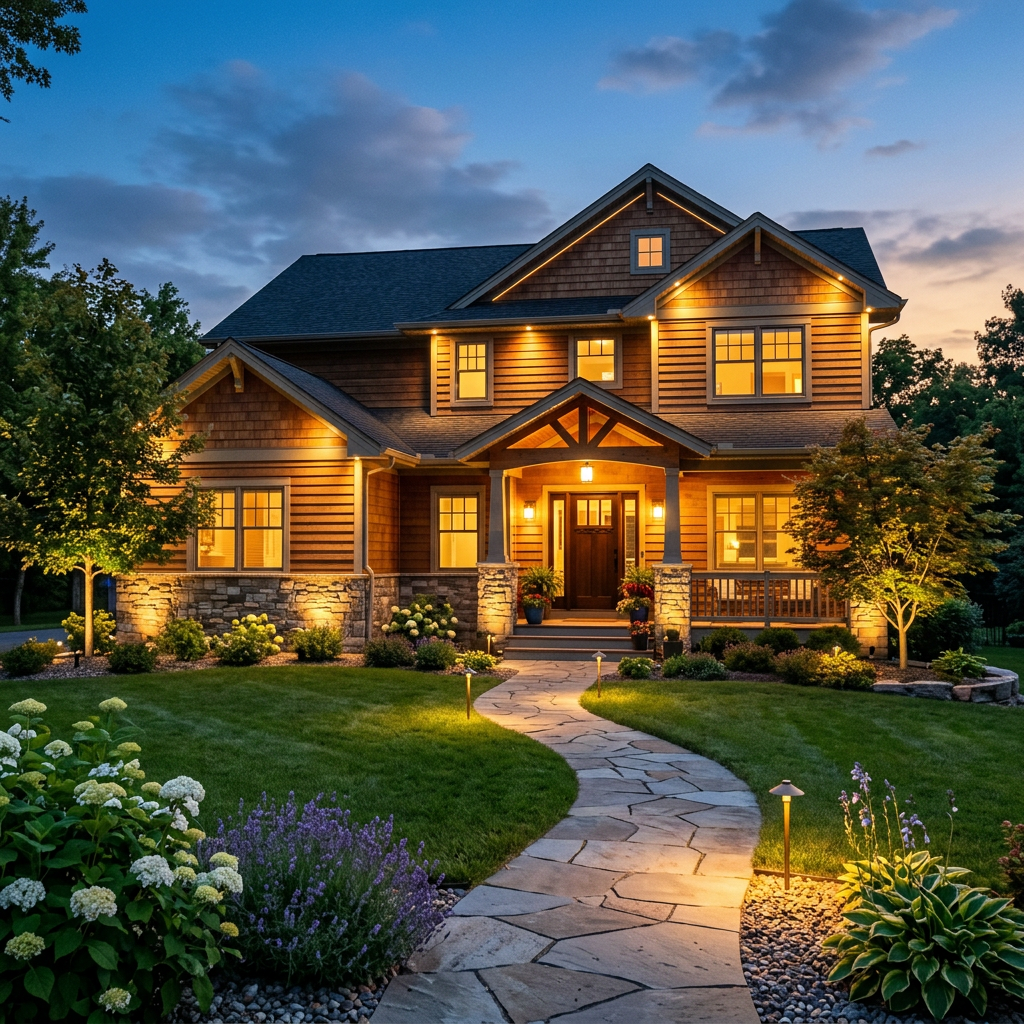
When we think about home improvements, we often focus on what happens inside the house. We choose the perfect paint colors. We update our furniture, add beautiful artwork, and spend countless hours making our interiors feel welcoming. Additionally, what about the space outside our front door? One of the most overlooked ways to transform the overall appearance of a home is outdoor lighting. Outdoor lighting has come a long way from the basic porch light.

Today, homeowners can choose from smart lighting systems and solar-powered fixtures. They also offer LED technology, landscape lighting, architectural accents, motion-activated fixtures, and color-changing options. In addition to these modern innovations, types of fixtures and applications can shape, enhance, and define exterior spaces. The right combination of lighting types can make an ordinary home look dramatically different after the sun goes down.

Lighting Is More Than Just Illumination
The primary purpose of outdoor lighting may be to help us see at night, but modern lighting does so much more. It can highlight the architecture of your home, create a welcoming entrance, improve curb appeal, define outdoor spaces, and create an atmosphere that feels completely different from the daytime appearance of your property.
Think about driving through a neighborhood at night. Some homes disappear into the darkness, while others seem to glow. A beautifully illuminated home naturally catches your attention. Carefully placed lights can highlight columns, roof lines, trees, landscaping, walkways, patios, and architectural details that may not stand out during the day.
That is the power of thoughtful outdoor lighting.
The Different Types of Outdoor Lighting
Outdoor lighting can be grouped into several key types, each serving a different purpose in both function and design. Understanding these categories helps homeowners create a balanced and visually appealing lighting plan.
Ambient Lighting
Ambient lighting provides overall illumination for outdoor spaces. It is the general glow that makes areas usable and safe after dark. Porch lights, wall-mounted fixtures, and overhead patio lighting often fall into this category.
Task Lighting
Task lighting is designed to illuminate specific areas where activities take place. This includes lighting for grilling stations, outdoor kitchens, stairways, and entry points. It ensures visibility where precision and safety are important.
Accent Lighting
Accent lighting is used to highlight focal points such as trees, sculptures, architectural features, or textured walls. Spotlights and up lights are common examples. This type of lighting adds depth and visual interest to a home’s exterior.
Pathway Lighting
Pathway lighting guides movement through walkways, driveways, and garden paths. These low-level fixtures improve safety while also adding charm and structure to landscaping.
Flood Lighting
Flood lights provide broad, powerful illumination over large areas. They are often used for security purposes or to light up driveways, backyards, and building exteriors.
Decorative Lighting
Decorative lighting focuses on aesthetics rather than function. String lights, lanterns, and festive fixtures fall into this category. They are often used to create mood and atmosphere in outdoor living spaces.
Security Lighting
Security lighting is designed to deter unwanted activity and increase visibility around the home. Motion-activated lights and bright perimeter lighting are common examples.
Architectural Lighting
Architectural lighting emphasizes the structure and design of a home. It highlights roof lines, columns, textures, and materials, helping the home stand out at night.
The Rise of LED Outdoor Lighting
One of the biggest innovations in outdoor lighting has been the widespread use of LED technology. LED lights provide bright, efficient illumination while generally using less energy and lasting significantly longer than traditional incandescent bulbs.
This has opened up countless possibilities for homeowners. Instead of limiting outdoor lighting because of energy consumption or frequent bulb replacement, homeowners can use multiple strategically placed fixtures to create a layered lighting design.
LED technology also allows homeowners to experiment with different color temperatures. Warm white lighting can create a cozy and traditional appearance, while cooler white lighting can give a contemporary home a crisp, modern feel.
The difference can be subtle, but the overall effect can be substantial.
Smart Lighting Is Changing the Way We Use Our Homes
Perhaps one of the most exciting developments in outdoor lighting is the introduction of smart technology.
Today’s smart outdoor lighting can allow homeowners to control fixtures through smartphones, timers, sensors, or voice-controlled home systems. Lights can be scheduled to turn on around sunset, adjusted remotely, or programmed to respond to movement.
Imagine arriving home after dark and having your pathway lights automatically illuminate as you approach. Or imagine being able to turn on your porch and landscape lighting while you’re away from home.
Smart lighting isn’t simply about convenience. It gives homeowners greater control over how their homes look and function after dark.
Solar Lighting Makes Outdoor Design More Flexible
Solar-powered outdoor lighting has also become increasingly popular. Because many solar fixtures don’t require traditional electrical wiring, they can provide an easy way to add lighting to gardens, walkways, patios, and other areas.
Solar technology has improved considerably, making today’s options more attractive and functional than some of the basic solar lights many homeowners remember from years ago.
For homeowners looking for an affordable way to add decorative lighting without running electrical wiring throughout their yard, solar fixtures can be an appealing option.
Outdoor Lighting Can Change Your Home’s Architecture
One of the most overlooked benefits of outdoor lighting is its ability to emphasize architectural features.
A beautiful brick exterior can be highlighted with up lighting. Tall columns can become dramatic focal points. A stone facade can take on depth and texture when light is directed across its surface.
Even a simple home can look more sophisticated when lighting is used intentionally.
Rather than placing lights everywhere, think about what you want people to notice. Is there a beautiful entryway? A unique roof line? Stonework around the garage? Large trees in the front yard?
Lighting can tell the eye where to look.

Don’t Forget the Front Door
Your front entrance is one of the most important areas to illuminate.
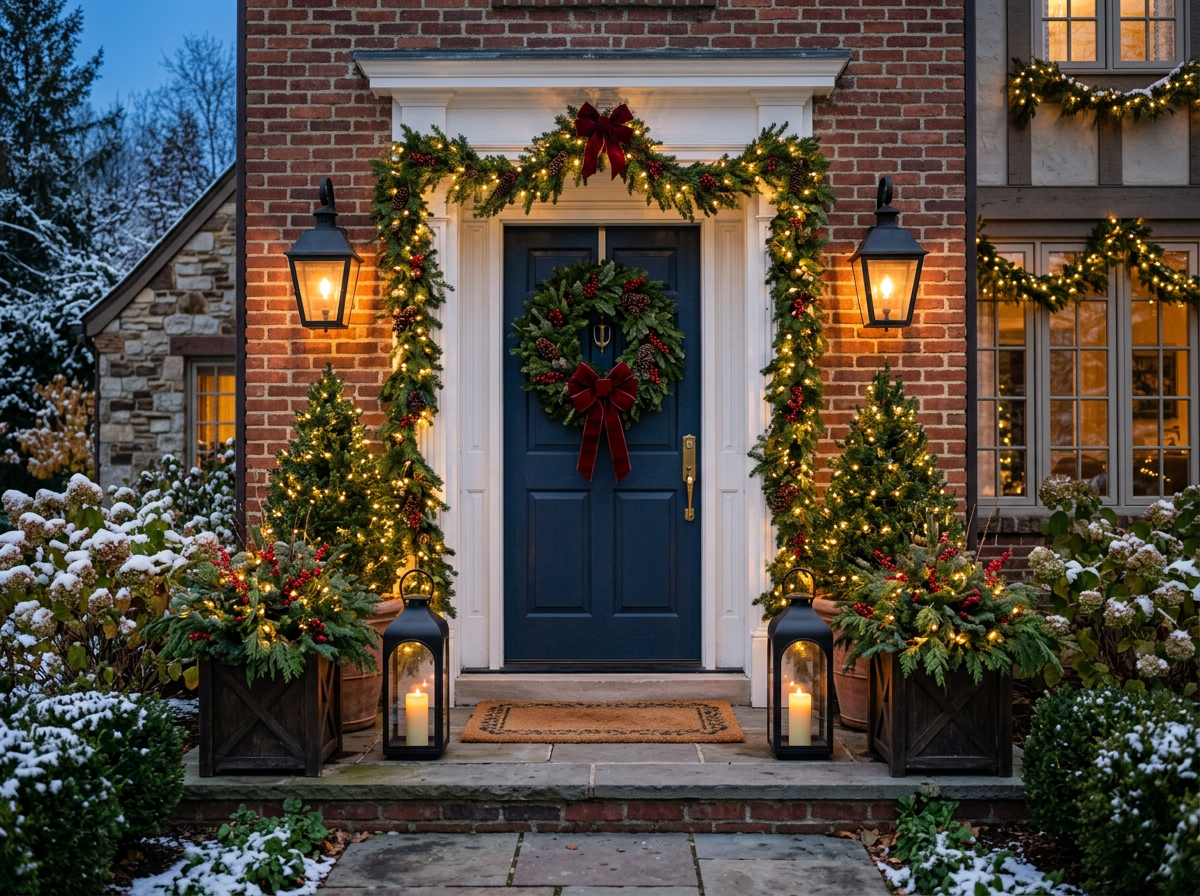
A well-lit entrance creates an immediate sense of welcome. Wall sconces, pendant lights, lantern-style fixtures, recessed lighting, and strategically placed landscape lights can all contribute to a beautiful entryway.
Your front door is also one of the first things guests see when they visit your home. The right lighting can make the entrance feel warm, intentional, and inviting.
And if you’re thinking about selling your home someday, that first impression can matter even more.
Landscape Lighting Can Make Your Yard Feel Like an Extension of Your Home
Outdoor living has become a major part of how homeowners use their properties. Patios, decks, outdoor kitchens, fire pits, and seating areas are no longer spaces that disappear when the sun goes down.
Lighting can help extend their usefulness into the evening.
String lights can create a relaxed atmosphere over a patio. Pathway lights can guide guests through a garden. Spotlights can highlight trees and landscaping. Under-deck lighting can provide a subtle glow without overwhelming the space.
The goal isn’t necessarily to make everything bright. In fact, too much lighting can take away from the atmosphere.
The goal is to create layers of light.
Layered Lighting Creates a More Expensive Look
One of the secrets designers use when creating beautiful outdoor spaces is layering.
Instead of relying on one powerful light source, consider combining different types of lighting. Use ambient lighting for general illumination, accent lighting to highlight architectural or landscape features, and pathway lighting to improve visibility.
This creates dimension.
The same principle applies indoors. A room illuminated entirely by one ceiling fixture can feel flat, while a room with ceiling lighting, lamps, accent lighting, and task lighting feels much more inviting.
Outdoor spaces benefit from the same approach.
Lighting Can Improve Curb Appeal Without a Major Renovation
One of the best things about outdoor lighting is that it can make a noticeable difference without requiring a major home renovation.
You may not be ready to replace your siding, install a new front door, or completely redesign your landscaping. But adding thoughtfully selected lighting can give your home an entirely different appearance at night.
In some cases, it can feel like you’ve renovated your exterior when you’ve actually changed only the lighting.
That’s an especially appealing option for homeowners who want a transformation without a massive project.
How to Choose the Right Outdoor Lighting
Before purchasing outdoor lights, take a walk around your property after dark. Look at the areas that feel too dark and the features that deserve more attention.
Then consider your home’s architectural style.
A traditional home may look beautiful with classic lantern-style fixtures. A contemporary home may benefit from sleek, minimalist lighting. A farmhouse-inspired exterior might work well with warm, simple fixtures, while a more dramatic architectural home could benefit from modern directional lighting.
Most importantly, don’t choose lighting simply because you like the fixture by itself. Think about how it will look on your home.
Don’t Make Everything Bright
More light does not necessarily mean better lighting.
Over-lighting your property can create harsh shadows, reduce the cozy feeling of an outdoor space, and make certain features compete with one another.
Instead, focus on balance.
Highlight the things you love and allow some areas to remain softly illuminated. Darkness can actually make the illuminated areas feel more dramatic.
This is where thoughtful lighting design becomes more important than simply adding more fixtures.
The Future of Outdoor Lighting
As technology continues to develop, outdoor lighting is likely to become even more integrated with the way we live.
Smart home systems, energy-efficient LEDs, solar technology, motion sensors, automated schedules, and customizable lighting controls are giving homeowners more options than ever before.
Outdoor lighting is no longer simply an afterthought added for safety. It has become part of the overall design of a home.
And perhaps that is the biggest innovation of all.

Final Thought
Your home doesn’t stop being beautiful when the sun goes down. In many ways, that’s when you have the opportunity to create an entirely new version of it.
Outdoor lighting can highlight your home’s best features, create a welcoming atmosphere, improve curb appeal, extend your living space, and add personality to your property. Whether you choose a simple set of pathway lights or invest in a complete smart landscape lighting system, the right illumination can completely change the way your home feels at night.
So the next time you’re looking at your home and wondering what it needs, don’t immediately think about a new paint color, new furniture, or another renovation.
Look outside after dark.
You may discover that your home doesn’t need to be changed nearly as much as it simply needs to be seen in a different light.


Leave a Reply